How to Buy Early Printed Books and Pre-War Editions Online – A Guide for the Beginning Collector
How to Buy Early Printed Books and Pre-War Editions Online – A Guide for the Beginning Collector
Buying early printed books and pre-war editions online can be both safe and rewarding if you understand the basic principles of the antiquarian book market. In this practical guide, we explain step by step how to recognize valuable copies, interpret antiquarian catalog descriptions, assess the condition of books, and safely purchase rare and early editions on the internet.

Buying early printed books and pre-war books online was still a niche just a dozen or so years ago. Today—thanks to auction platforms and professional online antiquarian bookshops—it is possible to build an entire collection without leaving home. However, to avoid disappointment (or serious financial loss) with your first purchases, it is worth learning a few key principles.
This guide shows how to buy early printed books online step by step: from understanding the basic terminology, through choosing the right purchasing channel, to evaluating a specific offer and building your own collection.
What Are Early Printed Books and Pre-War Editions?
Before you start spending money, it is important to understand the terminology. Antiquarian descriptions use terms that may sound unfamiliar to beginners, yet they strongly influence price.
Early printed books – definition and chronological scope
In Polish and European bibliological tradition, early printed books usually include:
-
incunabula – prints from the 15th century, issued up to and including the year 1500,
-
prints from the 16th, 17th and 18th centuries,
-
the conventional upper boundary of early printed books is usually around the year 1800 (sometimes slightly later, depending on the practice of a given academic centre or antiquarian bookshop) [1].
Early printed books were produced on handmade paper using metal type. Their print runs were small, and many titles survive today in only a handful of copies. This makes them a natural area of interest for bibliophiles.
Pre-war book editions
In the Polish antiquarian trade, pre-war editions generally refer to:
-
books published before 1939 (before the outbreak of World War II).
In practice, booksellers often distinguish separately:
-
19th-century prints,
-
publications from the period of the partitions of Poland,
-
books from the interwar period (1918–1939).
These are not early printed books in the strict scholarly sense, but they represent a very important market segment. They include first editions of Polish literary classics, important scientific works, beautifully produced albums, and regional publications—such as editions devoted to the Lubusz region or other parts of Poland.
Basic Collectors’ Terms You Should Know
Several words regularly appear in antiquarian descriptions:
format – the physical size of the book, traditionally described using abbreviations (2°, 4°, 8°, 12°), today often given simply in centimetres,
binding – the way the book block is bound:
-
publisher’s binding – the original binding issued by the publisher,
-
later binding – a later rebinding, for example a 19th-century bookbinder’s binding,
-
terms such as half leather, full leather, cloth, paper wrappers,
provenance – the ownership history of the copy: signatures, bookplates, library stamps, dedications; these can significantly increase value,
first edition – the first publication of a work overall or in a specific language or country,
bibliophile copy – a copy produced to a higher standard (better paper, numbered print run, special binding) or with unusual provenance,
defective copy (destrukt) – a heavily damaged or incomplete copy, often treated more as a reference object than a fully collectible book [3].
Understanding these terms allows you to read descriptions consciously and understand what you are actually paying for.
Where to Buy Early Printed Books Online?
The market is broad. The same type of book may appear on a general classified platform, at an auction house, or in a specialised antiquarian online shop. Each channel has advantages and limitations.
Popular sales platforms
This group includes large classified and auction websites.
Advantages:
-
huge number of listings—from inexpensive brochures to valuable early printed books,
-
both private sellers and professional antiquarian bookshops are present,
-
developed buyer protection systems and seller ratings.
Disadvantages:
-
highly uneven quality of descriptions and photographs,
-
frequent misuse of terms such as “early printed book” or “first edition” in non-professional listings,
-
higher risk of mistakes or intentional omission of defects.
For a beginner collector these platforms can be useful for cheaper and less risky purchases, such as attractive pre-war editions or post-war classics—provided caution is exercised.
Auction houses and specialised auction platforms
Auction houses (often combining physical auctions with online bidding) offer:
-
carefully selected objects,
-
catalogues prepared by experts,
-
relatively high-quality documentation (bibliographic description, photographs, often provenance information).
They are an excellent learning resource. Even if you do not bid, you can follow catalogues, compare descriptions, and analyse price results.
The downside for beginners may be the higher price level and less flexible purchasing conditions (auction fees, payment deadlines, limited negotiation possibilities).
Online antiquarian bookshops
An online antiquarian bookshop combines a traditional antiquarian business with the convenience of online shopping. The catalogue of available items is usually presented in the form of an online store, featuring:
-
detailed bibliographic descriptions,
-
photographs of key elements of each copy,
-
clearly described return and complaint policies,
-
company details and often many years of professional activity.
For a beginner collector this is usually the safest way to buy early printed books online:
-
you receive reliable information about condition and completeness,
-
you can expect professional advice,
-
if problems arise, the complaint procedure is easier than in private transactions.
Antykwariat Sobieski (https://antyksobieski.pl/) is an example of an online antiquarian bookshop combining classical bibliophile expertise with the convenience of online shopping. In practice this means:
-
a curated selection of early printed books and historical editions prepared by specialists,
-
descriptions including key information for collectors (completeness, binding, condition, provenance where possible), clearly visible for example in descriptions of literary classics,
-
the possibility of contacting the shop for consultation when choosing a copy,
-
clear shipping and packaging policies—crucial for fragile objects.
As a result, beginner collectors can learn from well-prepared examples while benefiting from the experience of a professional antiquarian bookshop.


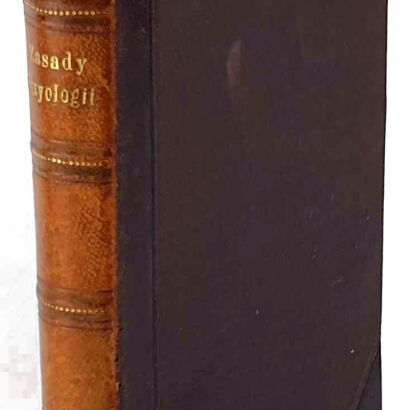
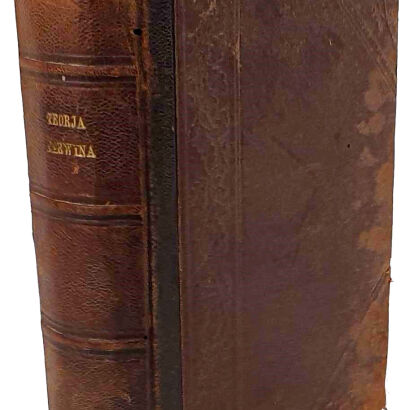
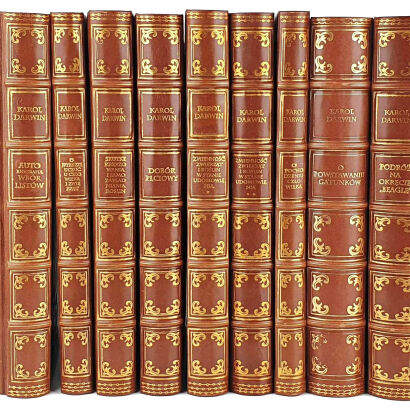


![ANDERSEN - BAŚNIE [przedwojenne]](/media/products/8da7b9b1c871f2fd7c7881f7f18b8562/images/thumbnail/small_batch-20231106-143727.jpg?lm=1768077350)


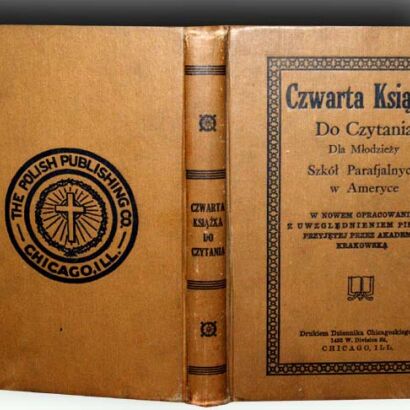

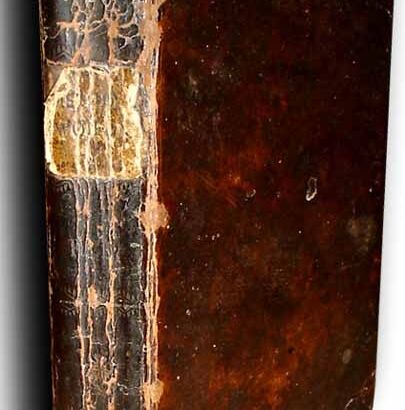
![HISTOIRE DE FREDERIC II Roi de de PRUSSE wyd.1788r. 5 wol. [HISTORYA FRYDERYKA II- WOYNY ŚLĄSKIE]](/media/products/9e9df9dc2cd2e27958c087dda9762afc/images/thumbnail/small_1_6d5f776b9864.jpg?lm=1765540606)

![PEREGRINI- DISSERTATIO ACADEMICA... INSTITUTIONUM TITULOS 1755 [PODRĘCZNIK PRAWA]](/media/products/9632ae492653def6866df1847bc9d1d1/images/thumbnail/small_1_7a1c680f2f15.jpg?lm=1765540634)




 Polish