Stanisław Kostka Potocki – "Podroz do Ciemnogrodu" (Warszawa 1820). First edition of the famous Enlightenment satire.
First edition of the famous satire by Stanislaw Kostka Potocki from 1820 – one of the most controversial books of the Polish Enlightenment. Podroz do Ciemnogrodu is a literary tale about backwardness, superstition, and the struggle for modernity, which introduced the word “ciemnogrod” into the Polish language and led the author to resign from his ministerial post. This two-hundred-year-old print, now rarely seen on the antiquarian market, remains one of the most fascinating testimonies of the intellectual debates of its era.
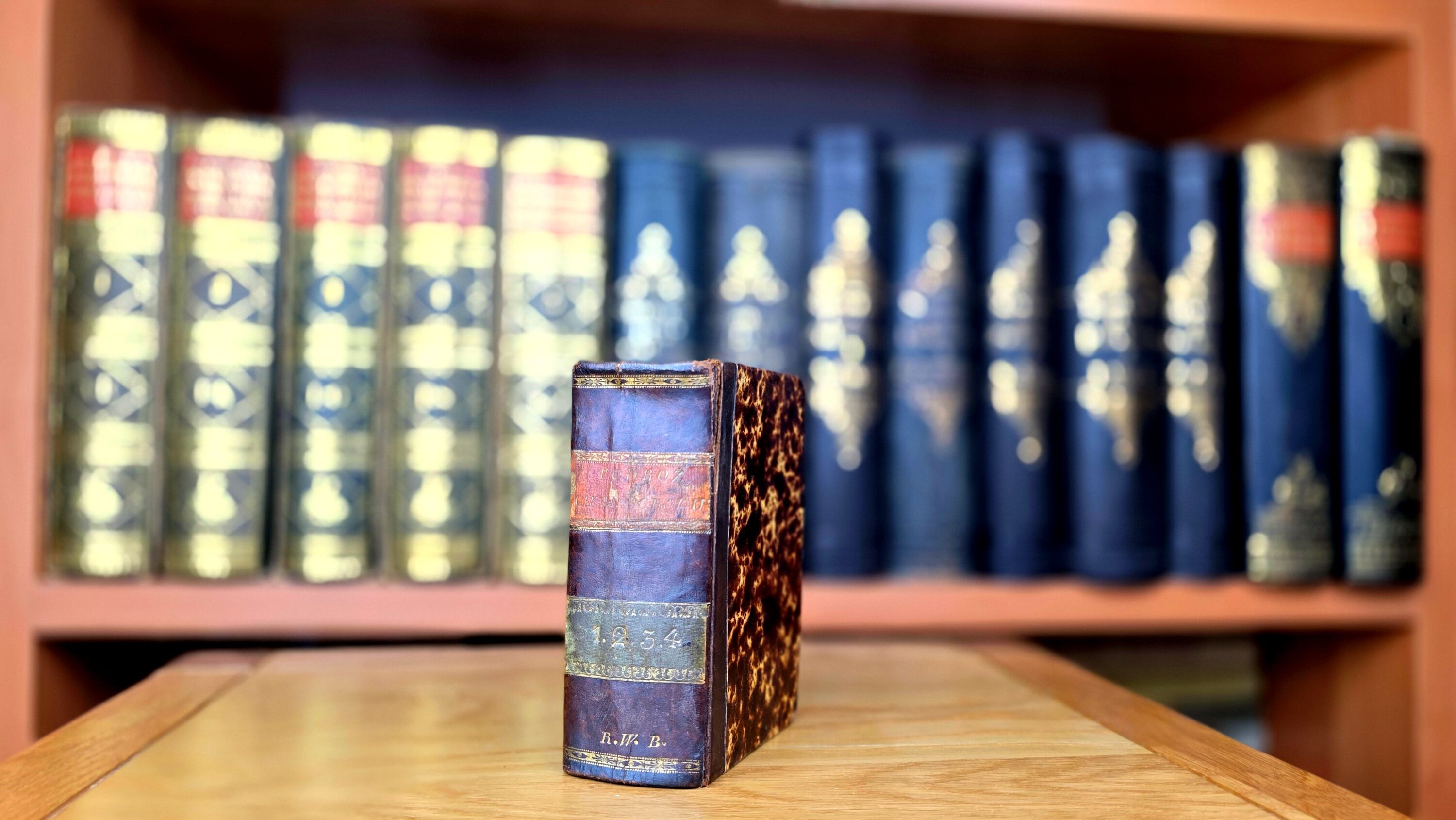
Stanisław Kostka Potocki – "Podroz do Ciemnogrodu" – A Book That Shook Poland. Enlightenment Manifesto
Journey to the Land of Backwardness
Podroz do Ciemnogrodu is a literary work presented as a report from a journey to a fictional country. However, after just a few pages, the reader realizes that it is not about any geographical region.
Ciemnogrod is a metaphor for a society immersed in superstition, fanaticism, and resistance to knowledge. In the world depicted by Potocki:
-
reason provokes suspicion,
-
science is treated as a threat,
-
progress is considered a dangerous novelty,
-
and authority replaces critical thinking.
Potocki constructs this vision with irony and sometimes very sharp satire. Under the guise of a literary journey, he delivers a relentless critique of the social mentality of his era.
A Scandal Greater Than Romanticism
It is difficult today to imagine the scale of reaction provoked by this publication. Among conservative and ecclesiastical circles, it was regarded as an attack on religion and clerical authority.
The author criticized:
-
the excessive influence of the Church on public life,
-
the intellectual closure of certain elites,
-
Sarmatian conservatism,
-
hostility towards educational reforms.
The reaction was fierce. Under pressure from the episcopate, Stanisław Kostka Potocki was forced to resign from his position as Minister of Religious Denominations and Public Enlightenment.
The paradox was that, thanks to this scandal, the book gained enormous publicity. In intellectual circles of the Kingdom of Poland, it was widely discussed and commented upon – some say it even attracted more attention in its time than Adam Mickiewicz's Ballady i romanse published two years later, which marked the beginning of the Romantic era.
Who Was the Author?
Stanisław Kostka Potocki (1755–1821) is one of the most fascinating figures of the Polish Enlightenment. He was a politician, scholar, art collector, and writer – a man of exceptionally wide interests.
In public life, he held many positions:
-
General Major of the Royal Artillery,
-
political activist of the Stanislawian era,
-
Minister of Religious Denominations and Public Enlightenment in the Kingdom of Poland.
However, his activities went far beyond politics. Potocki was one of the first researchers of ancient art in Poland and author of pioneering works in art history, including O sztuce u dawnych.
He was also a great patron of culture. Thanks to him, the Wilanow Palace was opened to the public as one of the first museums in Central Europe. His art collection was among the most important in the country.
Potocki also left numerous journalistic and literary texts. The most famous include:
-
Świstek krytyczny – a collection of polemical satirical articles,
-
works on art history and archaeology,
-
essays on culture and education.
All these works share a common theme: faith in reason, education, and progress.
The Book That Created a Word
The most lasting trace of Podroz do Ciemnogrodu is the word "ciemnogrod".
Today it functions in the Polish language as a term describing communities resistant to knowledge, modernity, or social change. It was later used by numerous writers and publicists, including:
-
Tadeusz Boy-Zelenski
-
Antoni Slonimski
-
Czeslaw Milosz
Few remember that its source is precisely Potocki's satirical novel from the early 19th century.
A Two-Hundred-Year-Old Book – Between 19th-Century Print and Old Print
First edition copies from 1820 are now rare on the antiquarian market.
Formally, the book is not considered an old print – the traditional boundary of that category ends in 1800, according to the classification adopted in Karol Estreicher’s monumental bibliography. However, it is worth noting that this boundary was set at the beginning of the 20th century, when the condition of old prints was judged differently.
Today, a copy over two hundred years old naturally falls among the most interesting 19th-century prints and is prized by collectors of Polish literature.
Why This Book Still Fascinates
Podroz do Ciemnogrodu is not only a rare print from two centuries ago. It is also a surprisingly relevant text.
The story of a society afraid of knowledge and closed to new ideas still resonates today as much as at the time of its creation. Perhaps that is why Potocki's book continues to return in discussions about the history of Polish culture and political thought.
In our "Best of the Best" section, it appears not only as a rare collector’s item but above all as one of the most important books of the Polish Enlightenment – a work that has become part of the history of language, literature, and ideological debates.
![POTOCKI- O WYMOWIE I STYLU [komplet w 4 wol.] 1815](/media/products/efcf0d148caa2782bf665549854c94f8/images/thumbnail/small_wenet20260115-144025.jpg?lm=1768916612)
![POTOCKI - PODRÓŻ DO CIEMNOGRODU cz.1-4 [komplet w 1 wol.]1820r. , pierwodruk](/media/products/331adc9c99b61c5e17c1cbb0e2c23cdc/images/thumbnail/small_wenet20260305-134813.jpg?lm=1773050125)


![HISTOIRE DE FREDERIC II Roi de de PRUSSE wyd.1788r. 5 wol. [HISTORYA FRYDERYKA II- WOYNY ŚLĄSKIE]](/media/products/9e9df9dc2cd2e27958c087dda9762afc/images/thumbnail/small_1_6d5f776b9864.jpg?lm=1765540606)


![[RENESANSOWA OPRAWA Z WIZERUNKAMI HABSBURGÓW I JAGIELLOŃCZYKÓW] NOWOPOLCZYK - APOLOGIA ALBERTI NOVICAMPIANI. Kraków 1559](/media/products/adfd8c1fe2910360016828a5d45da00e/images/thumbnail/small_batch-20250109-144014.jpg?lm=1765618191)

![JOHN LOCKE- O EDUKACYI DZIECI. SOME THOUGHTS CONCERNING EDUCATION ed. 1801 [w 2. wol.]](/media/products/8a04b2c5b0056ab9cf1b0abef59f9c5c/images/thumbnail/small_20220125-135700.jpg?lm=1765539078)

![[CONDILLAC] KONDYLLAK- O NAUCE HISTORYI cz.1 1812. Pierwsze polskie wydanie!](/media/products/8568e28cbb6e473e356047c1659e4a9c/images/thumbnail/small_batch-20240605-131631.jpg?lm=1765538767)


![[Renaissance binding with images of the Habsburgs and Jagiellonians] Nowopolczyk - Apologia Alberti Novicampiani. Kraków 1559](/uploads/blog/main/thumbnail/thumb_67c59c3978f74-stThumbnailPlugin-2-.jpeg?lm=1765538148)
![[Piotr Skarga - Zywoty Swiętych] Surius - De Probatis Sanctorum. T. I-VI plus Suplement (complete set) 1570, Poznan Renaissance knurled binding with images of saints, bookbinder Mc or Melchior Nering](/uploads/blog/main/thumbnail/thumb_646766598e5b2-big-batch-20230407-115941.jpg?lm=1765538151)
 Polish