How to recognize the first edition of "The Doll" by Bolesław Prus? A guide for collectors on the differences between the first print and the second edition
The first and second editions of Bolesław Prus's "The Doll" are among the most important editions of this novel in the history of Polish literature. How do the two editions differ, how to recognize the first print, and what to pay attention to when evaluating a specific copy? We also look at later, beautifully illustrated editions of "The Doll," which show how the perspective on this extraordinary novel has changed over the years.
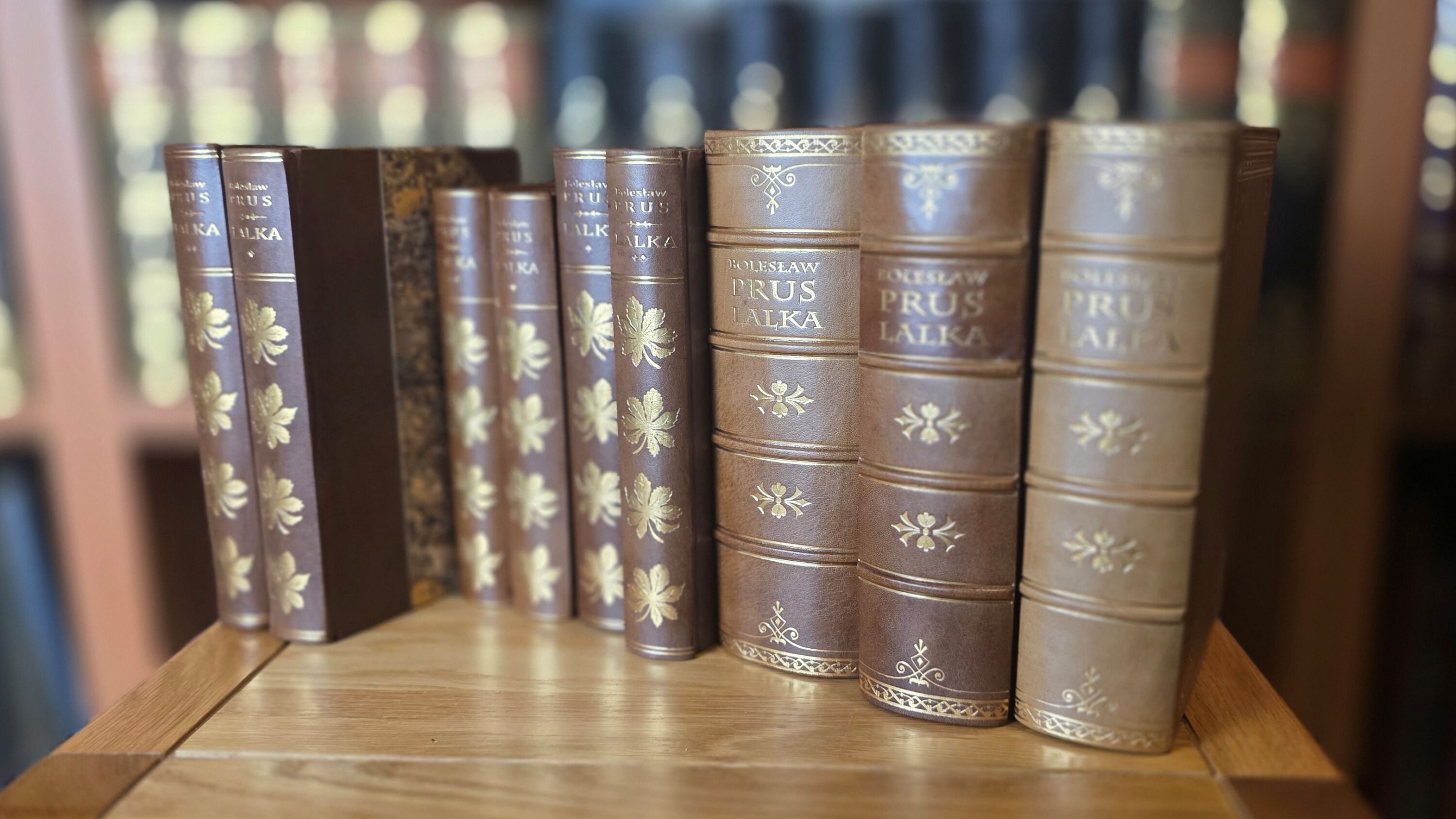
How to recognize the first edition of Bolesław Prus's "Lalka"? A guide for collectors on the differences between the first print and the second edition
TL;DR The first print of "Lalka" consists of three volumes published in 1890 by Gebethner and Wolff, printed by W. L. Anczyc and Company in Krakow. The second edition is two volumes from 1897, called the jubilee edition. The quickest distinguishing features: number of volumes, year on the title page, pagination, and frontispiece with a portrait. Verification can be confirmed in Polona and in the catalogs of the National Library and NUKAT. Beware of modern bindings, combined copies, and missing volumes. Every value assessment is only preliminary, as there is no certainty without inspection.
You have a copy of "Lalka" in your hands and don't know if it's the true first print or a later edition? This question is asked by many collectors, especially when the book comes into their hands by chance, from a grandmother, at a flea market, or in a closed box after moving. The good news is that the first edition of "Lalka" has several features that can be checked independently, without specialized equipment. You just need to know what to look for.
In this guide, we will go step by step through the differences between the first print from 1890 and the second edition from 1897. I will show you what the title page looks like, how to count the volumes, how to compare pagination, and where to confirm your findings. At the end, you will learn when it is worth submitting the copy for expert evaluation, for example to Antykwariat Sobieski, which regularly deals with first prints and valuation of old prints.
The first edition of "Lalka" in brief - what exactly you are holding
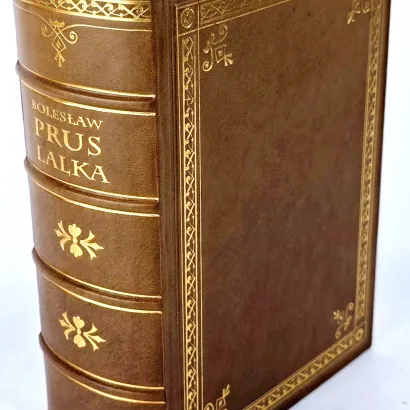
Let's start with the basics. The first edition of "Lalka" was published in 1890 by Gebethner and Wolff. The printing was done by the W. L. Anczyc and Company printing house in Krakow. It consists of three separate volumes, approximately 18 cm in size, with a frontispiece, that is, a page with a portrait of Bolesław Prus placed opposite the title page.
The pagination of the first print looks like this:
-
volume one: [4], 431, [1] pages,
-
volume two: [4], 503, [2] pages,
-
volume three: [4], 439, [2] pages.
These numbers are important because they are the easiest way to distinguish the first print from other editions. It is worth writing them down or remembering them before you start browsing your copy.
And one more thing that often confuses beginners. The first book edition is not the same as the serialized print. "Lalka" was first published in installments in "Kurier Codzienny" from September 29, 1887, to May 24, 1889. Only later did the whole work reach bookstores as a three-volume book. So if someone shows you a newspaper clipping and says it is the first print, that's not quite right. It is the first printing, but not the first book edition.
In short: the first print of "Lalka" is the first edition from 1890, three volumes, Gebethner and Wolff, printed by Anczyc in Krakow. Remember these three things because they will come up in every following section.
|
|
|---|
![PRUS- LALKA T. 1-3 [complete], 1st ed. Warsaw 1890](https://antyksobieski.pl/media/products/e0e8c43ad35a665d181009e80569258d/images/thumbnail/large_20210511-103643.jpg?lm=1765578126)
|
First print versus second edition - the most important differences
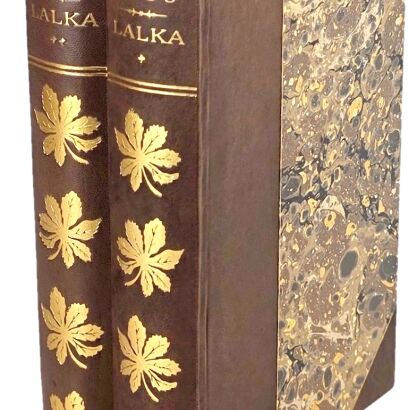
The quickest way to distinguish both editions is to look at the number of volumes and the year. The first print has three volumes and the year 1890. The second edition has two volumes and the year 1897. These are the two simplest tests you can perform in a few seconds.
The second edition from 1897 is called the jubilee edition because it coincided with the 25th anniversary of Prus's creative work. It was then that the novel first appeared in a two-volume layout. Below you will find a full comparison.
|
Feature |
Edition 1 (1890) |
Edition 2 (1897) |
|---|---|---|
|
Number of volumes |
3 |
2 |
|
Year on title page |
1890 |
1897 |
|
Publisher |
Gebethner and Wolff |
Gebethner and Wolff |
|
Format |
approx. 18 cm |
approx. 11 × 17.5 cm |
|
Number of pages |
431 / 503 / 439 |
419 + 414 |
|
Frontispiece |
portrait of Prus |
portrait of the author (sometimes missing) |
|
Text layout |
three volumes |
two volumes, jubilee edition |
Note the format. The first print is clearly larger. The second edition is smaller, more handy, closer to today's pocket format. So if you are holding a small, thick book in two volumes, it is almost certainly not the first print.
Both editions have a portrait of the author, but in the second it may be missing because copies circulated in homes and libraries for decades. The portrait itself does not decide anything. The whole matters: number of volumes, year, format, and pagination together.
It is also worth knowing that the text itself changed between editions. The two-volume edition from 1897 included orthographic and inflectional changes, as well as a different approach to parts previously subject to censorship. For the collector, however, the bibliographic layer is the most important because it allows you to determine exactly what you are dealing with.
|
|
|---|
![PRUS- LALKA ed. 1897 vol. 1-2 [complete in 2 vols.] half leather](https://antyksobieski.pl/media/products/49cb6d5450e79c7d98272b57b4802ed7/images/thumbnail/large_20191106-114249.jpg?lm=1767338491)
|
Recognizing features of the first print - step-by-step checklist
Now let's move to practice. Sit down with the copy at the table and go through the list below one by one. Each point is a specific test.
Collector's checklist:
-
Title page. Check the year. It should be 1890. Make sure there is no information like "second edition" or "jubilee edition." The publisher's name is Gebethner and Wolff.
-
Number of volumes. Count them. The first print has three volumes. If you have two, it is not the first edition.
-
Pagination. Open the last pages of each volume and compare the number of pages with the values 431, 503, and 439. This is a very effective test because it is hard to fake.
-
Frontispiece. Check if there is a portrait of Prus opposite the title page. It should be present in the first print.

Photo: Frontispiece of ed.2.
-
Format. Measure the book. About 18 cm in height is a good sign. A significantly smaller format suggests a different edition.
-
Binding. Examine the spine, cover, and endpapers. Consider whether the binding looks like it is from the 19th century or modern.
What to watch out for:
-
Original binding versus modern bookbinding. Many copies on the market have new leather bindings made recently. This is not the original binding, although it can be beautiful. It does not disqualify the book but changes its character and collector's value.
-
Combined copies. Sometimes someone combines a volume from the first edition with a volume from another edition to create a "complete set." Check if all volumes have the same year and the same typographic layout.
-
Missing volumes. A complete set is three volumes. If one is missing, the copy still has value but different. Do not treat it as a full set.
If any point does not match, don't panic. It does not immediately mean you have a fake. It only means you need to check more details and preferably consult a specialist.
Where to verify authenticity and edition
Self-identification is a good start, but it is worth confirming it in sources. Fortunately, you have several reliable places at your disposal.
The first and most convenient is Polona, the digital national library. There you will find scans of the three volumes of the first print from 1890. You can open a scan and compare it with your copy page by page. This is the best way to check the layout of the title page, pagination, and the appearance of the frontispiece.
The second place is the catalogs of the National Library and NUKAT. These are nationwide databases describing copies from many libraries. You enter the title, author, and year, and the system shows you a detailed bibliographic description. If your copy matches it, you are on the right track.
The third place is WorldCat and ESTER. These are international and historical catalogs, especially useful when you want to check how foreign libraries describe the edition.
How to do it in practice? The simplest way:
-
Go to Polona and find the scan of the first volume from 1890.
-
Open the title page and compare it with yours.
-
Check the pagination at the end of the volume.
-
Repeat the same for the other volumes.
-
If something does not match, note the difference and show it to a specialist.
And an important note. Some data about the first print is not confirmed in available sources. We do not know for sure what the print run was, what the price of the first edition was, whether there was an erratum, or what watermarks appeared in the paper. If someone gives you such information confidently, it is worth being cautious. Do not guess and do not rely on unverified data.
How much can the first print of "Lalka" be worth and what does it depend on
Let's move to the question that probably interests every collector: how much can the first print of "Lalka" actually be worth?
For books of this rank, there is no single universal price. The value of a specific copy depends on many factors: primarily completeness, condition, type of binding, preserved original binding, and provenance, that is, the ownership history of the book.
It also matters whether we are dealing with a complete set of three volumes or a single volume. For a collector, a complete edition is obviously particularly interesting, but single volumes can also have value, especially if they are well preserved or have an interesting binding or provenance.
The binding is also significant. In the case of "Lalka," you can find copies preserved in old original bindings as well as later bookbindings, including impressive leather bindings. However, a more expensive or more decorative binding does not automatically mean a higher value of the book. For some collectors, preserving the original binding is especially important; for others, an attractive, historical, or artistic binding may be an additional asset.
It is also worth remembering that the rare book market is small and specialized. Prices of rare copies can vary significantly, and their level depends not only on the condition of the book but also on current supply, collector interest, and individual features of the specific copy. Therefore, a single offer or price visible on the internet should not be treated as a universal price list.
This also applies to later editions of "Lalka." The second edition, as well as interesting editions with illustrations by outstanding Polish artists, can be valuable collector's items, but each such case requires a separate assessment. The year of publication, completeness, condition, binding, illustrations, and provenance can significantly change the value of the copy.
Therefore, with "Lalka," it is worth focusing primarily on the specific book, not just the year of publication. Two copies of the same edition can represent completely different collector's value.
If you have a "Lalka" from 1890 and want to know how much it might really be worth, it is best to consult an antiquarian or an expert specializing in old books. Only an inspection of the copy allows taking into account all the elements that determine its value.
For rare books, the most important thing is not so much finding a single "price from the internet" but properly recognizing the specific copy and its place in the collector's market.
|
|
|---|
![PRUS- LALKA ed. 1897 vol. 1-2 [complete in 2 vols.]](https://antyksobieski.pl/media/products/3a03760312d0d123d22296dad14b7194/images/thumbnail/large_batch-20260929-131145-cutout.jpg?lm=1790686069)
|
When to contact an antiquarian
There are situations when self-identification is not enough and it is really worth talking to a specialist. Here are a few of them:
-
the binding is uncertain and you don't know if it is original or modern,
-
one of the volumes is missing and you want to know how much such a copy is worth,
-
you suspect it is a reprint or a reissue,
-
you want to sell the book and need a reliable valuation,
-
the binding requires conservation or restoration.
In such cases, it is good to contact a place that regularly works with first prints and bindings. Antykwariat Sobieski deals with identification, valuation, and trading of rare prints, including first prints and 19th and 20th-century books. Copies are compared there with the auction market and with library and digital catalogs such as Polona, the National Library, or NUKAT. This allows precise determination of which edition you have.
Antykwariat Sobieski also offers bookbinding services. If your copy has a damaged binding, it can be restored or a new one made, for example in natural leather, preserving traditional craft techniques. This is important because a well-made binding can protect the book for decades and prepare it for display.
Just remember one thing. A preliminary assessment based on description and photos is one thing, and a binding valuation is another. Without inspection, no honest person will guarantee authenticity or value.
Common collector's pitfalls
Finally, a few things to watch out for. These are mistakes that even experienced collectors make.
Red flags:
-
Reprints and reissues. Modern reprints can be deceptively similar to the original. Check the paper, printing, and year of publication.
-
Combined copies. Volumes from different editions sold as a set. Always compare the year and typographic layout of all volumes.
-
Missing volumes. Someone sells a "first print" in one volume. It is not a complete set, although it can be a valuable fragment.
-
Modern bindings as "original". A new leather binding is not the original binding. Don't be convinced otherwise.
-
Relying only on the cover photo. The cover says little. The title page, pagination, and interior matter.
If something raises your doubts, return to the catalogs. Polona, the National Library, and NUKAT are your best allies. And if you still have no certainty, submit the copy for expert evaluation.
Summary - how to confirm the first print in five steps
Let's gather everything into one short procedure. Here are five steps you can perform yourself.
-
Count the volumes. Three volumes is the first print. Two is the second edition.
-
Check the year on the title page. 1890 is the first edition. 1897 is the jubilee edition.
-
Compare pagination. 431, 503, and 439 pages are the values of the first print.
-
Examine the frontispiece and binding. Portrait of Prus and period binding are good signs.
-
Verify in Polona and catalogs. Compare your copy with the scan and bibliographic description.
If after these five steps you still have doubts, don't guess. Submit the copy for expert evaluation, for example to Antykwariat Sobieski, where first prints and bindings are daily work.
Frequently asked questions
How many volumes did the first edition of "Lalka" have? Three volumes. The first print was published in 1890 by Gebethner and Wolff, printed by W. L. Anczyc and Company in Krakow.
When was the second edition of "Lalka" published? In 1897. This is the jubilee edition, related to the 25th anniversary of Prus's creative work. For the first time, it had a two-volume layout.
How much does the first print of "Lalka" cost? This is one of those questions that is hard to answer with a single amount. The first print of "Lalka" is today a sought-after collector's book, and prices of individual copies can vary significantly. They depend primarily on completeness, condition, type and quality of binding, and provenance of the specific copy.
Therefore, it is worth following current antiquarian and auction offers but not treating a single price as a universal value indicator. For rare books, the specific copy and its condition are of crucial importance.
If you want to know the value of your "Lalka," it is best to consult a professional antiquarian or expert. Inspection of the book allows assessing all features that may affect its collector's value.
Where to check if my copy is a first print? Best in Polona, where scans of the three volumes from 1890 are available. Helpful will also be the catalogs of the National Library, NUKAT, WorldCat, and ESTER.
What to do next
You now have the tools to conduct a preliminary identification yourself. Check the volumes, year, pagination, and frontispiece, then compare everything with the scan in Polona. If the result surprises you or doubts arise, do not leave it unanswered.
Antykwariat Sobieski will help you with identification, valuation, and purchase of the copy, and if the binding requires work, will propose an appropriate bookbinding solution. Just describe the book and attach photos to receive a preliminary assessment. And when the copy reaches the hands of a specialist, you will know exactly what you have and how much it is worth.
"Lalka" not only in the first print
For collectors, later editions of "Lalka" may also be interesting, in which the novel received artistic bindings by outstanding Polish illustrators. Particularly noteworthy are editions with illustrations by Franciszek Kostrzewski and Antoni Uniechowski. A separate, interesting collector's item is also the portfolio "18 illustrations for »Lalka«" by Władysław Daszewski, published in 1956, containing eighteen loose plates. Each such edition should be assessed individually — not only the illustrator's name but also the year and character of the edition, completeness, binding, and condition matter.

Illustration: Antoni Uniechowski, "Lalka", Warsaw 1969/1972, PIW, Graphic layout by Ewa Frysztak

Illustration: Franciszek Kostrzewski, "Lalka", Warsaw 1956, PIW.

Illustration: Antoni Uniechowski, "Lalka", Warsaw 1969/1972, PIW, Graphic layout by Ewa Frysztak

Illustration: Antoni Uniechowski, "Lalka", Warsaw 1969/1972, PIW, Graphic layout by Ewa Frysztak

Illustration: Franciszek Kostrzewski, "Lalka", Warsaw 1956, PIW.
"Lalka" lives not only on the pages of subsequent editions. Thanks to successive film adaptations, especially the popular movie adaptation, the story of Wokulski, Izabela Łęcka, and Rzecki has reached new audiences for generations. And perhaps that is why even very different editions of this novel still find their place in libraries and collections.
Author: Paweł Kołata, Antykwariat Sobieski

![PRUS- LALKA wyd. 1897 t. 1-2 [komplet w 2 wol.]](/media/products/3a03760312d0d123d22296dad14b7194/images/thumbnail/small_batch-20260929-131145-cutout.jpg?lm=1790686070)
![SIENKIEWICZ - TA TRZECIA [PISMA HENRYKA SIENKIEWICZA t.XIX]](/media/products/afe46390b9b745b727f04b3de6f74b6d/images/thumbnail/small_batch-20260917-103953.webp?lm=1790066679)
![SIENKIEWICZ - LITERACKI PIERWOWZÓR „QUO VADIS"' wyd. 1894 [PISMA HENRYKA SIENKIEWICZA t.XX]](/media/products/d29b01117dd6b817cb50225be63f9c3b/images/thumbnail/small_batch-20260917-104136.webp?lm=1790064549)

![ŻEROMSKI - DZIEŁA t.1-23 [komplet w 10 wol.] il. Szancer, Miklaszewski, Henisz, Uniechowski](/media/products/6cf0ef77a3d34d7fdf78cd1aea5e4ae8/images/thumbnail/small_batch-20250218-132113.jpg?lm=1765538219)



 Polish