Dziady" 1862. The first complete edition printed under the partitions and one of the rarest books of Adam Mickiewicz
There are rare books. There are very rare books. However, there are also those that for years are not found at auctions, in antiquarian offers, or even in foreign collector markets. For most bibliophiles, they remain only entries in bibliographies and catalogs of the largest libraries. To this very group belongs the Wrocław edition of Adam Mickiewicz's "Dziady" from 1862 – the first complete edition of this drama published on Polish lands under the partitions. The copy we present is the first to reach the Sobieski Antiquarian Bookshop since the beginning of our activity. Its appearance became an occasion to tell the story not only of an extraordinary book but also of the struggle for the Polish printed word in the 19th century, when merely possessing Mickiewicz's works could attract the attention of censorship and partition authorities.
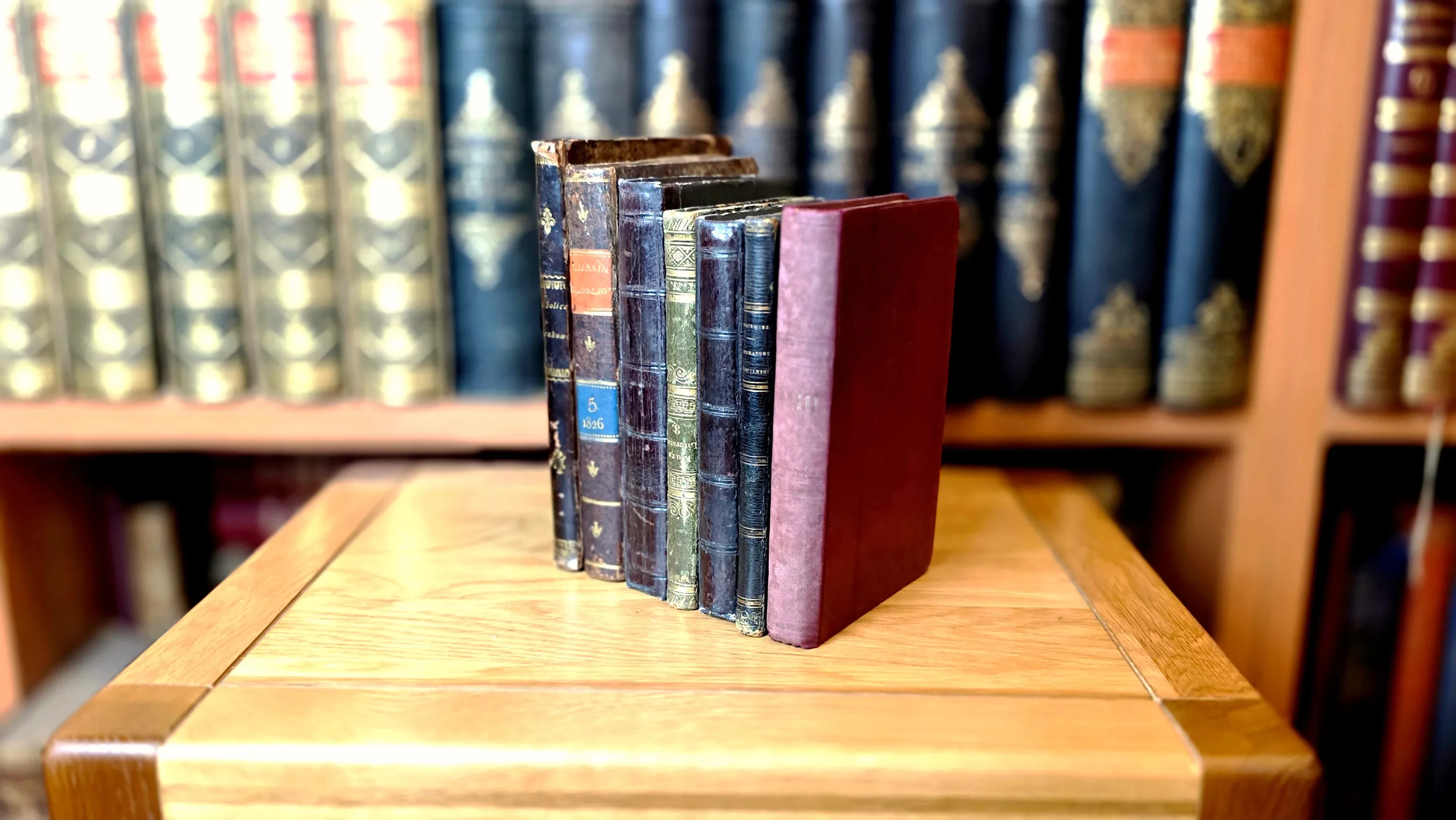

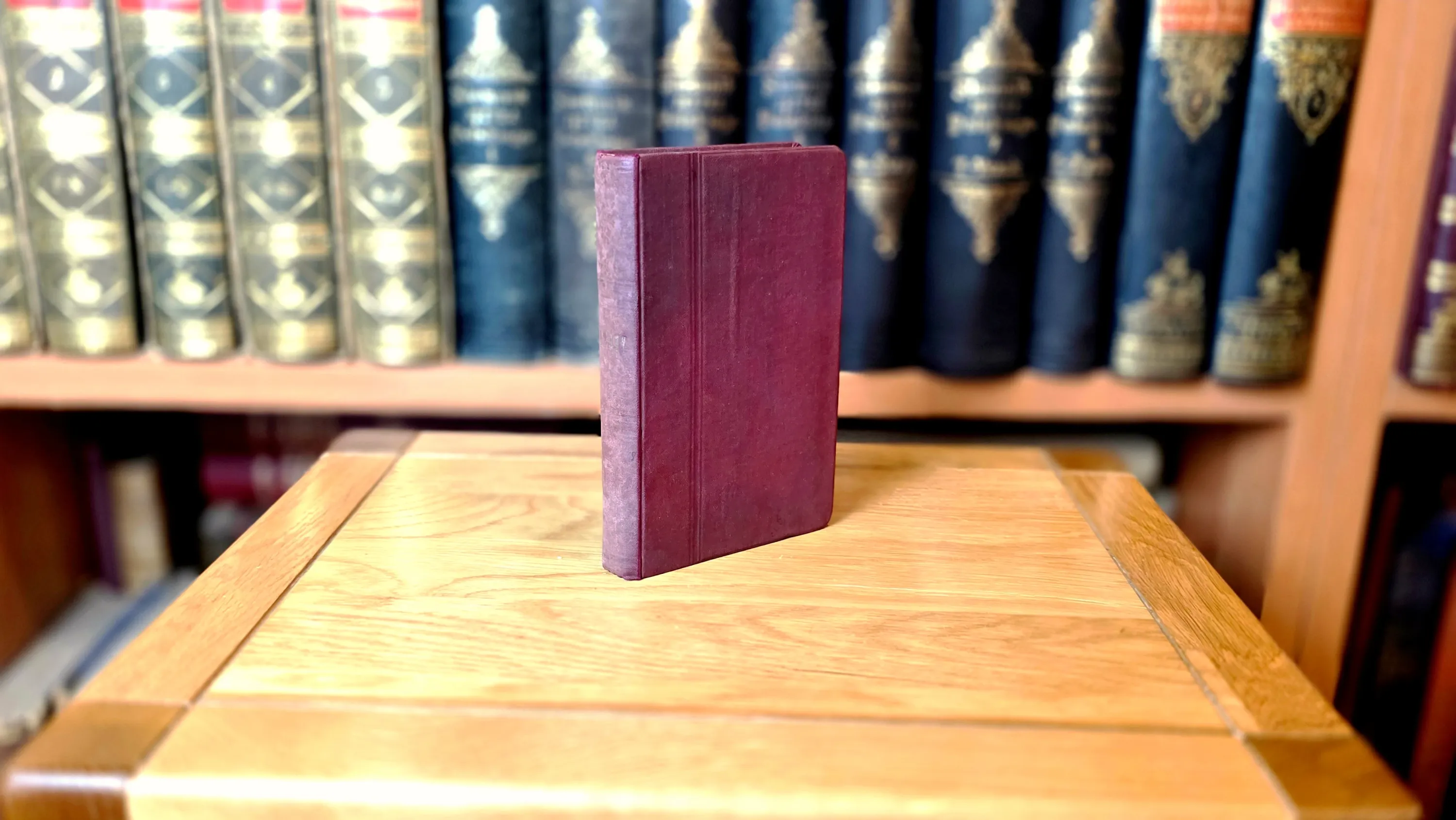
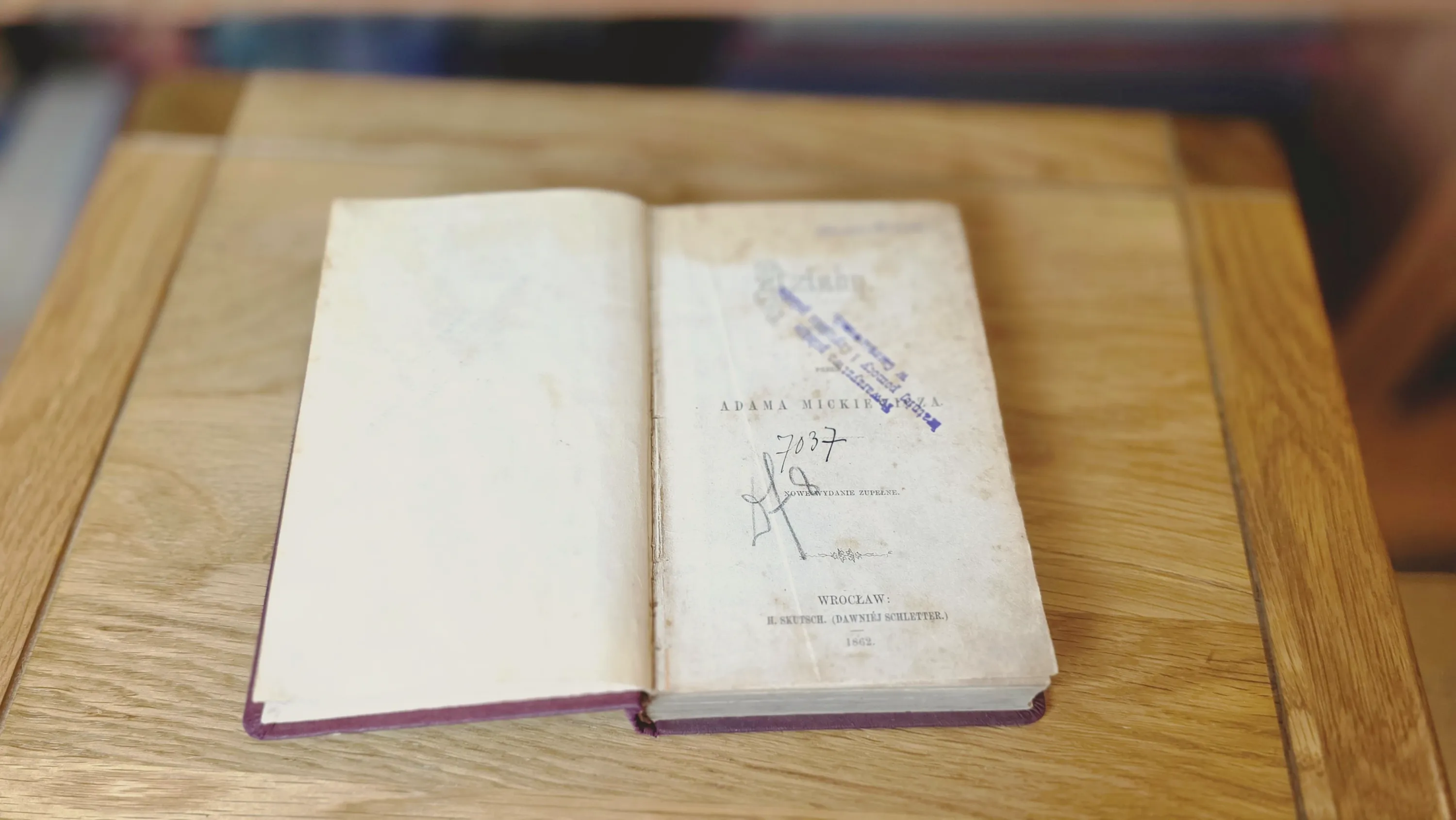
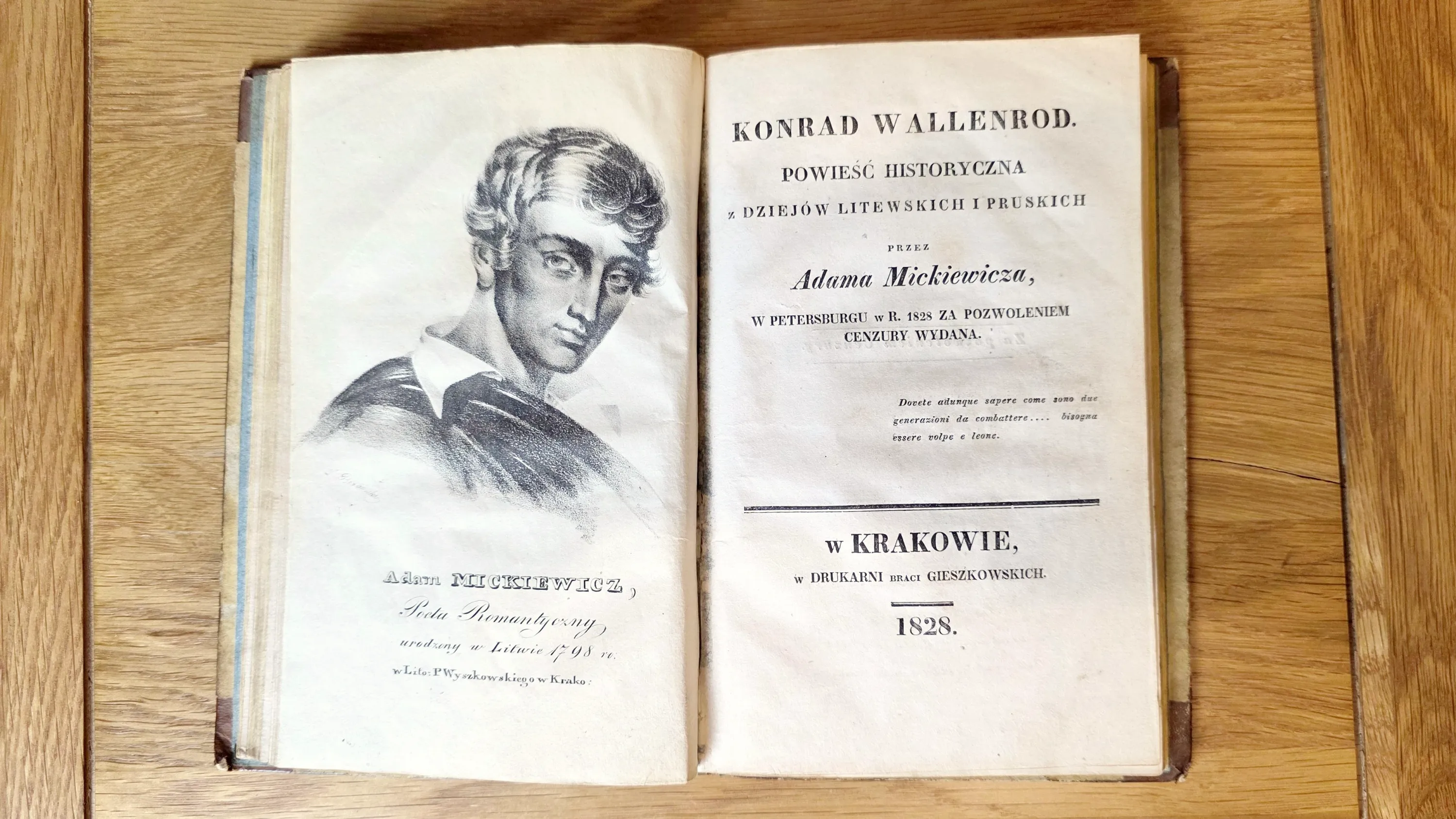
Mickiewicz, who never was. The first complete edition of "Dziady" in Polish lands and a book that is hard to find on the market
The best of the best | White ravens of Polish literature | Sobieski Antiquarian Bookshop
There are rare books. There are very rare books. However, there are also those that for years are not encountered at auctions, in antiquarian offers, or even in foreign collector markets. For most bibliophiles, they remain only entries in bibliographies, catalogs of the largest libraries, and scholarly studies. This group includes the Wrocław edition of Adam Mickiewicz's "Dziady" from 1862 – the first complete edition of this drama published in Polish lands.
The copy we present is the first to reach Sobieski Antiquarian Bookshop since the beginning of our activity. For us, it is not just another old book. It is a witness to history, a material trace of the struggle for Polish culture at a time when the printed word could be as dangerous as a weapon.
Through years of work in the antiquarian bookshop, we have learned that some books appear on the market regularly, others once every few years. However, there are also those we know mainly from bibliographies and library catalogs, not from actual antiquarian trade. For a long time, we classified the Wrocław edition of "Dziady" from 1862 in this group.
For many years, we have systematically monitored the market – browsing auction catalogs, sales archives, antiquarian offers, and foreign collector services. Despite this constant observation, we have not come across a copy of this edition offered for sale. Therefore, the moment the book arrived at Sobieski Antiquarian Bookshop was a special event for us. Even after many years of work, the antiquarian market can still surprise – and it is for such discoveries that this profession is pursued.
Why is this edition so important?
The history of "Dziady" is much more complicated than it might seem. Individual parts of the drama were created at different periods of Adam Mickiewicz's life. Parts II and IV were published in Vilnius in 1823. The most famous part today, Part III, was written after the fall of the November Uprising and published in Paris in 1832. Over the following decades, readers encountered the drama in various configurations, often without access to the entire work.
Only the edition published in Wrocław by Henryk Skutsch in 1862 brought the first complete text of "Dziady" printed in Polish lands, including all parts with explanations. This feature gives this edition a unique place in the history of Polish editing and Mickiewicz bibliography.
Paradoxically, however, it was not the first complete print overall. Such editions had already appeared earlier in exile, mainly in Paris. However, it was the Wrocław edition that made the complete "Dziady" accessible to readers living in the lands of the former Commonwealth.
For collectors, this is of great importance. In the world of bibliophilia, often not only the first edition of a work matters but also the first edition printed in a specific country, region, or historical context. In this case, we are dealing with such a breakthrough moment.
A book the partitioners did not want
To understand the uniqueness of this edition, one must go back to the 19th century.
After the defeat of the November Uprising, the name of Adam Mickiewicz was among those treated with the utmost suspicion by the Russian administration. He was no longer just a poet. He became a symbol of Polish independence aspirations, and his work was seen as a threat to the political order of the empire.
It was not only about Part III of "Dziady", containing famous prison scenes and uncompromising criticism of the tsarist system. The author's name alone was enough for censorship officials to scrutinize publications closely.
The Russian partition had one of the most restrictive censorships in Europe. Many of Mickiewicz's works could not be officially printed, and if they appeared, they often required censor intervention or were available only in a limited scope. Copies imported from abroad were sometimes confiscated at borders, and libraries maintained special banned books sections accessible only to a few.
That is why for much of the 19th century, the most important Polish books were printed outside the Kingdom of Poland – in Paris, Leipzig, Dresden, St. Petersburg, or Wrocław.
Why Wrocław?
At first glance, this may seem surprising. Why was the first complete edition of "Dziady" in Polish lands published precisely in Wrocław?
The answer lies in the complex political map of the 19th century.
Wrocław was within the borders of the Prussian monarchy. Although Prussia also pursued policies limiting Polish national life, the publication control system differed from the Russian one. In practice, there were many more opportunities to publish Polish books, especially by private publishers who saw the demand for national literature.
One of them was Henryk Skutsch, continuing the activity of the press taken over from the publisher Schletter. It was in his printing house that the edition now considered one of the most important Mickiewicz prints published in Polish lands before regaining independence appeared.
Interestingly, books published in Wrocław often then reached other partitions. They were bought by booksellers, transported across borders, passed privately, or ended up in libraries and reading rooms run by Polish social organizations. Thanks to this, national literature could reach places where official printing was difficult or even impossible.
One such testimony is the presented copy, bearing the stamps of the Polish Society of Mutual Aid and Polish Reading Room in Czernowitz. The presence of these ownership marks tells the story of the book's journey through various circles of Polish intelligentsia and shows that Mickiewicz's literature lived not only on private library shelves but also in institutions nurturing Polish culture far from Warsaw or Kraków.
Why were "Dziady" a dangerous book?
Today it is hard to imagine. Dziady belong to the school canon; almost every Pole knows fragments, and quotes from the Great Improvisation or the Warsaw Salon have entered the language of culture. However, in the mid-19th century, the situation was entirely different. For the partition authorities, it was not just literature. It was a text that strengthened national memory, built a sense of community, and reminded of lost statehood.
The greatest concern of censors was primarily Part III of the drama. Mickiewicz depicted the persecution of Vilnius youth by the tsarist administration, political trials, prisons, and the mechanisms of the Russian repressive apparatus. For contemporary readers, this was not literary fiction. Many knew similar events from personal experience or family stories.
That is why Mickiewicz's name remained one of the most inconvenient for Russian censorship for decades. Authorities understood perfectly that literature could influence as effectively as journalism or political activity. In a world without its own state, a book became a carrier of historical memory, language, and national identity.
Small books, great history
Many collectors note the characteristic format of 19th-century editions of Polish literature. Today's reader might get the impression that publishers deliberately printed books in small sizes. Indeed, the copy of Dziady from 1862 measures only about 11 × 17.5 cm.
Was this related to censorship?
Partly yes, although there were many more reasons.
Primarily, the small format meant lower production costs. Paper was one of the most expensive elements of the publishing process, so printers tried to maximize the use of each sheet. Books in octavo or duodecimo format were simply cheaper both in printing and binding.
Convenience of use was also important. The literature of Mickiewicz, Słowacki, or Krasiński was read repeatedly, often outside the home. The book could be tucked into a coat pocket, travel bag, or trunk. It was also easier to transport between partitions.
Book historians point out that mobility was of great importance in the 19th century. Polish publications circulated between Paris, Leipzig, Wrocław, Kraków, Lviv, Vilnius, and Warsaw, often crossing partition borders. Every additional centimeter of format meant higher transport costs and fewer copies could be carried.
As a result, the small format became a hallmark of many editions of Polish Romantic literature.
Mickiewicz wrote everywhere. Literally.
Many anecdotes are associated with Adam Mickiewicz's life, but one particularly well shows the poet's extraordinary talent.
Witnesses recalled that during social gatherings, he could improvise poetry for hours without any notes. It was enough to give a topic, a single word, or a motif for him to almost immediately begin reciting long, coherent, and vivid works. Such improvisations amazed listeners, and some even compared them to musical virtuoso concerts of the era.
It is no coincidence that improvisation became one of the most important motifs of Part III of Dziady. The Great Improvisation was not just a literary device. Mickiewicz knew this kind of creativity from his own experience.
The poet's acquaintances also recalled that sometimes after finishing an improvisation, he himself could not faithfully reproduce all the verses spoken. Literature was born in the moment and often remained only in the listeners' memory.
Books that built Polish libraries
The presented copy carries yet another extremely interesting story.
On the title page, the stamps of the Polish Society of Mutual Aid and Polish Reading Room in Czernowitz have been preserved. This is not an ordinary ownership mark.
In the second half of the 19th century, similar reading rooms served as local centers of Polish intellectual life. Lectures, meetings were organized there, press and books imported from various parts of Europe were made available. For many Poles living outside the former Commonwealth, they were places of contact with their native language and literature.
It is easy to imagine that this copy passed from hand to hand. Perhaps it was read by a student, teacher, official, or a young person who first encountered Konrad and the Great Improvisation precisely in the reading room in Czernowitz.
Such traces of use make old books cease to be merely collector's items. They become witnesses of history.
Mickiewicziana – some of the hardest books on the market
Every collector sooner or later comes to a similar conclusion – early editions of Adam Mickiewicz's works today belong to the most sought-after prints of 19th-century Polish literature.
This applies not only to the first Paris editions but also to editions printed in St. Petersburg, Moscow, Leipzig, Wrocław, or Warsaw. Some were published in small print runs, some were intensively read and simply did not survive in good condition to our times. Others remained in institutional libraries for decades and practically did not enter private circulation.
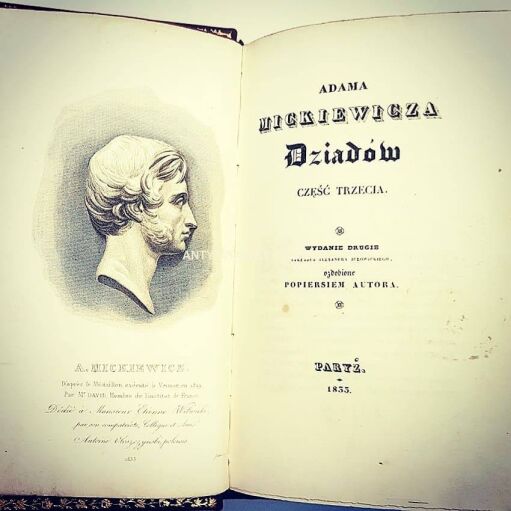
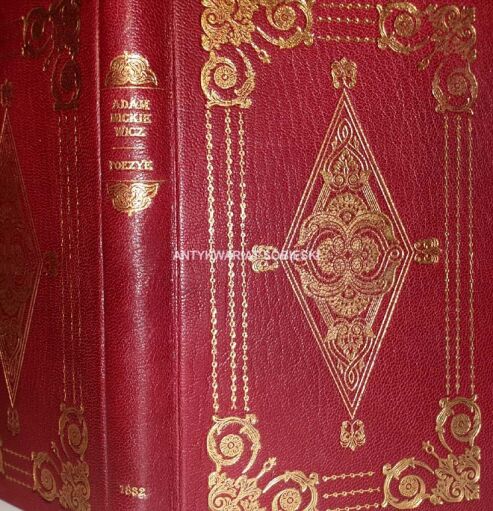
For this reason, every appearance of a well-preserved 19th-century Mickiewicziana arouses collectors' interest. It is no coincidence that for years we have devoted attention on our blog to the most interesting editions of the bard's works. We have already written about the first edition of "Pan Tadeusz", analyzing its history and actual rarity, we also presented the Paris edition of Part III of "Dziady" from 1833 with the author's bust, as well as the very interesting Warsaw edition of "Poems of Adam Mickiewicz" from 1832. Together, they create a fascinating story about the history of Polish Romantic books and the bibliophile market, where true rarities appear very rarely.

Adam Mickiewicz, Pan Tadeusz. First edition, Paris 1834.
The best of the best – a place where true white ravens appear
Since the beginning of Sobieski Antiquarian Bookshop, one idea has guided us – searching for books that remain out of reach for most collectors. It is not only about age or material value. True rarity is primarily a combination of historical, bibliographic significance and almost complete absence from the market.
From this idea, our original section "The best of the best" was born – a place dedicated to the rarest books, old prints, and collector's prints that we manage to find. Exceptional objects often absent from regular antiquarian trade, and sometimes known only from libraries, bibliographic studies, or old auction catalogs, appear here.
These are not only the most valuable items from our offer. They are primarily books that set the highest level of Polish collecting – first editions, first prints, outstanding old prints, works with documented provenance, and objects whose appearance on the market is an event in itself.
The "Dziady" from 1862 presented today perfectly fit this philosophy. It is a book we have not encountered in trade for years, despite constant monitoring of auction catalogs, sales archives, and offers of domestic and foreign antiquarian bookshops. Such moments remind us that even after many years of work, the antiquarian market can still surprise.
Mickiewicziana – a fascinating world we are still discovering
Adam Mickiewicz's work has occupied a special place in our interests for many years. 19th-century editions of his works today belong to the most sought-after prints of Polish literature. This applies both to the first Paris editions and editions printed in Warsaw, St. Petersburg, Moscow, Leipzig, or Wrocław.
Each of these books tells its own story. Some were created in exile, others appeared under strict censorship supervision, still others for decades reached only libraries or private collections. The common denominator remains one – today, these are extremely difficult objects to find.
Currently, we pay special attention to assembling as complete a collection as possible of first editions and first prints of Adam Mickiewicz's works. It is fascinating but very demanding work. It includes not only the most famous works such as Pan Tadeusz, Dziady, Crimean Sonnets, or Konrad Wallenrod, but also the first publications of the poet's smaller works that appeared in 19th-century periodicals and today are among the hardest-to-find Mickiewicziana. Every new discovery allows a better understanding of the bard's creative history and the old book market.
That is why we regularly publish extensive studies on the most interesting Mickiewicziana on our blog.
If you are interested in the history of the first complete edition of "Dziady", we also encourage you to read our earlier articles:
- The first edition of "Pan Tadeusz" – what is the real story of the most famous Polish poem and why is its first edition today one of the greatest collector's rarities?
https://antyksobieski.pl/blog/pierwsze-wydanie-i-pierwodruk-pana-tadeusza-adama-mickiewicza-czyli-jak-to-z-tym-tadziem-bylo - Paris edition of Part III of "Dziady" from 1833 with the author's bust – one of the most recognizable editions of Polish Romanticism.
https://antyksobieski.pl/blog/mickiewicz-dziady-cz-iii-wyd-paryz-1833r-z-popiersiem-autora - Warsaw edition of "Poems of Adam Mickiewicz" from 1832 – a very interesting edition showing the history of the bard's first editions.
https://antyksobieski.pl/blog/mickiewicz-poezye-adama-mickiewicza-piec-tomow-w-iednym-z-portretem-autora-w-warszawie-1832
Each of these articles shows that collecting old books is not only about searching for the oldest copies. It is primarily about discovering the history of people, printers, publishers, former owners, and the extraordinary paths books traveled through generations.
For the most demanding collectors
The rarest objects very often do not reach public sale. Many years of presence in the antiquarian market have allowed us to build a network of contacts with collectors, libraries, and owners of exceptional book collections. Thanks to this, we can help acquire works that have remained out of reach for most of the market for years.
Those interested in the rarest prints are invited to register in our online store and subscribe to the VIP Newsletter. This is how we inform about the most valuable objects appearing in our offer – often even before they are publicly presented.

Photo: Adam Mickiewicz, Four-year course of "Paris Lectures", Paris 1845. First edition.
Not only for collectors with unlimited budgets
Although in the "The best of the best" section we present books often reaching values of many or even tens of thousands of zlotys, the world of old books is not reserved only for the wealthiest collectors.
Our offer regularly includes beautiful, carefully selected sets of 19th- and 20th-century editions of literary classics, elegant bindings, first editions of lesser-known authors, and interesting historical and scientific books that allow starting a collection without the need to allocate huge funds.
We believe that collecting should start with passion, and only later with market value.


Photo: Adam Mickiewicz, first print of the sonnet To Niemen. "Warsaw Daily", 1826 (July–September).
Welcome to the gallery
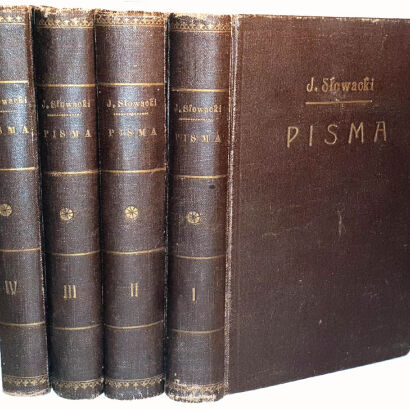
In the gallery below, we present not only the discussed edition of "Dziady" but also other exceptional works of Polish Romanticism currently in our offer. Among them, you can find rare editions of works by Adam Mickiewicz, Juliusz Słowacki, Cyprian Kamil Norwid, and other creators of the era.
Perhaps there awaits the book that will become the jewel of your library or the beginning of a fascinating collection.
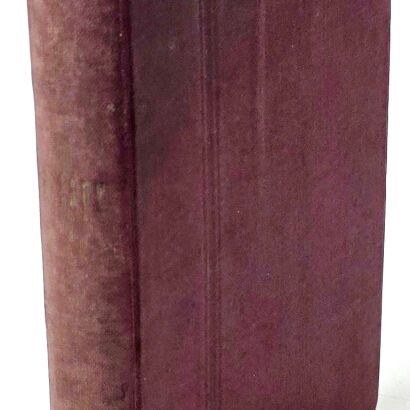


![MICKIEWICZ - PISMA t.1-4 [komplet] Paryż 1844 wyd. profesorskie](/media/products/d7f8e7211fc70867ec3250982866c984/images/thumbnail/small_20201123-130437.jpg?lm=1765540476)
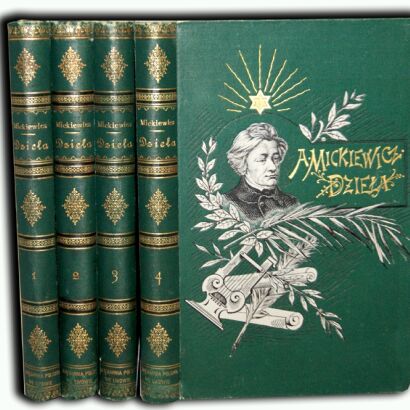


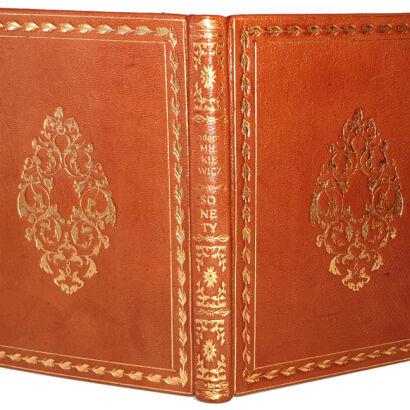

![MICKIEWICZ- DZIEŁA POETYCKIE wyd. Nowogródek 1933r. [red. Pini]](/media/products/771425d3eac079c0f3c259e74596d91d/images/thumbnail/small_20191028-132320.jpg?lm=1765540813)


![MICKIEWICZ- KURS PIERWSZOLETNI T.1-4 [komplet w 4 wol.]. Paryż 1842-1845, pierwodruki](/media/products/18870c7899d0fbacb96b5553d7aad901/images/thumbnail/small_Abatch-20251020-124052.jpg?lm=1765624509)
![MICKIEWICZ- PIERWODRUK SONETU DO NIEMNA [DZIENNIK WARSZAWSKI 1826 (LIPIEC SIERPIEŃ WRZESIEŃ)]](/media/products/6a516dec2d71400928e93ed5db17bb39/images/thumbnail/small_Abatch-20251020-123202.jpg?lm=1765538218)








 Polish