Wiktor Feliks Szokalski and "Fantazyjne objawy zmyslowe / Fancy Sensory Symptoms" - between science, dream, and the birth of modern psychology
Wiktor Feliks Szokalski and "Fantazyjne objawy zmyslowe / Fancy Sensory Symptoms" – between science, dream, and the birth of modern psychology
Among nineteenth-century Polish scientific works, a special place is held by the two-volume work of Wiktor Feliks Szokalski – Wiktor Feliks Szokalski – entitled "Fancy Sensory Symptoms. Dreams, Specters, and Hallucinations / Dreamy Reveries" (Kraków 1861–1863). This is a book that escapes simple categories: it is simultaneously a medical treatise, a psychological study, and an attempt to capture what is most fleeting in human experience – the boundary between perception and imagination.
Szokalski, one of the pioneers of Polish ophthalmology, did not limit himself to treating eye diseases. He was interested in seeing itself – both in the physiological and psychological sense. In his view, hallucinations, dreams, and illusions were not merely "errors" of the mind but phenomena requiring systematic study. In this sense, his work was ahead of its time, situated at the intersection of medicine, physiology, and the emerging experimental psychology.

Szokalski and the attempt at a scientific description of dreams
Fancy Sensory Symptoms is one of the earliest consistent studies in Central Europe concerning dreams and visual hallucinations. The author attempts to explain the mechanisms of dream formation, referring to physiological processes and the work of the nervous system.
Importantly, Szokalski did not treat dreams as purely metaphysical phenomena. He attempted to “demystify” them and describe them through the language of science. It is precisely this approach that leads contemporary scholars to compare his work with later concepts of depth psychology, although Szokalski himself remained much closer to nineteenth-century medicine and physiology than to the psychoanalytic theories that would emerge later.
For readers interested in the history of this publication, digital editions of the original work may also be of interest:
Fantazyjne objawy zmysłowe – Google Books
Fantazyjne objawy zmysłowe Tom I
Fantazyjne objawy zmysłowe Tom II
Freud and the birth of psychoanalysis
Several decades later, similar questions were taken up by Sigmund Freud, whose works revolutionized the way of thinking about the human psyche.
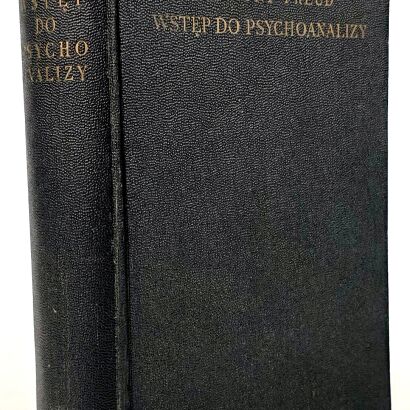
In Freud's classic texts – such as "Introductory Lectures on Psychoanalysis" Introductory Lectures on Psychoanalysis (1935 edition), "The Ego and the Id" The Ego and the Id or "The Psychopathology of Everyday Life" The Psychopathology of Everyday Life – dreams, slips of the tongue, and unconscious actions become the key to understanding the human psyche.
Freud shows that what seems accidental (dreams, slips, forgetfulness) can have deep psychological meaning. In this context, Szokalski appears as one of the precursors of the thinking later developed by psychoanalysis – although, of course, his language and method remain rooted in nineteenth-century medicine.

Sigmund Freud with a cigar in the famous photograph from the early 1920s.
Polish contexts: Higier and the development of knowledge about the psyche
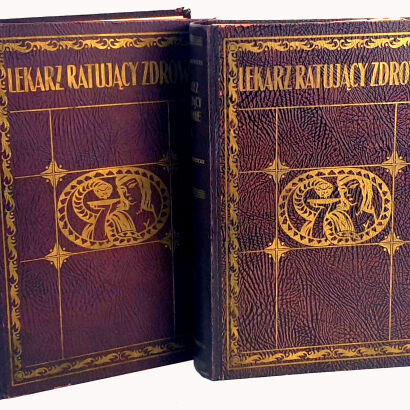
It is also worth mentioning Polish attempts at systematizing psychological and sexual knowledge from the early twentieth century. A special place is held by the monumental publication of Marcuse Higier – "Encyclopedia of Sexual Knowledge" (vols. 1–4, 1937) Marcuse-Higier – Encyclopedia of Sexual Knowledge.
This work, although created in a different context than the works of Szokalski or Freud, shows the same process: the gradual "scientification" of areas of human experience that previously remained in the realm of taboo, philosophy, or speculation.

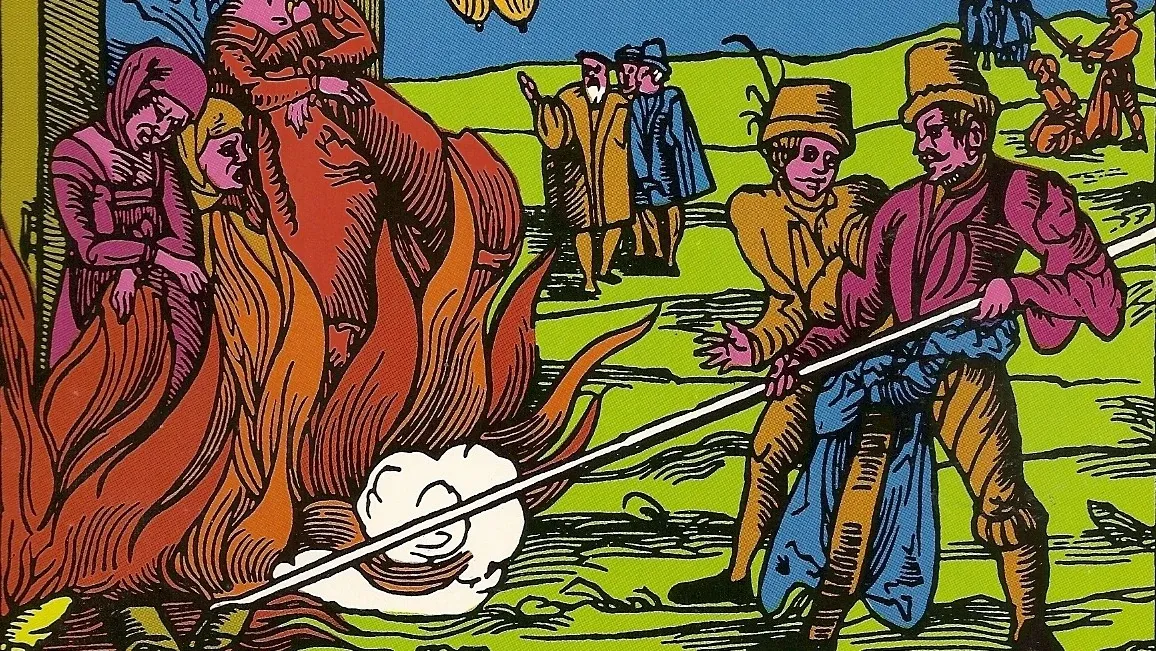
Source: Wikimedia Commons – Burning witches (Malleus Maleficarum illustration).
At the same time, this process has a much longer history. Early modern printed books already show that attempts to explain psychological, emotional, and “unnatural” phenomena oscillated between demonology and medicine. A notable example is the monumental work Johann Weyer, Opera omnia (Amsterdam, 1660), which includes, among others, the treatise De lamiis liber as well as medical and philosophical writings.
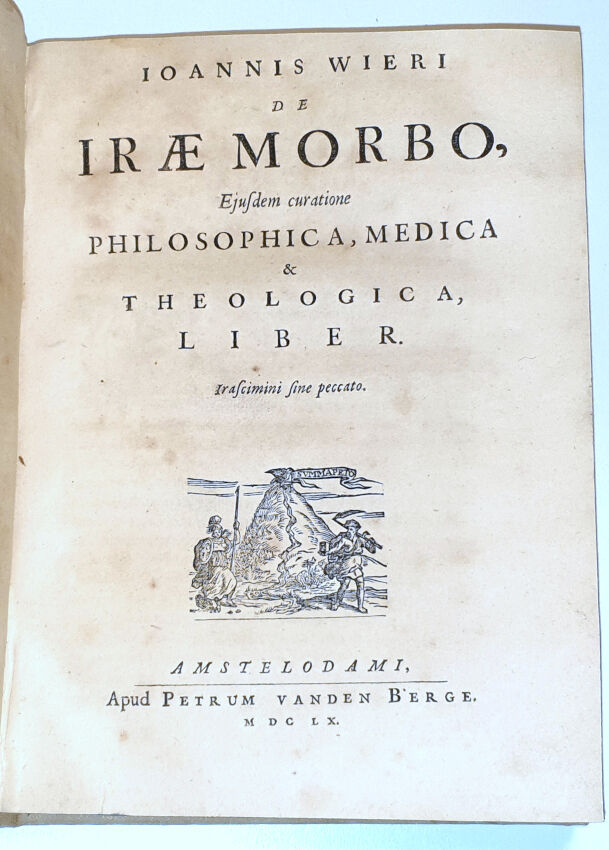
Weyer, known as one of the most important critics of witch hunts and the author of De praestigiis daemonum, interpreted certain phenomena attributed to witchcraft not as the intervention of supernatural forces, but as the effects of mental disorders, melancholy, and diseases of the mind. In this sense, his writings are today often read as one of the early stages in the transition from demonology toward a medical account of human behavior.
Old prints and fascination with the beginnings of knowledge
Works such as Fancy Sensory Symptoms today are not only a source of historical knowledge but also exceptional collector's items. Old medical and psychological prints hold a special place in the bibliophile world – combining scientific value with the material beauty of nineteenth-century books.
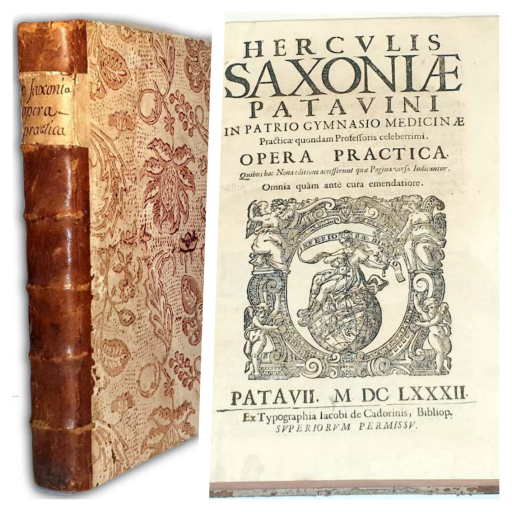
The role of old prints and their significance for the history of medicine can also be read about in the context of other Polish works, e.g., in the entry about the work Herculis Saxoniae Medicinae from 1682 Herculis Saxoniae Medicinae 1682 – Polish work of the Zamość Academy, which shows how important early attempts at systematizing medical knowledge were in Poland and Europe.
The book as a collector's item and gift
Collecting such publications today is not exclusively the domain of medical historians or psychologists. It is also a passion of first edition collectors, bibliophiles, and those interested in the history of ideas. Each book of this type carries not only content but also a material history – binding, signs of use, provenance.
In this sense, an old print can also be a unique gift – an object that combines intellectual and emotional value. You can read about the significance of the book as a gift and symbolic object here Book as a gift – meaning and choice.
Instead of a conclusion
Fancy Sensory Symptoms by Szokalski is a book that stands at the crossroads of eras. On one hand – rooted in nineteenth-century medicine, on the other – surprisingly close to later theories of Freud and the development of depth psychology.
For the contemporary reader and collector, it is not only a scientific text but also a testimony of the moment when science began seriously studying what is most elusive: dreams, visions, and fantasies of the human mind.
Sources and Further Reading
- Wiktor Feliks Szokalski – *Fantazyjne objawy zmysłowe* (Google Books)
- Wiktor Feliks Szokalski – *Fantazyjne objawy zmysłowe*, Vol. I
- Wiktor Feliks Szokalski – *Fantazyjne objawy zmysłowe*, Vol. II
- Damian Włodzimierz Makuch — “Fantazyjne objawy zmysłowe” by Wiktor Feliks Szokalski and the Concept of the Nineteenth-Century Observer
- CEJSH — Scholarly article on Szokalski and modern theories of perception
- Jonathan Crary — *Techniques of the Observer*
- Michel Foucault — *The Birth of the Clinic*
- Michel Foucault — *Madness and Civilization*
- Oliver Sacks — *Hallucinations*
- Sigmund Freud — *Introductory Lectures on Psychoanalysis*
- Sigmund Freud — *The Psychopathology of Everyday Life*
- ArXiv — “Sleeping Beauties” in Science
![FREUD, MARCUSE; HIGIER- ENCYKLOPEDIA WIEDZY SEKSUALNEJ t.1-4 [komplet w 4 wol.] wyd.1937](/media/products/fdcea9c52f43ce0807f6a2586e67733e/images/thumbnail/small_batch-20260715-150028.jpg?lm=1784200696)

![SZOKALSKI - FANTAZYJNE OBJAWY ZMYSŁOWE t.1-2 [komplet w 2 wol.], wyd. 1861-1863](/media/products/4d62dbd453f6fbb1ab522dd6e686a8a9/images/thumbnail/small_wenet20260305-150418.jpg?lm=1773926479)
![[PIONIERSKA PRACA OJCA POLSKIEJ OKULISTYKI] SZOKALSKI- WYKŁAD CHORÓB PRZYRZĄDU WZROKOWEGO U CZŁOWIEKA t. 1 1869](/media/products/cea5b41695503b7ac816b25cdac7ddef/images/thumbnail/small_batch-20240916-101950.jpg?lm=1765540594)
![LOMBROSO - CZŁOWIEK - ZBRODNIARZ W STOSUNKU DO ANTROPOLOGII, JURYSPRUDENCYI I DYSCYPLINY WIĘZIENNEJ t.1-3 [komplet w 1 wol.]](/media/products/74e965f0b8aa85846bfaf027bf9c1f42/images/thumbnail/small_batch-20220622-134704.jpg?lm=1765539361)








 Polish