Where to buy collector's editions of old Polish literature?
Old book or a true collector's treasure?
Not every old book is valuable. The value of a copy is primarily determined by its rarity, condition, completeness, first edition, provenance, binding, or author's autograph. In our guide, we show where to look for valuable books, how to recognize a collector's copy, and what to watch out for before purchasing.
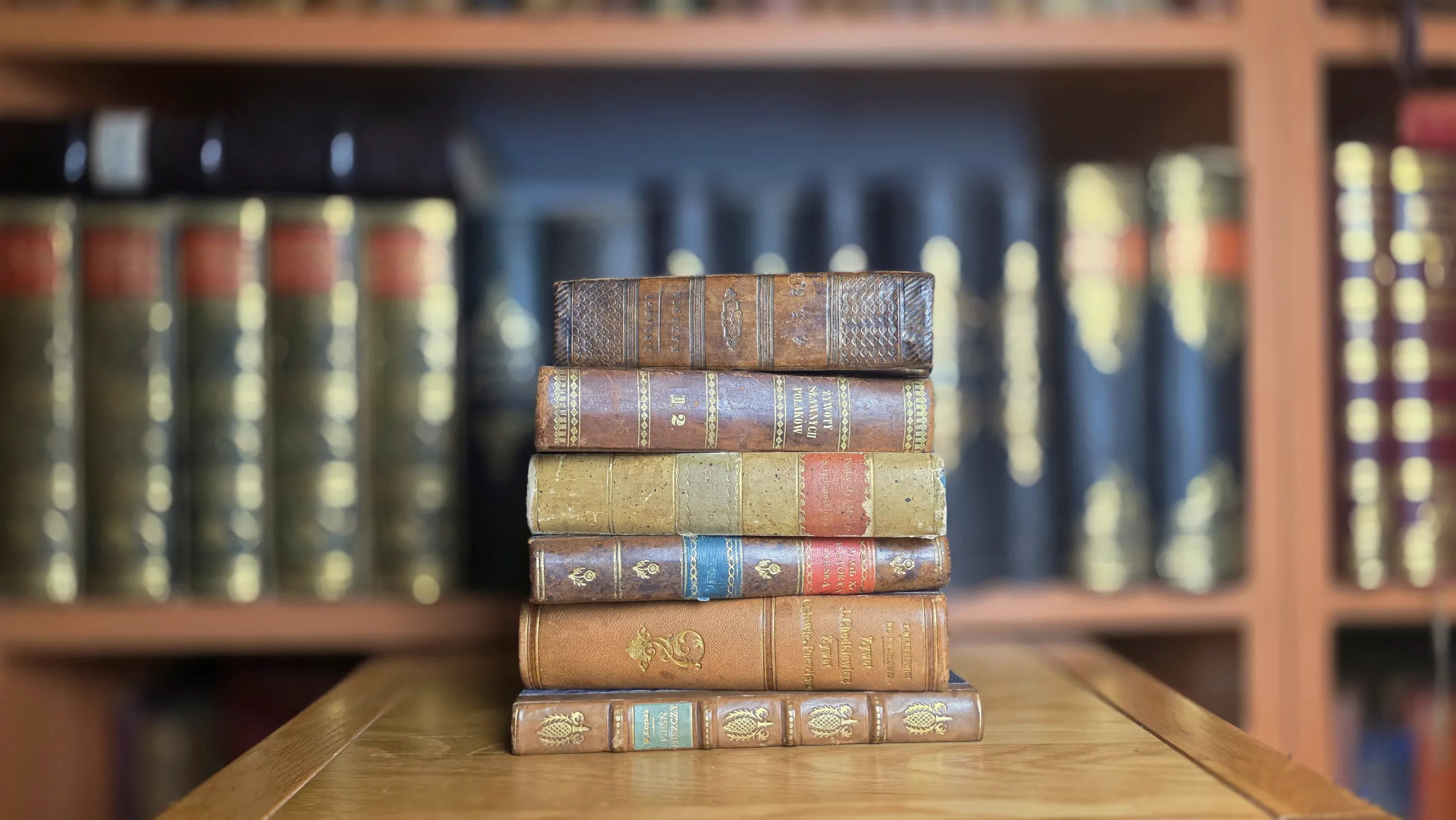
Where to buy collector's editions of old Polish literature? A practical guide on how to choose a valuable copy
TL;DR You can buy collector's editions of old Polish literature in stationary antiquarian bookstores (there are approximately 150–250 operating in Poland), on auction platforms (OneBid, DESA Unicum, Allegro Kolekcje), and at collector fairs and markets. The value of a copy depends primarily on its condition and completeness, and only then on whether it is a first edition, its provenance, binding, autographs, and rarity. For the most sought-after titles, there are specific price ranges: "Ferdydurke" from 1938 is 4–8 thousand PLN, "Pan Tadeusz" from 1834 is 15–50 thousand PLN, and "Przedwiośnie" from 1925 is 1000–4999 PLN. A trusted source combining sales, auctions (48 editions on OneBid), free appraisals, and bookbinding services is Antykwariat Sobieski.
What are collector's editions of old Polish literature and why is it worth buying them
Collector's editions of old Polish literature are copies with above-average market value, resulting not from age alone but from a combination of rarity, condition, edition type (first, limited), provenance, and special features such as the author's autograph or artistic binding. These editions have historical, editorial, and collector significance, and their value can far exceed the price of an ordinary, albeit old, book.
It is crucial to distinguish between the terms "old book" and "valuable book." Age is only one factor. A mass-produced 19th-century edition in poor condition may be worth a few dozen PLN, while the first edition of "Ferdydurke" from 1938 reaches 4–8 thousand PLN on the market. Value is built by rarity, demand, cultural significance, and condition, not just the printing date.
Why is it worth being interested in this segment? Firstly, the sentimental aspect: interacting with a physical trace of literary history offers an experience unavailable in digital editions. Secondly, the investment aspect. The art and antiques market in Poland reached a value of 544.6 million PLN in 2025 (GUS data), and despite a 17.1% annual correction, the long-term trend remains upward. The segment of books and old prints constitutes an estimated 5–10% of this market, i.e., about 25–55 million PLN annually. Thirdly, the prestige aspect: building a private library is an investment in cultural capital that can be passed on to future generations.
Where to buy collector's editions – overview of purchase channels
The choice of purchase channel depends on your priorities: personal contact with the copy, auction transparency, price availability, or transaction security. Below are four proven paths along with their specifics.
Stationary antiquarian bookstores – personal contact and the possibility to inspect the copy
A stationary antiquarian bookstore is the best choice for a beginner collector who wants to see the book before buying. Physical contact allows you to assess the condition of the binding, paper quality, completeness of pages, and any signs of intervention not visible in photos. Additionally, there is expert advice and the possibility to negotiate the price.
There are approximately 150–250 active stationary antiquarian bookstores in Poland. The main centers are Warsaw (including Kwadryga, Atticus, Antykwariat na Wiśniowej, Galeria Książki Kolekcjonerskiej), Kraków (Rara Avis and antiquarian bookstores in Kazimierz), Wrocław (Antykwariat Szarlatan), and Poznań (Antykwariat im. Żupańskiego). In Kalisz, the oldest city in Poland, operates Antykwariat Sobieski, which offers about 20,000 volumes on site, including old prints, first editions, and bibliophile books.
The limitation of this channel is the limited selection in one place and the need to travel. If you are looking for a specific title, it is worth checking the online offer in advance and arranging a viewing.
Online auction platforms – reach, transparency, and competition
Online auctions are the fastest-growing purchase channel, combining wide reach with price transparency. However, the three main platforms differ significantly in terms of commissions, specialization, and volume.
|
Platform |
Buyer’s commission |
Specialization |
Volume / turnover |
Remarks |
|---|---|---|---|---|
|
OneBid |
10–20% |
Aggregator of auctions from many antiquarian houses |
Large, growing |
Access to price history; Antykwariat Sobieski runs 48 auction editions here |
|
DESA Unicum |
20% |
The largest bibliophile and art auctions |
218 million PLN turnover in 2025, over 50% of the auction market |
Dominant player, high-quality catalogs |
|
Allegro Kolekcje / Antykwariat |
none (purchase price) |
The largest secondary market by volume |
26 million books sold in 2025 |
Lower prices but risk of unverified sellers |
OneBid is a good choice for beginners because it aggregates offers from many auction houses and allows tracking price history of specific titles. DESA Unicum offers the largest and best-prepared bibliophile catalogs, but the 20% commission is the highest. Allegro Kolekcje offers the largest selection and lowest prices but requires particular caution when verifying the seller.
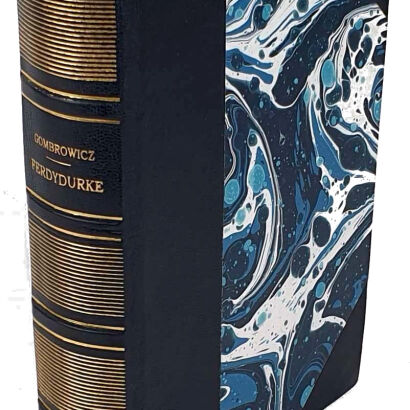
Specific price examples from auctions show market realities. The first edition of "Ferdydurke" from 1938 with illustrations by Bruno Schulz was offered for 7999 PLN at Antykwariat Sobieski, while the starting price on OneBid was about 714 EUR (approx. 3100 PLN). Miłosz's "Ocalenie" from 1945 reaches 140–400 PLN on OneBid depending on the binding, and Żeromski's "Przedwiośnie" from 1925 is 1000–4999 PLN.
Collector fairs and markets – bargains and direct negotiations
Collector fairs and markets are a channel for patient bargain hunters. Cyclical events, such as the Collector Fair in Łódź or flea markets (calendar available, among others, at starocia.com), gather many sellers in one place and allow direct price negotiations.
The advantage is a large selection and the possibility to inspect many copies during one visit. The limitation remains the seasonality of events, the need for quick decisions, and the risk of overlooking defects amid the flood of offers. At fairs, it is worth coming with a list of sought titles and basic knowledge of evaluation criteria, which I present in the further part of the guide.
Purchases directly from online antiquarian bookstores – security and certification
Buying directly from a reputable online antiquarian bookstore combines e-commerce convenience with transaction security. A model example is Antykwariat Sobieski, which labels each copy with a certificate of authenticity, offers free remote appraisal (including via WhatsApp), and international shipping. Membership in the Association of Polish Antiquarians and Art Dealers and the International Antiquarian Union CINOA formally confirms credibility.
When choosing an online antiquarian bookstore, pay attention to four elements: certificates of authenticity, membership in industry organizations, transparency of descriptions (condition, completeness, provenance), and business history. A reputable antiquarian does not hide defects but describes them in detail.
How to choose a valuable copy – evaluation criteria step by step
Assessing the value of a copy requires a method. The hierarchy of criteria below, from the most important to detailed, will allow you to consciously evaluate each book before purchase.
Step 1 – Condition and completeness (the most important criterion)
Condition is the foundation of valuation. The scale ranges from an "ideal" copy, looking freshly printed, to a volume requiring restoration. When inspecting, check for missing pages, loose gatherings, cracked spine, signs of moisture (so-called foxing, i.e., rusty spots on paper), underlining, and library stamps.
The simple rule applies here: it is better to buy a copy in worse condition but complete than incomplete in better visual condition. A missing page or title leaf drastically lowers value. Example: "Przedwiośnie" from 1925 in a publisher's brochure costs about 1000 PLN, while a complete copy in full leather reaches 4999 PLN.
Step 2 – Is it a first edition? How to check
First edition is the first edition of the text in a given form, and its identification requires knowledge of several techniques. Check number lines (number line), i.e., sequences of digits on the publishing data page, compare the date on the title page with the copyright date, and pay attention to "points of issue," i.e., specific printing features of a given edition.
An example of an unmistakable distinguishing feature is the 1938 "Ferdydurke," whose first edition contains illustrations by Bruno Schulz. Use central library catalogs for verification: NUKAT, the digital Polona library, and the global WorldCat catalog. It is also worth reading the detailed guide to recognizing collector's editions, which explains step by step how to distinguish first editions from reprints.
|
|
|---|
|
Step 3 – Provenance, i.e., where the copy comes from
Provenance is the ownership history of the book, documented by ex-libris, stamps, dedications, and ownership inscriptions. A copy from the library of a famous person or prestigious institution may be worth 30–100% more than an identical volume without documented history.
At the same time, be cautious: stamps from ordinary public libraries may lower value and, in extreme cases, indicate illegal origin. Always verify provenance with an expert.
Step 4 – Binding – whether original and in what condition
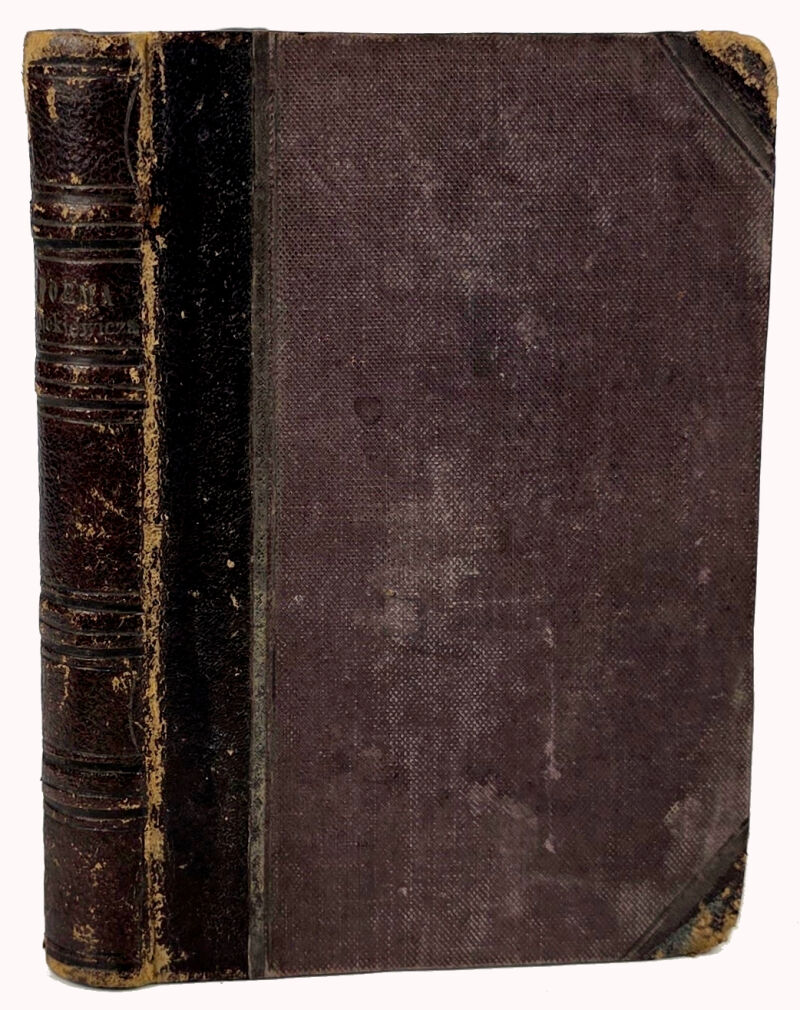
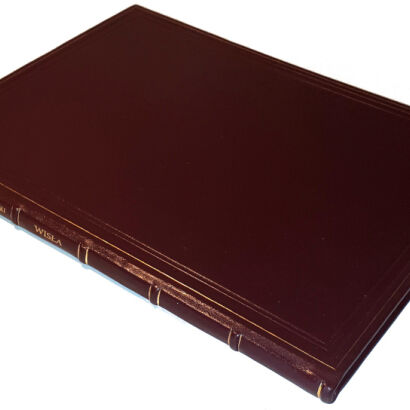
Distinguish between the publisher's binding (original, from the printing house) and the bookbinder's binding (made later). Binding in natural leather, both full leather and half leather, increases the value of the copy by 30–100% or more, and artistic binding with gilding even more.
If the copy requires new binding, it is worth using a professional workshop. Antykwariat Sobieski offers hand bindings in natural leather, restoration, and gilding, carried out with traditional craft techniques. The cost of professional restoration is 200–600 PLN, and full leather binding costs about 400–1500 PLN or more.
|
|
|---|

|
Step 5 – Autographs, dedications, and other special features
The author's autograph is the strongest value multiplier, capable of multiplying the price of a copy. A dedication from the author to a famous person raises the value even more. However, remember that not every signature is an autograph: expert verification is necessary to distinguish an authentic signature from an imitation.
Special features also include illustrations by famous artists (such as the mentioned Schulz drawings in "Ferdydurke"), limited editions, and preserved dust jackets, which themselves can be valuable elements.
Step 6 – Rarity and print run – how many copies survived
The smaller the print run and the fewer surviving copies, the higher the value. The first print of "Pan Tadeusz" from 1834 was issued in about 3000 copies, of which only a few dozen remain in good condition today. Hence prices reaching 15–30 thousand PLN, and the Podlaska Library paid 24 thousand PLN for its copy in 2021.
Data on print runs can be found in national bibliographies, library catalogs, and historical-literary studies.
|
|
|---|

|
Checklist for evaluating a copy before purchase
Copy evaluation checklist
Have I checked the completeness of pages and the title leaf?
Have I verified the publication date in NUKAT or Polona?
Have I confirmed that it is a first edition (number lines, points of issue)?
Have I assessed the condition of the spine, gatherings, and paper (foxing, moisture)?
Have I checked whether the binding is original and in what condition?
Have I verified provenance (ex-libris, stamps, dedications)?
Have I confirmed the authenticity of any autograph with an expert?
Have I compared the price with market ranges for the given title?
Have I checked the credibility of the seller (certificates, industry membership)?
Have I requested photos of all pages and binding details?
Common mistakes when buying and how to avoid them
Awareness of typical pitfalls is half the success. Here are seven common mistakes and specific ways to defend against them.
1. Buying a reprint as an original. Reprints can closely resemble originals. Check the printing date, paper quality, smell, and number lines, then verify the copy in NUKAT or Polona.
2. Not checking completeness. Always compare the copy with the bibliographic description (number of pages, illustrations, maps) and ask the seller for photos of all pages.
3. Ignoring condition. Foxing, moisture marks, and cracked spines drastically reduce value. Do not buy "blindly" without photos and condition description.
4. Buying from an unverified seller. The risk especially concerns platforms with unverified offers. Choose sellers with certificates, membership in industry organizations, and documented auction history, like Antykwariat Sobieski.
5. Amateur repairs and cleaning. Never try to glue, clean, or repair a book yourself. The cost of professional restoration (200–600 PLN) is much lower than the loss of value caused by amateur intervention.
6. Relying solely on the book's age. Not every old book is valuable. Mass-produced 19th-century editions in poor condition have low market value.
7. Not verifying provenance. A stamp "Public Library in X" may mean the copy was stolen or withdrawn from circulation. Always check the legality of origin.
What to watch out for on your first purchase
Do not buy a reprint as an original: verify the date and paper in NUKAT.
Do not buy without photos of all pages and condition description.
Do not repair the book yourself: entrust it to a professional.
Do not rely solely on age: check edition, completeness, and condition.
Do not buy from a seller without certificates and business history.
Do not skip verifying provenance and legality of origin.
Do not make decisions under time pressure: compare prices across several channels.
What next after purchase – storage, conservation, and building a collection
Purchase is just the beginning. Proper storage and conservation determine whether the value of your copy will last for decades.
How to properly store valuable books
Archival standards recommend a temperature of 16–18°C and relative humidity of 45–55% RH. Protect from UV radiation (blinds, shutters) and use acid-free materials such as boxes and interleaves. Avoid basements, attics, direct sunlight, heaters, and moisture, which accelerate paper and binding degradation.
When and where to commission professional conservation
Signs requiring intervention include a cracking spine, loose pages, mold traces, and acidic paper. Costs of professional conservation are as follows: restoration 200–600 PLN, full leather binding 400–1500 PLN or more, fumigation from 100 PLN. The bookbinding workshop of Antykwariat Sobieski performs bindings in vegetable-tanned natural leather, gilding, and personalization using traditional craft techniques – more about these bookbinding services can be read on the antiquarian's website.
How to develop a collection – trends and next steps
Trends for 2025/2026 indicate growing interest in interwar literature (Gombrowicz, Schulz, Witkacy) and first post-war editions (Miłosz, Herbert). At the same time, demand for mass-produced 19th-century editions in poor condition is falling. Gain market knowledge from the OneBid 2025/2026 report (400 pages of analysis), the Antykwariat Sobieski blog (categories "Collector's Guide" and "First Editions"), and the Artinfo.pl service with auction results.
When developing a collection, you can choose one of several paths: investing in a specific period (e.g., only Young Poland), collecting autographs, or building a thematic library. Antykwariat Sobieski offers advisory services for building a private library within the "Exclusive Libraries" service, helping to select copies according to the collector's profile and budget.
Mini-glossary of bibliophile terms
-
First edition – the first edition of the text in a given form; usually the most sought-after and valuable.
-
Provenance – documented ownership history of the book (ex-libris, stamps, dedications).
-
Points of issue – specific printing features of a given edition allowing it to be distinguished from other editions.
-
Half leather / full leather – binding in leather on the spine and corners or on the entire cover.
-
Foxing – rusty spots on paper caused by moisture and microorganism growth.
-
Number lines – sequence of digits on the publishing page indicating the print number.
-
Ex-libris – a book ownership mark, usually graphic, placed on the inside cover.
Editorial: Paweł Kołata, owner of Antykwariat Sobieski


![MICKIEWICZ - POEZYE. T. 1-4 [w 2wol.] Paryż 1828-1832, DZIADY cz. III Paryż PIERWODRUK](/media/products/98c0841dd6432c86359ce7021693b4c8/images/thumbnail/small_batch-20220822-155018.jpg?lm=1765538805)




 Polish