Rare editions of Henryk Sienkiewicz - a practical collector’s guide: how to recognize first editions and early prints, and where to safely buy them?
Rare editions of Henryk Sienkiewicz - how to recognize first editions and safely buy antiquarian classics
A practical guide for book collectors, showing how to distinguish first editions from later reprints, what to look for in auction descriptions, and where to find valuable copies of the “Trilogy”, “Quo vadis”, and other works by Sienkiewicz without the risk of misidentification.
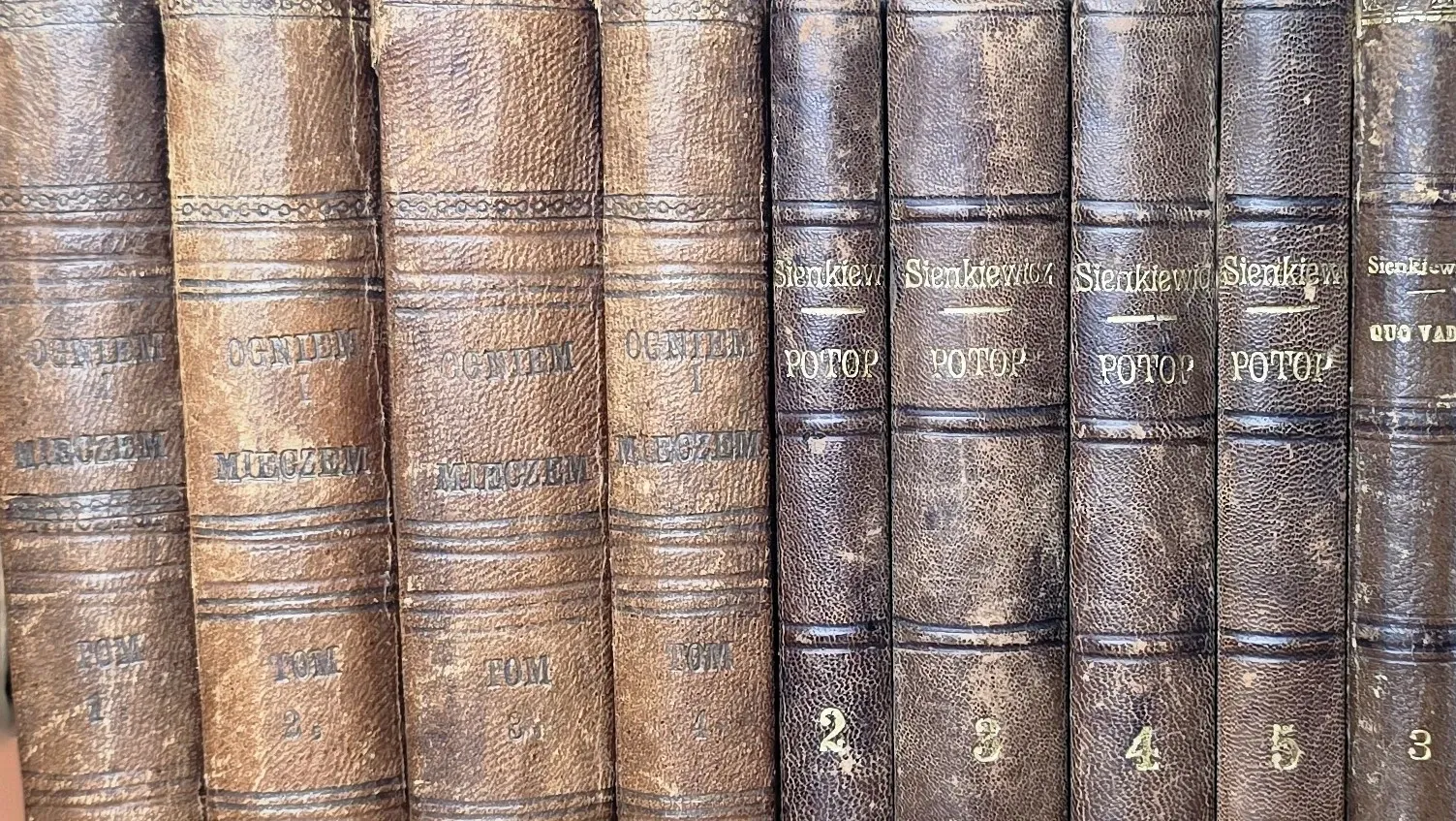
Rare editions of Henryk Sienkiewicz – a practical collector’s guide: how to recognize first editions and early prints, and where to safely buy them?
Table of contents
Why are rare editions of Henryk Sienkiewicz so highly valued?
Types of Sienkiewicz editions – what exactly are we collecting?
How to recognize a first edition of Sienkiewicz step by step
Mini-case: “Quo vadis” – how to distinguish valuable editions from common reprints
Where to buy rare Sienkiewicz books safely?
How to read auction and catalogue descriptions – a practical guide
Leather bookbinding and restoration – when it is worth it and when it is not
How to store rare editions of Henryk Sienkiewicz
Sienkiewicz collector FAQ
Mini glossary of collecting terms
Sources
Why are rare editions of Henryk Sienkiewicz so highly valued?
Henryk Sienkiewicz is one of the most important Polish writers: Nobel Prize laureate and author of “The Trilogy”, “Quo vadis”, “The Teutonic Knights”, and “In Desert and Wilderness”. His works have been published hundreds of times – but only a small portion of them are rare collector’s editions, especially:
first editions of Henryk Sienkiewicz,
pre-war editions,
luxury and bibliophile editions,
copies with the author’s autograph or interesting provenance.
For collectors, not only the text matters, but also:
historical context – a book published during the author’s lifetime, sometimes under partitions;
print run – often small, which increases rarity;
condition and binding – well-preserved original cover, half-leather binding, beautiful leather bookbinding;
provenance – bookplates, dedications, stamps of libraries, collections, or institutions.
Well-chosen rare editions of Henryk Sienkiewicz can increase in value over time and represent one of the more stable segments of the antiquarian book market. The condition is that purchases should be made consciously and in a trusted antiquarian bookshop specializing in first editions, not “accidentally” on random marketplaces.
Types of Sienkiewicz editions – what exactly are we collecting?
It is worth organizing the terminology to clearly understand what to look for and what we are actually buying.
1. First editions
A first edition of Sienkiewicz is the first standalone book edition of a given work in a given language. For collectors:
Polish first editions are usually the most valuable,
foreign first editions (e.g. English, French, German translations) are treated separately.
For example: the first separate edition of “With Fire and Sword” (Warsaw, Gebethner i Wolff, 1884) will be significantly more valuable than a post-war edition from the 1950s.
Note: the first serialization in the press (e.g. in “Słowo”) is something different from the first book edition, although both can be of collector interest.
2. Pre-war editions (until 1939)
This is a very broad category:
various editions by Gebethner and Wolff,
editions from Warsaw, Lviv, Kraków, Poznań publishers,
popular and luxury series (e.g. decorative collected works).
They are usually cheaper than first editions but still collectible – especially in good condition, with original binding or elegant period bindings. A useful reference point are actual market offers of pre-war Sienkiewicz books.
3. Bibliophile and limited editions
These include:
limited, numbered editions,
books printed on handmade paper,
artistic bindings – often unique copies designed individually,
editions prepared by bibliophile clubs or prestigious publishers.
In Sienkiewicz’s case, these may include post-war special editions with illustrations by renowned artists. They have strong presentation value – combined with leather bookbinding they become unique gift items.
4. Early prints (“antiquarian books”) in the Sienkiewicz context
Strictly speaking, an early print is a book published before 1800. Sienkiewicz (b. 1846, d. 1916) does not fall into this category, so his books are not early prints in the bibliological sense.
In practice, the market sometimes calls “antiquarian books”:
older 19th-century editions,
early serialized novels later issued as books,
very early editions printed in old typography.
When buying, one should focus on the exact date and publisher, not just general descriptions.
How to recognize a first edition of Sienkiewicz step by step
1. Check the title page
Look carefully at:
full title and subtitle,
author’s name,
place of publication,
publisher,
year,
edition statement (e.g. “Second edition”).
If you see “Sixth edition”, it is obviously not a first edition.
2. Compare with bibliography
You need reliable bibliographic references:
national bibliographies,
library catalogues,
catalogues of reputable antiquarian bookstores.
3. Check format and layout
First editions often differ in:
format,
typography,
illustrations,
whether it was issued as a standalone book or part of a series.
4. Identify the publisher
Important publishers include:
Gebethner and Wolff,
E. Orgelbrand,
publishing houses from Warsaw, Kraków, Lviv, Poznań.
5. Evaluate condition
Even rare editions lose value if:
pages are missing,
there is mold or damage,
binding is heavily damaged.
Mini-case: “Quo vadis”
This title exists in many versions and is often misidentified.
Check:
publisher,
date,
language,
title page,
paper quality,
binding.
Where to buy safely?
Best option:
specialized antiquarian bookshops,
professional auction houses,
trusted dealers with detailed cataloguing.
Leather binding and restoration
Leather binding is recommended when:
the original binding is missing or destroyed,
the book is intended as a gift.
However, original bindings are often more valuable than restored ones.
Storage
Ideal conditions:
18–21°C,
45–55% humidity,
no direct sunlight.
FAQ
Not all pre-war editions are valuable.
Reprints are not collectible investments.
Autographs significantly increase value but require authentication.
Mini glossary
first edition – original publication
reprint – later reproduction
provenance – ownership history
half-leather binding – leather spine and corners
Sources
Biblioteka Narodowa – https://katalogi.bn.org.pl
Polona – https://polona.pl
PWN Encyclopedia – https://encyklopedia.pwn.pl
IFLA Rare Books Section – https://www.ifla.org
Library of Congress Preservation – https://www.loc.gov

![SIENKIEWICZ - POTOP Tom I-VI [komplet] wyd.2 z 1888 skóra](/media/products/6624b403e36ceb907ef4025e89b1beb0/images/thumbnail/small_20210319-135842.jpg?lm=1765540346)








![PRUS - FARAON t. 1-3 [ komplet] wyd.2, 1901](/media/products/fbea401b26cbe30b0751a28b5b9a06cd/images/thumbnail/small_wenet20260203-105911.jpg?lm=1770381339)



 Polish