Artistic bookbinding – from the Renaissance to the present. A guide to techniques and styles for collectors
Bookbinding is not only about protecting the pages – it can be a work of art, a testament to an era, and a collectible item in its own right. From Renaissance roulettes and Baroque gilding to Art Nouveau, Art Deco, and contemporary custom bindings – we show how to recognize styles, materials, and techniques, as well as what to look for when assessing the value of a binding. We also explain when an ordinary book can become a valuable object due to the work of an outstanding bookbinder and why the mere visual appeal of a binding does not always mean it has high value.
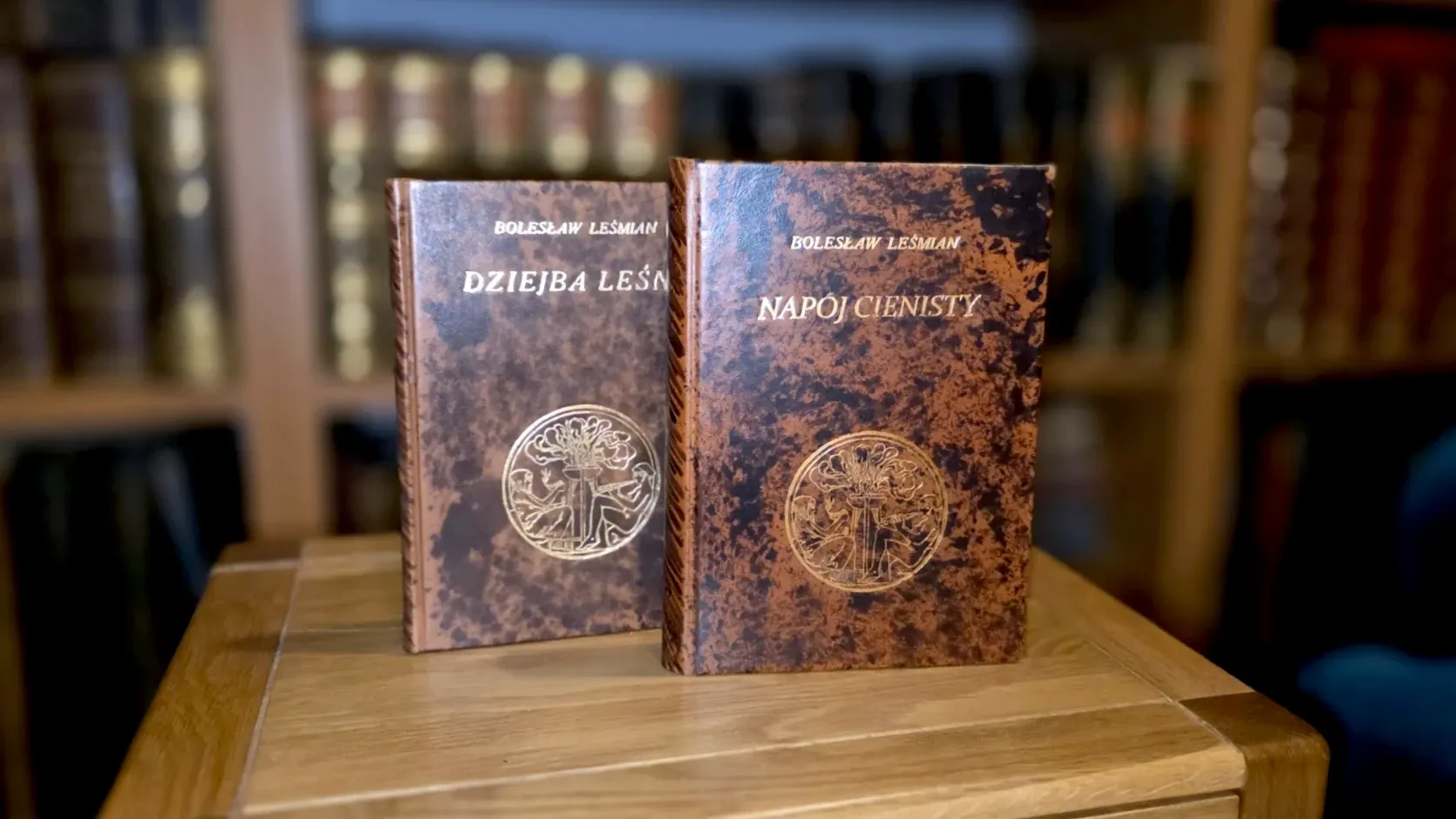
Artistic Bookbinding – From the Renaissance to the Present. A Guide to Techniques and Styles for Collectors
TL;DR
Bookbinding can be more than just protection for the text. It can be an independent work of artistic craftsmanship, a testimony of an era, the work of a specific workshop, or the individual vision of a bookbinder.
For a collector, however, it is important to distinguish several situations. An original binding from the period, made at the time the book was created or shortly thereafter, is different from a later artistic binding, and still different from a reconstruction of an old binding or a contemporary creation inspired by history.
Importantly, the value of the book and the value of its binding do not always go hand in hand. An ordinary, mass-produced book can become a valuable collectible object thanks to a binding made by an outstanding bookbinder. On the other hand, an extremely rare book can retain high value despite a later, average binding.
Contemporary bookbinding is also not limited to copying old patterns. Both historicizing bindings using traditional techniques and completely modern creations designed as individual works for a specific copy and person are being made.
What is Artistic Bookbinding and Why Does It Matter?
Binding is one of the fundamental elements of the physical form of a book. It protects the book block, affects its durability and usability, but in many cases also serves an aesthetic and artistic function.
In the history of the book, the boundary between craft and art has never been entirely clear. A bookbinder had to know the properties of leather, paper, threads, glues, and decorative materials, but at the same time had to be able to design a composition, select ornaments, and subordinate decoration to the form of the book.
In the best realizations, the binding becomes an integral part of the work.
However, this does not mean that every decorative binding is an artistic binding, nor that every old binding is valuable. The value of a particular copy is determined by many factors: rarity and importance of the book, its condition, completeness, provenance, quality and dating of the binding, authorship or attribution to a workshop, applied techniques, and preservation of original elements.
Therefore, in bibliophilia, two issues must be separated:
the value of the book as a book and the value of the binding as an artistic object.
How to Evaluate a Binding? The Most Important Criteria
Evaluating a binding requires looking at it as a whole. The amount of gilding, the impressiveness of the ornament, or the cost of the material used do not alone determine its value.
1. Technique of Execution
The method of constructing the binding, preparation of boards or cardboard, sewing of the block, the way the binding is attached to the book, execution of the spine, headbands, endpapers, and decoration all matter.
In historical bindings, technique can help determine the time and environment in which the copy was made.
2. Material
Among others, parchment, calfskin, goatskin, pigskin, or sheepskin were used. In later periods, fabrics, decorative papers, lacquers, metals, and various decorative materials also appeared.
The material itself does not automatically create a hierarchy of value. A well-made binding from a simple material can be much more interesting than an average binding made from a more expensive material.
3. Decoration
Important are gilding, blind stamping, roulettes, plaques, fleurons, corner ornaments, geometric compositions, leather mosaics, inlays, and decorated edges of pages.
4. Provenance and Signature
The bookbinder’s signature, superexlibris, exlibris, or well-documented provenance can be of great importance. Particularly interesting are bindings that can be attributed to a specific artist or workshop.
The Polish thread is significant here. The superexlibris of Sigismund Augustus, a ruler whose library contained about 4000 volumes, is one of the most important ownership marks in the history of Polish collecting. A separate example is the roulette binding by Melchior Nering from 1570, made in Poznań, documenting the high level of the Polish Renaissance workshop — you can find more about such copies in the Polish old prints category.
5. Condition and Originality
Damage, wear, losses, or later repairs should be assessed in the context of the age and history of the object. Not every intervention reduces value to the same extent.
The key question is: what is original, what has been repaired, and what was added later?
6. What Can and Cannot Be Assessed from Photos?
Based on photos alone, it is impossible to fairly determine several things: thickness and type of leather, presence of conservation beneath the surface, quality of block sewing, and authenticity of stamps. Therefore, verification of a binding with potentially high value should be done with the copy in hand or based on complete photographic documentation of details.
It is worth using knowledge about Polish old prints and their typical bindings. Familiarity with construction, materials, and decorations characteristic of particular periods can be an important starting point for further identification.
Renaissance and Mannerism
The Renaissance brought the development of bindings in which decoration began to play a particularly important role.
Popular were blind and gilded stamping, roulettes, plaques, and elaborate ornamental compositions. Plant, figurative, heraldic, and architectural motifs were used.
In Western Europe, calfskin remained an important material, but pigskin and parchment were also used. Decoration showed influences of antiquity, Islamic art, and local bookbinding traditions.
The roulette allowed repeating a long ornament over a larger surface, while single tools – fleurons or plaques – served to create more complex compositions.
Mannerism did not represent a complete break with the Renaissance. In many regions, styles overlapped, and the period was characterized by more sophisticated, sometimes denser ornamental compositions.
For a collector, the most important is recognizing technique, workshop, and time of creation, rather than assigning every decorative binding to a rigid stylistic category.
Baroque and Rococo
In the 17th and 18th centuries, binding decoration reached exceptional diversity.
Gilded compositions, plant and geometric ornaments, decorations of the à la fanfare type, as well as arrangements characteristic of French bookbinding called à la dentelle were developed.
The French bookbinding tradition was particularly significant. Among the names associated with the most outstanding works are Antoine-Michel Padeloup, Nicolas-Denis Derome, and Jean-Georges Trautz-Bauzonnet.
In such cases, the book may have significance not only as a carrier of text. The binding itself becomes a collectible object.
This is an important hint also for auction evaluation: if a copy has a well-documented binding by a specific master, it should not be valued solely according to the value of the edition itself.
Classicism, Historicism, and the 19th Century
In the 19th century, both bindings in the classical spirit and those consciously referring to earlier epochs appeared.
The development of historicism caused bookbinders to increasingly reach for old forms and ornaments. Bindings referring to the Renaissance, Baroque, or Classicism can be found, but made already in the 19th century.
This is a very important distinction:
a binding may look Renaissance, but does not have to come from the Renaissance.
For a collector, this means the necessity to separate the style of the binding from its actual dating.
In Polish bookbinding of the 19th and early 20th centuries, significant workshops developed, especially in Warsaw, Kraków, and other large centers. Among the names associated with the Polish tradition of artistic bookbinding are among others Franciszek Joachim Radziszewski and Robert Jahoda.
Radziszewski is known, among other things, for characteristic gilded decorations, his own tools, and compositions using plant, animal, and symbolic motifs. Robert Jahoda played a significant role in the development of Kraków’s artistic bookbinding.
Art Nouveau, Art Déco, and Modernism
The turn of the 19th and 20th centuries brought a fundamental change in thinking about book decoration.
Art Nouveau introduced flowing lines, plant motifs, asymmetry, and decoration inspired by nature. Art Déco turned towards geometry, rhythm, stylization, and more decisive composition.
In the 20th century, another important stage appeared: binding began to be treated as an autonomous artistic expression.
In France, particularly significant were among others Pierre Legrain, Rose Adler, and Paul Bonet. Their works show that a binding does not have to be merely a decorative “package” for the book. It can be an individual artistic project whose form remains in dialogue with the content but does not have to literally illustrate it.
It is here that the transition from decorative craft to authorial design of the book as an artistic object is especially visible.
When is the Binding More Valuable Than the Book?
In bibliophilia, we are used to thinking of the book as a whole, where the most important are content, author, edition, illustrations, or rarity. In the case of artistic bindings, this order can be reversed.
The book can be relatively ordinary, and its binding outstanding.
It happens that a mass edition copy, which by itself would not represent great collectible value, becomes interesting precisely because it was bound by a known and respected bookbinder.
In such a case, the collector essentially buys a bookbinding work of art, of which the book is the carrier.
The name of the maker, signature, characteristic tools and ornaments, the way the leather is worked, the decoration composition, and the possibility of attributing the binding to a specific workshop may be significant.
The history of European bookbinding knows many such cases. Bindings made by Derome, Padeloup, or Trautz-Bauzonnet are today collected as works of bookbinding art. In the 20th century, a similar path was set by Legrain, Adler, and Bonet.
A similar phenomenon occurs in Polish bookbinding. Warsaw and Kraków were among the most important centers for the development of artistic bookbinding, but good workshops also operated in other cities.
Not every valuable book has a valuable binding, and not every valuable binding hides a valuable book.
This is one of the basic sentences a collector should remember.
Custom Binding – The Book as an Individual Work
Artistic binding does not belong exclusively to the past.
Even today, creations designed for a specific copy, a specific person, and a specific order are being made.
Sometimes it is a book inherited from parents or grandparents. Sometimes the first copy of a work important to someone. Other times a book intended as a gift for a close person, collector, or author.
Then the bookbinder does not simply make a “nice cover.”
They create an individual design, select materials, color schemes, decoration methods, and execution techniques.
A unique object is created – often one of a kind, made for a specific person and for a specific reason.
It can be a historicizing binding, consciously referring to the Renaissance, Baroque, Classicism, or Art Déco. It can also be completely contemporary: minimalist, geometric, abstract, avant-garde, or using the bookbinder’s own design language.
A contemporary bookbinder does not have to copy the past. They can also continue it, interpret it, or consciously depart from it.
Contemporary Times – Tradition, Interpretation, and New Forms
Contemporary bookbinding can be conventionally divided into several currents.
Historicizing Bindings
They refer to past epochs and traditional techniques. They may use hand gilding, blind stamping, classic binding constructions, natural leather, decorated endpapers, or traditional sewing methods.
A well-made historicizing binding is not a forgery just because it resembles an old binding. The key is an honest determination of its dating and character.
If made today, it should be described as a contemporary realization inspired by a specific epoch.
Contemporary Bindings
They do not try to imitate old styles. They may use minimalism, geometry, abstraction, unusual material combinations, or contemporary decorative solutions.
Their value does not lie in similarity to historical bindings but in the quality of design, execution, and artistic individuality.
|
|
|---|

|
Comparative price table per epoch (approximate and scattered data)
Individual Bindings
They are made for a specific person, event, or copy.
In such a case, the binding can be part of the owner’s personal history. The book receives a form that no other copy has.
Antykwariat Sobieski combines bibliophile knowledge with its own bookbinding workshop, allowing book evaluation, conservation, and design and execution of new bindings to be conducted in one place.
Can a Contemporary Binding Ever Become an Antique?
This question is particularly interesting.
Of course, not every contemporary binding will automatically become a collectible object in the future.
Its future significance may depend on time, quality of execution, individuality of the design, documentation, authorship, condition, and whether later collectors and researchers consider it an interesting example of the art of its era.
However, one can imagine a situation where a well-made contemporary historicizing binding, after several decades of natural material aging, begins to be perceived as a testimony of bookbinding of its era.
It will not become a “period” binding that it imitates. It will remain a contemporary work. However, over time it may gain its own historical value.
The situation of modern bindings is even more interesting.
Just as today we are interested in the works of Legrain, Adler, or Bonet because they show the way of thinking about the book characteristic of their times, future collectors may view the best contemporary realizations as a document of culture and design at the turn of the 20th and 21st centuries.
Therefore, contemporary bookbinding should not be seen solely as preserving old patterns.
It can be both a continuation of tradition and its development.
A good historicizing binding allows preservation and creative use of old techniques.
A good contemporary binding can create something that did not exist before.
|
|
|---|

|
Materials and Techniques
Leather
The most common are calf, goat, pig, and sheep leathers. They differ in texture, thickness, susceptibility to dyeing and stamping, and aging behavior.
However, there is no simple rule:
“more expensive leather = better binding.”
Quality depends on the preparation of the material, its suitability for the book’s construction, and the quality of the entire binding’s execution.
Gilding
Gilding can be done hot using foil or gold leaf, depending on the technique and workshop tradition.
In historical bindings, very elaborate compositions made with numerous tools are also found.
Blind Stamping
Allows decoration without using gold. The effect depends, among other things, on the type of leather, tool, temperature, pressure, and surface preparation.
Roulette and Tools
The roulette allows repeating an ornament along edges or on larger surfaces. Single fleurons, fillets, or specially made tools enable building individual compositions.
Mosaic
Leather mosaic allows combining fragments of leathers of different colors and textures. It is a technique especially useful in individually designed realizations.
Endpapers and Decorative Papers
The endpaper is not only a technical element. It can be an important part of the composition of the entire book.
In contemporary realizations, decorative papers are often selected to harmonize with the color of the leather, gilding, or decoration of the page edges.
Recognition Matrix – What to Look At?
|
Element |
What Can It Tell the Collector? |
|---|---|
|
Binding construction |
Helps determine technique and period |
|
Type of leather |
May indicate regional tradition and workshop |
|
Ornament |
Helps determine style and environment |
|
Tools |
May be characteristic of a specific bookbinder |
|
Gilding |
Informs about technique and level of decoration |
|
Signature |
May enable identification of the maker |
|
Superexlibris |
May provide information about the owner |
|
Exlibris |
Indicates provenance |
|
Endpapers |
May be original or later |
|
Condition |
Helps assess preservation and history of the object |
|
Later repairs |
May be significant for authenticity |
|
Documentation |
Can significantly facilitate identification |
|
|
|---|

|
Provenance, signature, and superexlibris
In the case of artistic bindings, the origin of the copy can be as important as the decoration itself.
The bookbinder’s signature can confirm authorship. However, lack of a signature does not automatically mean the binding has no known author.
Helpful can be:
-
characteristic tools,
-
composition style,
-
gilding method,
-
characteristic ornament,
-
materials,
-
analogous signed works,
-
archival photographs and catalogs,
-
provenance documentation.
Bindings with a superexlibris, i.e., an owner’s mark placed directly on the binding, are particularly interesting.
A coat of arms, monogram, or symbol can lead to a specific person, library, or collection.
Provenance does not have a universal “value multiplier.” Its importance depends on whether it can be credibly documented and how important it is for the history of a particular copy.
Original or Reconstruction?
One of the most common mistakes is treating a binding that looks old as proof of its age.
Appearance alone is not enough for dating.
A contemporary bookbinder can very faithfully reproduce old technique, construction, and ornament.
We can therefore have:
-
an original binding from the period,
-
a later binding made in a historical style,
-
a reconstruction of a specific old binding,
-
a contemporary binding inspired by history,
-
a completely original contemporary binding.
None of these categories is by definition “better.” They are simply different kinds of objects.
For a collector, the most important is correct identification and honest description.
Conservation and Care
An old binding is a sensitive object. Leather, paper, glues, and decorative elements age at different rates.
The most important are:
-
stable storage conditions,
-
avoiding excessive humidity,
-
avoiding direct sunlight,
-
limiting sudden changes in temperature and humidity,
-
careful handling of the book,
-
storing in the proper position.
In the case of valuable bindings, do not apply oils, waxes, pastes, or other preparations without consulting a specialist. A substance that improves the appearance of leather in the short term may cause its degradation or hinder professional conservation in the future.
Conservation should not aim to “rejuvenate” the book.
Its basic task is to preserve the object and limit further degradation with minimal intervention.
Market and Prices
The market for artistic bindings does not have a universal price list.
The price of a particular copy may depend on:
-
the value of the book itself,
-
rarity of the edition,
-
author,
-
condition,
-
dating of the binding,
-
authorship of the bookbinder,
-
quality of execution,
-
provenance,
-
completeness,
-
documentation,
-
artistic attractiveness.
Auction results for specific, comparable objects are particularly important.
However, a single auction result should not be treated as an automatic valuation of every copy made in a similar style.
It is also worth remembering that the price achieved at auction, the offer price in an antiquarian bookshop, and the price of a private transaction can differ significantly.
Comparative Price Table of Bindings by Epoch
The following ranges are approximate and do not constitute a price list. The market for artistic bindings is small and scattered, and prices of individual copies depend primarily on the authorship of the binding, its quality, condition, provenance, and the value of the book itself. In the case of outstanding works by known bookbinders, prices may significantly exceed the indicated levels.
|
Epoch / Style |
Typical Features |
Approximate Price Range* |
What Can Significantly Increase Value |
|---|---|---|---|
|
Renaissance |
roulettes, blind and gilded stamping, plaques, calf or pigskin leather |
2,000–15,000 PLN |
rare workshop, dating, exceptional decoration, superexlibris, known provenance |
|
Mannerism |
richer compositions, plaques, elaborate stamping and gilding |
3,000–20,000 PLN |
exceptional workshop, rare decoration, provenance |
|
Baroque |
rich gilding, ornaments, à la fanfare compositions |
2,000–20,000 PLN |
known bookbinder, outstanding decoration, provenance, completeness |
|
Rococo |
lace decoration (dentelle), fancy gilding, plant ornament |
3,000–25,000 PLN |
recognized workshop, quality of gilding, condition, provenance |
|
Classicism and 19th Century |
ordered decoration, gilding, classical and historicizing bindings |
800–8,000 PLN |
authorship, interesting workshop, important provenance |
|
Art Nouveau |
plant ornament, asymmetry, individually designed decoration |
1,000–10,000 PLN |
known creator, authorial design, rarity |
|
Art Déco and Modernism |
geometric compositions, mosaic, experimentation with material and form |
2,000–20,000 PLN |
Legrain, Adler, Bonet and other recognized creators; exceptional design and provenance |
|
Polish 20th Century Artistic Bindings |
gilding, stamping, mosaic, individual designs |
500–10,000 PLN |
signature of a known bookbinder, e.g., F.J. Radziszewski, R. Jahoda, exceptional copy |
|
Contemporary Artistic Bindings |
historicizing, modern, avant-garde, made to order |
1,000–15,000 PLN+ |
author’s name, uniqueness, individual design, quality of materials and execution |
* The amounts given should be treated as approximate market levels, not as valuations of specific bindings. In the case of exceptional copies, prices may be many times higher. Conversely, an old or richly decorated binding without established authorship and provenance may have a value much lower than the indicated levels.
What Really Increases the Value of a Binding?
There is no single element that automatically determines high value.
The greatest importance may have the combination of several features:
outstanding authorship + good provenance + high quality of execution + attractive design + good condition.
But even a less spectacular binding can have great scientific or historical value if it documents a specific workshop or an important stage in the development of bookbinding.
Therefore, it is worth being cautious about simple rankings:
gilding is not always better than blind stamping,
goat leather is not always better than calf leather,
elaborate decoration is not always better than minimalist,
and an impressive binding is not always a valuable binding.
The whole matters.
Verdict
Artistic binding is one of those areas of bibliophilia where the book can transcend its basic function.
It can be a document of an era, a testimony of a workshop, a carrier of provenance, an example of excellent craftsmanship, or an independent work of art.
The most important rule is:
Not every beautiful binding is valuable, and not every valuable binding is impressive.
It is worth learning to distinguish original historical bindings from later ones, reconstructions from contemporary interpretations, and decoration from actual artistic value.
But it is equally important to recognize that the history of binding does not end with the old masters.
Today's bookbinder can create historicizing bindings that are a conscious continuation of old techniques. They can also create entirely contemporary designs that, in a few decades, will be a testimony of our time for future collectors.
Perhaps that is why it is worth looking at contemporary bookbinding not only as a service but also as a living field of artistic craft.
Mini-glossary
Bibliophilia – collecting books because of their historical, artistic, literary, publishing value, or personal significance.
Fleuryon / fleuron – a single stamped ornament used in binding decoration.
Wheel – a tool that allows imprinting a repetitive ornament on the surface of the binding.
Blind stamping – decoration made without the use of gold or other metallic materials.
Gilding – decorating the binding using gold or gold-like material, performed with various techniques.
Super ex-libris – a mark of the owner of a collection or library placed on the binding.
Provenance – the history of origin and successive owners of the copy.
Historicizing binding – a contemporary binding consciously referring to an old style or technique.
Reconstruction – an attempt to recreate the earlier appearance or construction of a specific binding.
Author's binding – an individual creation in which the design and execution have a clearly personal artistic character.
FAQ
Is every old binding valuable?
No. Age is only one of the evaluation elements. Quality of execution, condition, technique, provenance, and the possibility of attributing the binding to a specific workshop also matter.
Does a valuable book have to have its original binding?
Not always. A rare book can retain high value even in a later binding. However, the original binding can be an additional, very important element of the copy's value.
Can an ordinary book be expensive because of its binding?
Yes. If it was bound by a well-known bookbinder or is an outstanding example of bookbinding art, then the value of the binding can exceed the value of the edition itself.
Can a contemporary binding have collectible value?
Yes. There is no reason why artistic value should be reserved exclusively for old works. A contemporary binding can be an individual work of art, especially if it is well designed, made with high-quality techniques, and has a clear authorial character.
Is a historicizing binding a forgery?
No, if its contemporary origin is clearly stated. The problem arises only when a contemporary creation is presented as an authentic historical binding.
Can a modern, avant-garde binding be valuable?
Of course. Value does not have to come from similarity to past eras. A modern binding can be interesting precisely because it represents the artistic language of its era.
Does a bookbinder's signature guarantee high value?
No. A signature is a very important clue but not sufficient on its own. Authenticity of the signature, quality of the binding, condition, provenance, and significance of the specific work also count.
Does lack of a signature mean the author cannot be identified?
No. Sometimes it is possible to attribute a binding based on characteristic tools, ornamentation, technique, materials, and comparison with other signed works.
Can you clean an old leather binding yourself?
In the case of a valuable binding, it is better not to do so without consulting a specialist. Oils, waxes, and leather preparations can cause irreversible changes.
Can a contemporary binding become an antique in a few decades?
It may gain historical and collectible value, but that does not mean it will become a binding "from the era" it originally imitated. It will remain a contemporary work that over time may become a testimony of the bookbinding art of its own time.
Is it worth binding a book that is not valuable by itself?
Yes – if it has personal, aesthetic, or collectible significance for the owner. In such a case, a new binding can give the copy an individual character and a completely new emotional and artistic value.
What is more important: the book or the binding?
There is no single answer.
For a bibliographer, the edition and its content may be most important. For a collector of bookbinding art – the binder and the execution. For a historian – provenance. For the owner – the personal history of the copy.
The most interesting books are often those in which all these elements come together in one object.
Author: Paweł Kołata, Antykwariat Sobieski


![STEPHEN KING - DARK TOWER set of the 8 volumes [complete] LEATHER Polish translation](/media/products/1001ab6455c270ddaa61abd8042907e9/images/thumbnail/small_20191125-131413.jpg?lm=1765538988)


![HISTOIRE DE FREDERIC II Roi de de PRUSSE wyd.1788r. 5 wol. [HISTORYA FRYDERYKA II- WOYNY ŚLĄSKIE]](/media/products/9e9df9dc2cd2e27958c087dda9762afc/images/thumbnail/small_1_6d5f776b9864.jpg?lm=1765540606)


 Polish