Illustrated children's books from the antiquarian bookstore – how to choose unique collector's editions and where to find them online?
From children's reading to collector's rarity – see which books are gaining value

Illustrated Children's Books from Antiquarian Bookshops – How to Choose Unique Collector's Editions and Where to Find Them Online?
TL;DR
The collector's value primarily depends on the first edition, condition, completeness of illustrations and dust jacket, and the illustrator's name.
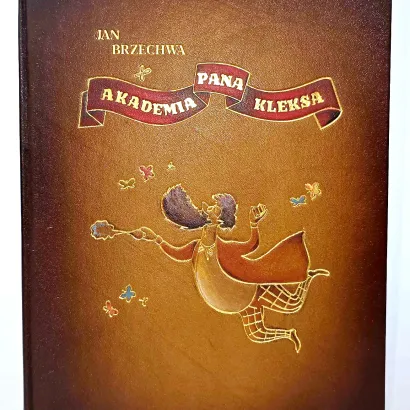
The first edition of "Mr. Kleks' Academy" (1946) reached prices in 2025–2026 from 142 EUR to 414 EUR on OneBid, 750 PLN in an antiquarian bookshop, and 2374.84 PLN on Allegro; a unique copy in a decorative artistic leather binding was sold at Antykwariat Sobieski for 3999 PLN.
Original illustrations (e.g., by Szancer) cost 2500–17,000 PLN, while books with reproductions usually range from 100 to 3500 PLN.
Authenticity and completeness of a copy are verified in the Polona, National Library, and NUKAT catalogs, as well as against OneBid and DESA Unicum listings.
Antykwariat Sobieski combines selection of copies with its own bookbinding workshop and issues certificates of authenticity.
Purchasing an illustrated children's book from an antiquarian bookshop is a decision that requires more than just sentiment. The market for collector's editions is fragmented, and the difference between a first edition and a reprint can reach several thousand zlotys. Below we present a practical guide: how to assess the value of a copy, how much Polish classics realistically cost in 2025–2026 listings, and where to safely buy online.
Illustrated Children's Books from Antiquarian Bookshops – What Determines Collector's Value
Before browsing offers, it is worth understanding the hierarchy of factors that determine a book's value. Not every old copy is collectible, and not every reprint deserves the title of a bibliophile edition.
First edition and first print run. This is the foundation of value. First edition means the first publication of a given text in book form. The first print run is the part of that edition printed in the initial series before any changes were made to the layout or illustrations. For collectors, the first print run has the greatest value because it is closest to the author's and publisher's intent. However, one must distinguish the first edition from later reprints and check the specific bibliographic features of the edition.
Condition and completeness. A copy in very good condition, with the dust jacket and all illustrations intact, can be worth several times more than the same title with defects. For modern literary editions, the original publisher's binding with dust jacket is more valuable than a secondary bookbinding. Importantly, unprofessional, "beautifying" restoration lowers the value instead of increasing it.
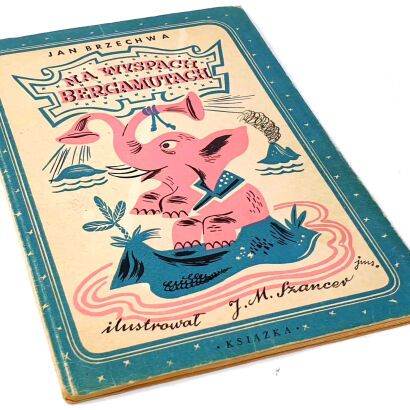
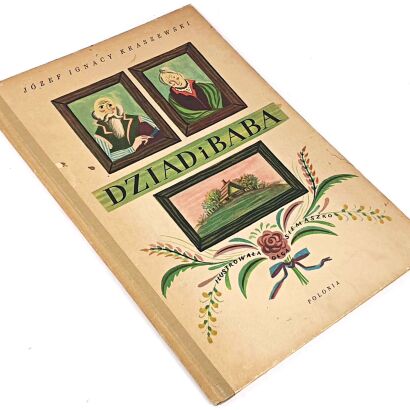
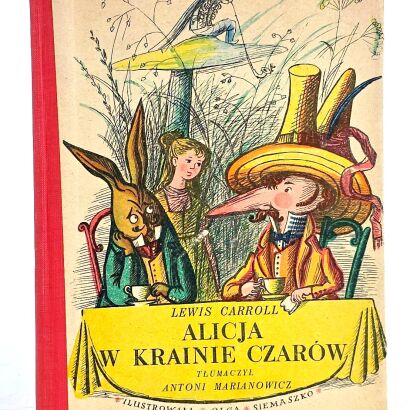
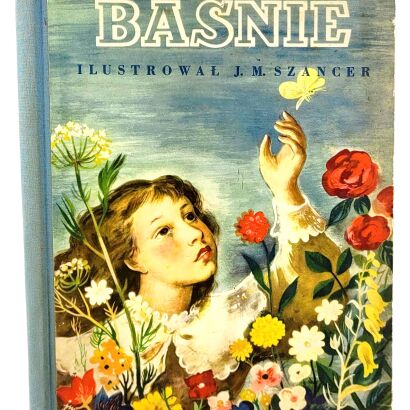
Illustrator's name. In Polish children's literature, this is often a decisive factor. Jan Marcin Szancer, Olga Siemaszko, Bohdan Butenko, Marian Walentynowicz, or the duo Levitt and Him are names that themselves build market value. The illustrator's name can significantly increase interest in a book but does not replace the importance of edition, condition, and completeness. It is the combination of these features that determines the price of a specific copy.
Dedication, autograph, and provenance. A copy with the author's or illustrator's autograph, a dedication to a famous person, or documented ownership history commands significantly higher prices. An example is the first edition of "Mr. Kleks' Academy" with an autograph and dedication to Wanda Grodzieńska, sold on OneBid for 313 EUR with a 511% increase.
Print run and cultural significance. Titles that shaped generations of readers have lasting market value. The entire first print run of "120 Adventures of Koziołek Matołek" (over 5000 copies) was sold out within four weeks in December 1932, illustrating the scale of demand for children's classics.
Quality of binding. For modern editions, the original publisher's binding matters most. Secondary, professional bookbinding can be an asset for copies that lost their original binding but never fully replaces the original in the eyes of a collector.
How to Recognize First Editions of Polish Classics – Identification Features
Recognizing the first edition requires knowledge of specific bibliographic features. The table below lists the most important Polish children's classics with their identification features.
|
Title |
Year of Publication |
Publisher |
Illustrator |
Format / Volume |
Special Features |
|---|---|---|---|---|---|
|
"Mr. Kleks' Academy" |
1946 |
Published by the authors (Piotr Kawczyński) |
Jan Marcin Szancer |
116 pages |
4 color plates outside the text + black-and-white illustrations within the text |
|
"120 Adventures of Koziołek Matołek" |
Premiere December 1932, date on the page 1933 |
Gebethner and Wolff |
Marian Walentynowicz |
approx. 19.5 × 29.5 cm |
Soft cardboard binding; entire print run sold out in 4 weeks |
|
"The Locomotive" |
1938 |
J. Przeworski Publishing House |
Levitt and Him (Jan Lewitt and Jerzy Him) |
Includes "The Locomotive," "The Turnip," "Bird Radio" |
Illustrations and cover by Levitt and Him Studio |
|
"Mr. Twardowski in Czupidłów" |
1959 / 1960 |
Czytelnik |
Jan Marcin Szancer |
Standard book format |
First edition 1959, subsequent 1960 |
One distinction is particularly important: the 1938 edition of Tuwim's "The Locomotive" was illustrated by Levitt and Him, not Jan Marcin Szancer. This is a common mistake because later post-war editions of this poem were illustrated by Szancer. If you see an offer for the 1938 "The Locomotive" with Szancer's illustrations, it is a misdescription.
You can check the year of publication on the title page and in the printing colophon on the last pages of the book. In the case of "Koziołek Matołek," remember that the first edition premiered in December 1932, but the title page shows the date 1933.
How Much Do Unique Editions Really Cost – Auction Prices 2025–2026
The biggest gap in the market is the lack of verified, current price listings. The table below shows specific sales results and offers from 2025–2026, each with date and source.
|
Title |
Edition |
Price |
Date / Source |
|---|---|---|---|
|
"Mr. Kleks' Academy" |
1st ed., 1946 |
414 EUR (235% increase) |
OneBid, auction |
|
"Mr. Kleks' Academy" |
1st ed., 1946 |
142 EUR (starting price 97 EUR) |
OneBid, auction |
|
"Mr. Kleks' Academy" |
1st ed., 1946 |
750 PLN |
Warsaw Antiquarian Bookshop, offer |
|
"Mr. Kleks' Academy" |
1st ed., 1946 |
2374.84 PLN |
Allegro, offer |
|
"Mr. Twardowski in Czupidłów" |
1959 ed. |
101 EUR (starting price 19 EUR, 523% increase) |
OneBid, auction |
|
"Mr. Twardowski in Czupidłów" |
1960 ed. |
399 PLN |
Antykwariat Sobieski, offer |
It is worth emphasizing that for the first editions of "120 Adventures of Koziołek Matołek" and "The Locomotive," there are no publicly available sales listings from 2025–2026. These are rare copies, especially complete ones (with dust jacket and all illustrations). For such rare editions, the situation is harder to capture statistically – there are few contemporary comparable auction results. Their value should therefore be assessed individually, considering edition, completeness, condition, and presence of original binding or dust jacket.
The upward price trend is confirmed by historical data. In 2017, books with Szancer's illustrations were valued at 30–150 PLN, and first editions at "several hundred zlotys." Current listings for the first edition of "Mr. Kleks' Academy" (750–2374 PLN) show a clear increase over eight years.
The scale of this phenomenon is well illustrated by auction results of single, often small children's books. An example is "Koziołeczek" with illustrations by Jan Marcin Szancer. As late as 2019, the first edition from 1946 was offered for 500 PLN and did not find a buyer. Meanwhile, in December 2024, another equally rare pre-war copy of "Koziołeczek," published in 1944 and fully illustrated by Szancer, reached 711 euros at a starting price of 14 euros.
An even more spectacular result was achieved by "The Tale of the Golden Heart" from 1957, a small publication illustrated by Szancer. In June 2026, it was listed on OneBid with a starting price of only 15 euros and ended the auction at 795 euros. This is more than fifty times the starting price and an amount corresponding to several thousand zlotys.
Such results show that in recent years, the perception of some Polish children's books has changed. They are no longer treated solely as sentimental childhood keepsakes. In the case of rare editions, especially attractively illustrated by Szancer, they become full-fledged collector's items. Importantly, the price increase concerns not only the most famous titles, such as "Mr. Kleks' Academy," but also small, seemingly modest books that a few or a dozen years ago were offered for hundreds of zlotys and today can fetch several thousand zlotys at auctions.
The price increase is not solely due to the passage of time. Several factors act simultaneously in the case of children's books: a shrinking number of well-preserved copies, growing interest in the Polish school of illustration, the return of adult collectors to books from their childhood, and increasing interest in books as objects of applied art. In Szancer's case, there is an additional element – his illustrations today operate simultaneously in two markets: collector's books and original graphics. This strengthens the recognition of the name and may translate into demand for rare book editions.
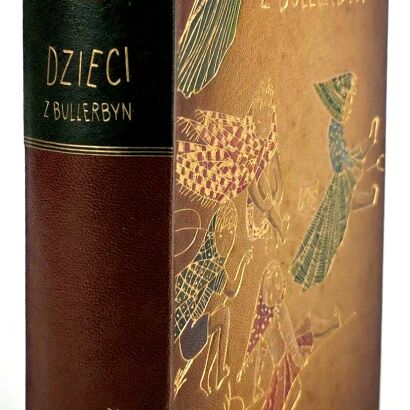
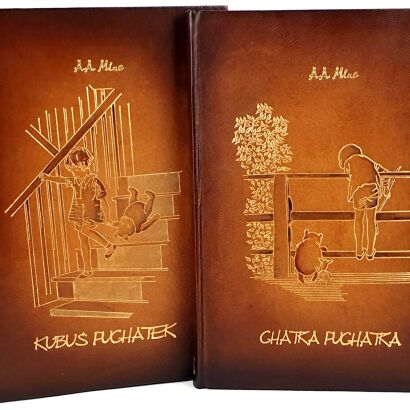
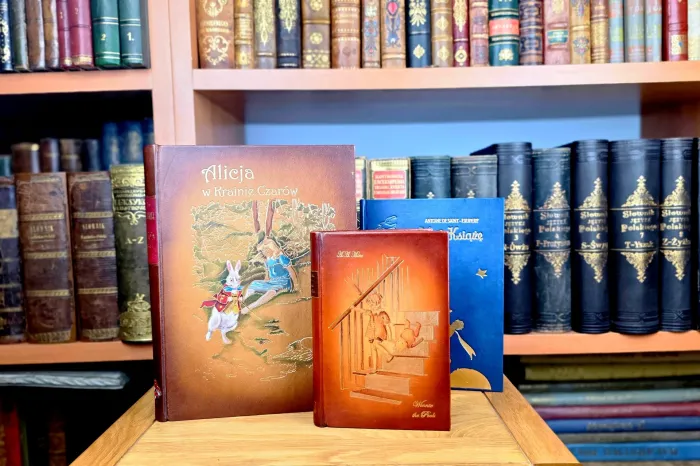
Even more interesting is the case of a copy that received a new, artistic binding. "Mr. Kleks' Academy" in a decorative leather binding was sold by us for nearly 4000 PLN. So it was not just a transaction involving an old book but an item combining bibliographic value with the value of artistic craftsmanship. The price was determined not only by the content and publication date but also by the unique appearance and individual character of the copy.
However, it is worth remembering that the cost of making the binding does not automatically equal an increase in the book's market value.
|
|
|---|

|
Original Illustration or Book with Reproductions – Key Distinction
One of the most common mistakes of beginner collectors is confusing prices of original graphic works with prices of books in which these works have been reproduced. These are two completely different market categories.
Original illustrations are unique artworks, often made with ink, watercolor, or gouache. Their prices are many times higher. Examples from auction listings:
-
"Bolesław's Golden Spear" by Szancer, sold for 17,000 PLN at Agra-Art auction (19.10.2025, starting price 12,000 PLN);
-
"Illustration for Hansel and Gretel" by Szancer (circa 1968), sold for 3,304 EUR at DESA Unicum (19.11.2024);
-
other Szancer illustrations fetch from 500 to 6500 PLN at auctions.
Books with reproductions of these illustrations are a completely different segment. Prices depend primarily on edition, condition, completeness, and rarity of the specific title and can range from several dozen or hundreds of zlotys to several thousand zlotys for particularly sought-after editions.
Watch out for: When you see an offer for "Szancer illustrations" for several hundred zlotys, check whether you are buying an original artwork or a book with reproductions. Original artworks at art auctions start at several thousand zlotys. A book with Szancer's illustrations is naturally a sought-after but much cheaper object. If the price seems too low for an original, you are probably dealing with a reproduction or print.
How to Verify Authenticity and Completeness of a Copy – Step by Step
Safe online purchase requires a repeatable verification method. Here is the sequence of steps used by professional antiquarians:
-
Determine the order of editions in library catalogs: Polona (National Library), NUKAT, or WorldCat. Check how many editions of a given title exist and in which years.
-
Compare the editorial page of the copy (year, publisher, print run) with the bibliographic description in the catalog. Discrepancies mean you are dealing with a different edition than the seller declares.
-
Check completeness of illustrations. Count color plates and illustrations in the text, comparing with the bibliographic description. A missing plate significantly lowers the value.
-
Assess presence of dust jacket. For modern editions, the original dust jacket increases the copy's value, and its absence lowers it by even several dozen percent.
-
Compare the price with OneBid and DESA Unicum listings to assess if the offer is market-appropriate.
Verification checklist for a copy:
-
Completeness of illustrations: number of color plates and illustrations in the text matches bibliographic description
-
Dust jacket: present, original, without major defects
-
Editorial page: year, publisher, and print run consistent with declared edition
-
Binding condition: original publisher's binding, without signs of unprofessional restoration
This is exactly the practice used by Antykwariat Sobieski. Each volume is verified in the Polona, National Library, and NUKAT catalogs and compared with auction market listings on OneBid and DESA Unicum. Certificates of authenticity are issued for selected copies, providing additional documentation of provenance and item identification. However, the certificate does not replace the bibliographic description or thorough documentation of the copy.
Where to Find Unique Editions Online – Trusted Purchase Channels
The online collector's book market is divided into several channels that differ in safety, verification, and prices.
Specialized online antiquarian bookshops. A specialized antiquarian bookshop can be a good choice for a beginner collector because the description of the copy should include its condition, completeness, and bibliographic features, making it the safest channel for beginners.
Antykwariat Sobieski runs dedicated categories of children's books (before and after 1945), verifies each copy in library catalogs and against the auction market, issues certificates of authenticity, and has its own bookbinding workshop. This combination of trade and craftsmanship allows comprehensive service: from selecting a copy, through binding, to preparing it as a gift. The brand has been operating for over 20 years and is a member of the Association of Polish Antiquarians and Merchants as well as CINOA.
Bibliophile auctions. The OneBid platform gathers offers from antiquarian bookshops and auction houses. Antykwariat Sobieski runs its own bibliophile auctions there (48 editions), including the category "Books for children and youth. Classics of fairy tales and stories." Auctions provide insight into real sales prices but require knowledge of bidding rules and verification of descriptions.
Auction houses. DESA Unicum and similar institutions are the right address for those seeking original illustrations, not books. Their listings show the real value of artworks but rarely offer volumes themselves.
General platforms. Allegro is the largest book market in Poland: in 2025, 26 million books were sold there, nearly 8 million of which were children's books, and the share of used books remained around 10%. This is a huge supply but requires independent verification of each offer. Prices can be inflated, and edition descriptions often incorrect.
Common Mistakes When Choosing and How to Fix Them
1. Confusing original illustration with a book. Buyers pay several hundred zlotys for a "Szancer illustration," thinking they are acquiring an original artwork. Fix: always check exactly what you are buying. An original artwork is unique; a book with reproductions is a printed edition.
2. Overpaying for a reprint as a "first edition." Sellers on general platforms often mistakenly describe later editions as first editions. Fix: verify year and publisher in Polona, NUKAT, or WorldCat catalogs before purchase.
3. Ignoring the lack of a dust jacket. A copy without the original dust jacket can be worth several dozen percent less than the same title with a dust jacket. Fix: ask the seller about the dust jacket and demand its photo.
4. Buying a copy with incomplete illustrations. A missing color plate lowers the copy's value. Fix: check the number of plates in the bibliographic description and count them in the copy.
5. Unprofessional restoration lowering value. Self-made "improvements" to the binding, gluing, or repainting the cover destroy collector's value. Fix: commission binding and restoration only to professionals. Antykwariat Sobieski runs its own bookbinding workshop that makes natural leather bindings, artistic bindings, and restoration using traditional craft techniques.
6. Valuation "from a distance" without inspection. No reliable antiquarian will value a copy without photos of the title page, printing colophon, and cover. Fix: require the seller to provide photos of these elements, and when valuing your own copy, prepare complete documentation.
What Next – Binding, Gift, and Building a Collection
Purchase is just the beginning. Here are four paths you can take after acquiring a copy.
Bookbinding. A popular title in a professional binding becomes a unique keepsake. At Antykwariat Sobieski's workshop, you can have a half-leather binding (450–900 PLN), full leather with gilding (800–2500 PLN), cloth binding (200–500 PLN), or artistic and bibliophile binding (2850–4200+ PLN). Restoration and conservation range from 200 to over 2000 PLN depending on the volume's condition.
Gift with personalization. An illustrated book is a unique gift for baptism, communion, or birthday. The bookbinding workshop allows embossing a name, date, initials, or dedication on the binding, making the copy a family keepsake passed down through generations.
Building a collection around an illustrator. Instead of random purchases, it is worth focusing on one artist: Szancer, Siemaszko, Butenko, or Walentynowicz. A collection around one name builds coherence and facilitates valuation of individual copies.
|
|
|---|
|
Investment path. If the goal is also value growth, a collector's book should be treated as a long-term purchase (5–10+ years), without profit guarantees. The market is less liquid than popular financial assets, and the price depends on condition, rarity, provenance, and current collector interest.
|
|
|---|
|
Antykwariat Sobieski offers free remote valuation via WhatsApp and client visits for copy inspection. This practice eliminates the risk of incorrect assessment and allows reliable, fact-based valuation of each volume.
Illustrated children's books are increasingly more than just childhood memories. The most interesting copies combine literary, illustrative, bibliographic, and material value. Therefore, when purchasing, it is not worth relying solely on the author's name or the year of publication. The most important is the specific copy: its edition, condition, completeness, binding, provenance, and place in the history of Polish illustration. These are the features that determine whether we are buying simply an old book or an item whose collector's value may significantly increase over time.
Author: Paweł Kołata, Antykwariat Sobieski







 Polish