A brief history of the discovery. What caused one book from 1894 not to be sold, but to return to the University Library in Warsaw.
An unassuming seal in an old book became the beginning of an extraordinary provenance investigation. Thanks to the analysis of ownership marks and cooperation with the University Library in Warsaw, it was possible to uncover the history of the copy and restore its proper place in the history of the former book collection.
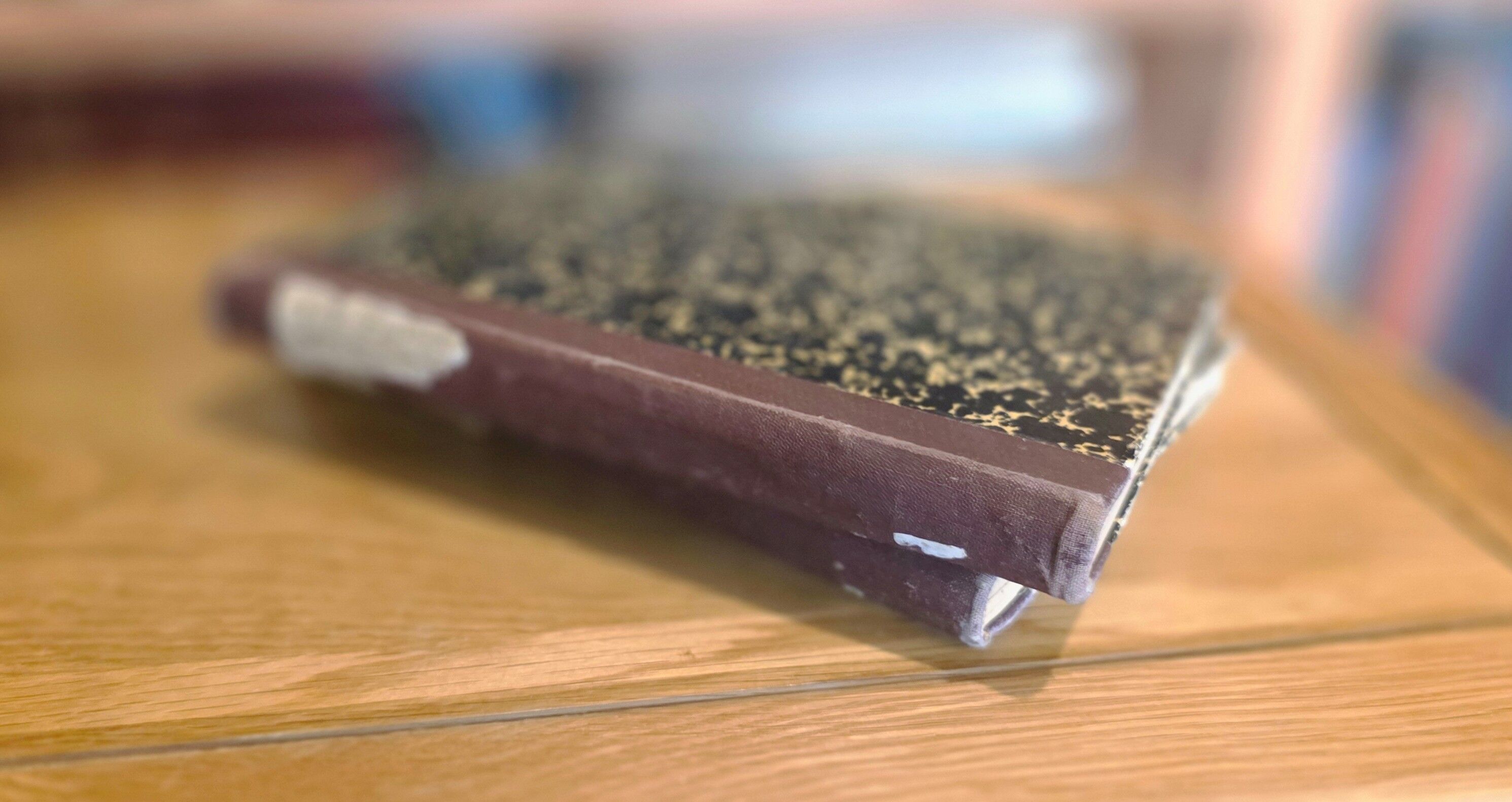
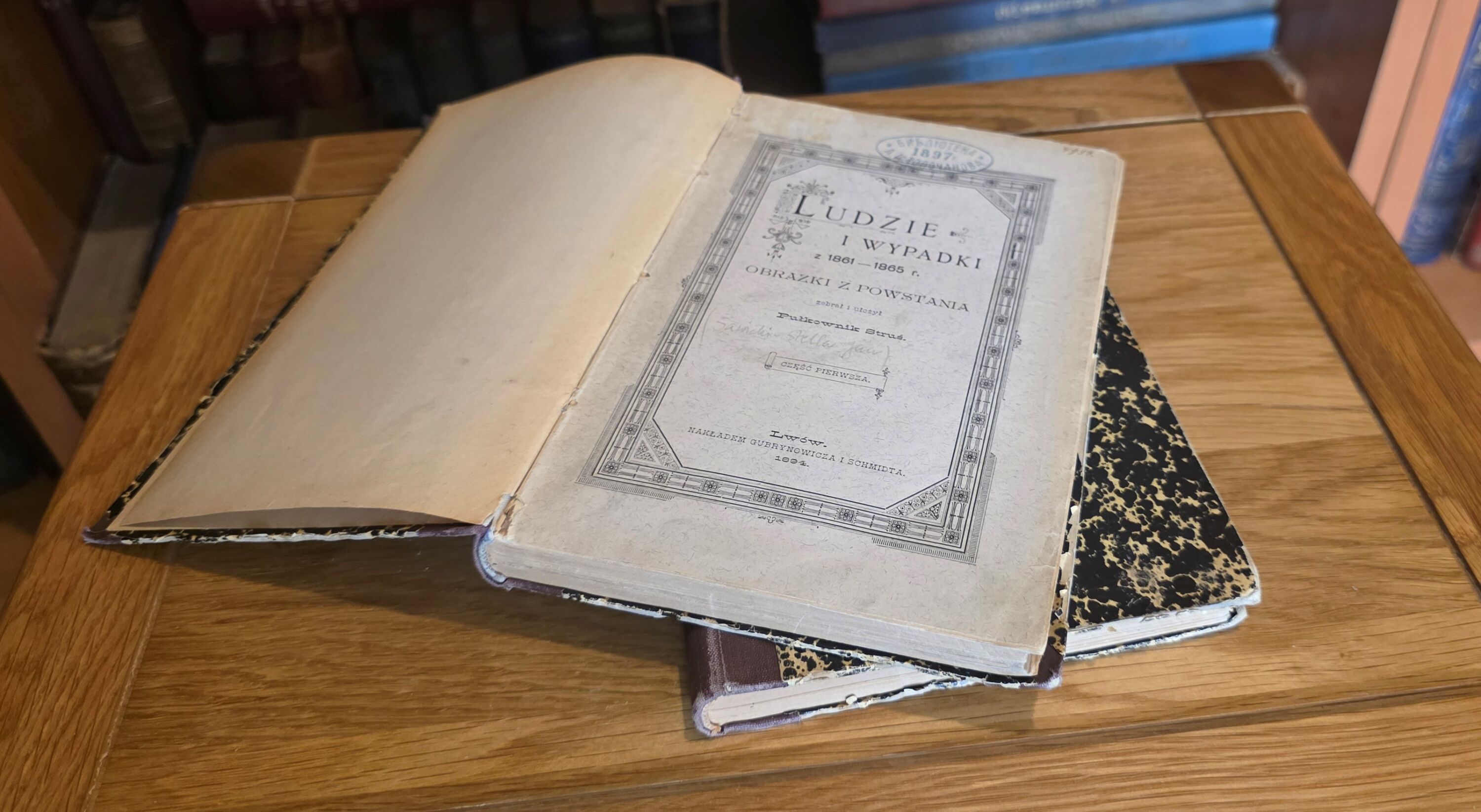
Thanks to cooperation with Dr. Zbigniew Olczak from the University Library in Warsaw, it was possible to determine the origin of the copy and bring it back to the historic collection
Every old book has its story. However, not every one has had the chance to tell it.
This story is also a tale about how valuable cooperation between antiquarians and librarians can be in provenance research of old books.
The work of an antiquarian is most often associated with searching for rare books, assessing their condition, or determining their collector's value. This is, of course, an important part of our daily work, but there is also a second dimension to this work – much less visible, and often much more fascinating.
It is a history hidden between the pages of a book.
Sometimes it is recorded in the handwriting of a former owner. Other times it is hidden under a small seal, an almost invisible inventory number, or an old bookplate. Sometimes a single trace leads to a private library of a distinguished scholar, an aristocratic palace, a monastery, a university, or an institution whose fate seemed to be a closed chapter of history.
Such discoveries remind us that old books are not only carriers of content but also witnesses of an era, people, and events.
One such story happened recently at the Sobieski Antiquarian Bookshop.
A book that was supposed to go on sale
A copy of the book Jan Sawicki’s “People and Events from 1861–1865. Pictures from the Uprising”, published in Lviv in 1894, arrived at our antiquarian bookshop.
At first glance, it was an interesting pre-war print that would certainly attract collectors interested in Polish history and 19th-century literature.
As always, we began a thorough examination.
We checked completeness, condition, binding, any damages, and publishing features. This is a standard procedure for all books entering our offer.
However, this time something else caught our attention.
On the pages of the book, there remained an oval ink stamp with Russian inscription and an inventory number.
For many people, these would be just old stamps that do not affect the ability to read the book.
For an antiquarian, however, these are pieces of information as valuable as the content of the work itself.
They very often allow answering questions such as:
- Who did the book belong to?
- What path did it travel over more than a hundred years?
- Was it part of a known collection?
- Is its presence on the antiquarian market a natural result of history, or does it require additional verification?
At this stage, we did not yet know the answers.
We only knew it was worth finding out.
One seal can change everything
People not involved in the antiquarian market often ask why we pay so much attention to old seals, handwritten notes, or pencil inventory numbers.
The answer is simple.
Every mark left on a book is a fragment of its biography.
Just as a person has their own life story, so does a book have its path – from the printing house, through the bookstore, libraries, private owners, and collectors, to the modern antiquarian bookshop.
Some copies have changed owners only a few times over more than a hundred years.
Others have traveled through many countries, survived wars, border changes, library closures, or the dispersal of large collections.
That is why provenance, the history of ownership of a particular copy, is today one of the most important fields of research on old books.
It allows reconstructing the fate of a single volume and often gives it additional historical value.
Sometimes it turns out to be even more valuable than the rarity of the edition itself.
Provenance – a word that opens the door to the past
Provenance is all the traces that allow determining who the book belonged to and what path it traveled from the moment of publication to today.
Most often these are:
- bookplates,
- library and institution seals,
- super-exlibris on bindings,
- inventory numbers,
- owners’ autographs,
- dedications,
- manuscript notes,
- bookseller and binder labels,
- former library signatures,
- distinctive bindings made to order.
For the average reader, these may seem like trivial details.
For a book historian, they are often the most valuable source of information about a particular copy.
It is the analysis of such traces that allows reconstructing a history that cannot be found in any library catalog or bibliographic study.
In the case of Jan Sawicki’s book, everything indicated that we were dealing with a copy with a much more interesting history than could be assumed during the first examination.
We did not yet know where this path would lead us.
But we knew one thing.
This book still had a lot to tell us.

- Title page of the book [Sawicki - Stella Jan] - “People and Events from 1861–1865".
When several seals turn an antiquarian into... a detective
Working with old books teaches humility.
Not every seal is legible. Not every signature can be easily read. Sometimes the ink faded over a hundred years ago, a fragment of the imprint was cut off during binding, and the only clue remains two or three letters written in Cyrillic or Latin.
In such moments, something begins that we at Sobieski Antiquarian Bookshop like the most – provenance research.
It is a process that cannot be conducted according to a single scheme. Every book requires an individual approach. Sometimes the answer is found within minutes. Other times solving the mystery takes many hours or even several days.
Sometimes we compare seals with other copies, browse old library catalogs, use digital libraries, archives, scientific publications, or databases. Occasionally, it is necessary to contact librarians, museum workers, or book historians who have been working with specific collections for years.
This is not the result of mere curiosity.
It is an element of due diligence that – in our opinion – every professional antiquarian bookshop should follow.
Because behind every seal there may be an extraordinary story.
But just as well, there may be an obligation to verify the origin of the copy more thoroughly.
We are not Indiana Jones... although sometimes he would be useful
We admit frankly – the work of an antiquarian looks decidedly less spectacular than adventure movies.
We do not run away from a huge rolling stone in a temple, do not jump over chasms, and usually do not wear a leather hat.
Although it must be admitted that sometimes a few inconspicuous seals can provide excitement comparable to a good thriller novel.
Our "weapons" are not a whip and revolver, but a magnifying glass, specialist literature, archives, library catalogs, patience, and... phone and email.
Because very often the most important tool turns out to be a conversation with another person.
A story that taught us never to assume anything in advance
A few years ago, a larger collection of medical books arrived at our antiquarian bookshop.
At first glance, there was nothing unusual about it. Specialist publications, academic textbooks, scientific editions.
During the examination, however, we noticed something that immediately caught our attention.
Many copies contained numerous seals of institutions related to a medical university, old signatures, and library markings.
A natural question arose:
Were the books properly withdrawn from the collections, or does their presence on the market require explanation?
This is a situation where one cannot rely on guesses.
On the one hand, one must not unjustly suspect the owner of dishonesty.
On the other hand, one cannot ignore signals that may indicate a special origin of the copies.
Therefore, we began verification.
We contacted the appropriate institutions, sent messages, made phone calls, and tried to reconstruct the history of these books.
After some time, we received a response.
It turned out that the books had been properly withdrawn from library collections according to applicable procedures and designated for disposal. However, instead of being shredded, they were saved and entered legal antiquarian circulation.
The person who possessed them could fully legally dispose of them.
That was good news.
But something else was equally important.
We had certainty.
And that is exactly what matters.
Why do we check more than we have to?
Some might say that since a book has been on the antiquarian market for many years, there is no need to ask additional questions.
We see it differently.
If there are markings suggesting belonging to a library, museum, university, or other public institution, it is worth taking the time to verify them.
Not because every such book comes from an improper source.
On the contrary.
In the vast majority of cases, everything turns out to be completely legal.
However, precisely because exceptions occur, we believe it is the duty of a professional antiquarian to check such information as thoroughly as available sources allow.
It is a responsibility towards the history of the book, cultural institutions, and our clients.
When buying an old book, a collector should be sure that they are acquiring an object whose origin has been verified with due diligence.
And although we are neither detectives nor court experts, we try to work in such a way as to leave no questions unanswered if there is a possibility to clarify them.
One seal that led us to the University Library in Warsaw
In the case of Jan Sawicki’s book, initially, we only knew that the preserved markings were not accidental.
The oval seal made in Cyrillic and the inventory number indicated that the copy once belonged to a large, well-organized collection.
However, the most important question remained:
Which one?
In cooperation with Dr. Zbigniew Olczak, Head of the 19th Century Collections Cabinet at the University Library in Warsaw, who has been researching the collection of Arkady Andreyevich Tolochanov for years, we conducted a detailed analysis of the preserved provenance traces. Combining documentation, markings on the copy, and specialist knowledge allowed us to identify it and confirm its connection with the historic collection.
After clarifying all circumstances, we jointly agreed that the proper place for this book is the University Library in Warsaw – an institution associated with preserving and studying this heritage.
At some point, it became clear that we were no longer dealing merely with an interesting copy of an old book but with a specific testimony of the history of a certain collection.
This was the moment when a simple antiquarian description turned into research on the history of the book and its former owners.
These findings confirmed that the copy is connected with the historic collection of Arkady Andreyevich Tolochanov, part of which is preserved today in the University Library in Warsaw.
As a result, we jointly came to the conviction that this institution is the natural place to preserve the further history of this copy.

- Pre-title page of part 2 of the book [Sawicki - Stella Jan] - “People and Events from 1861–1865".
Together we managed to restore the copy to the historic collection
On the antiquarian market, success is most often associated with finding an exceptionally rare edition or a spectacular sale of a valuable object.
We believe success can also look different.
Sometimes the greatest satisfaction comes from knowing that a book returns to where it is an important element of a larger whole.
Not everything can be calculated in market value.
Some copies primarily have historical value, resulting from their connection with a specific collection, library, or collection.
In such situations, preserving the continuity of history becomes the most important.
That is why we decided to hand over the copy to the University Library in Warsaw.
We can say with satisfaction that thanks to cooperation with Dr. Zbigniew Olczak and the University Library in Warsaw, it was possible to establish the history of this copy and bring it back to the proper collection. Such situations show how much can be achieved when the knowledge of librarians and the experience of antiquarians complement each other.
This one sentence best summarizes the whole story.
The collection of Arkady Andreyevich Tolochanov
The history of the found copy also became an opportunity for us to get to know one of the most valuable historic collections held at the University Library in Warsaw more closely.
However, we did not want to describe it solely based on available publications or archival materials.
We decided that a commentary from a person who has been professionally working with this collection for years would be much more valuable for our readers.
Therefore, we asked Dr. Zbigniew Olczak, Head of the 19th Century Collections Cabinet at the University Library in Warsaw, to present the history of Arkady Andreyevich Tolochanov’s collection.
Below we publish the commentary he prepared, which introduces the history of the collection, its significance for Polish cultural heritage, and the place it occupies in the holdings of the University Library in Warsaw.

- Close-up of the seal of Arkady Andreyevich Tolochanov’s collection and library signature.
Expert commentary
The collection of Arkady Andreyevich Tolochanov was gathered with expertise and passion over more than 30 years by a man with a fairly typical biography but a very interesting and non-stereotypical life attitude, which was also reflected in the assembled library collection.
A. A. Tolochanov was born in 1830 in the deep Russian province in the Tula Governorate in the family of a poor nobleman. In his youth, he chose civil service but remained for many years in very low positions in provincial offices of his native governorate. He probably decided to move to the Kingdom of Poland to improve his material situation. Here he made a rapid bureaucratic career and died as the president of the Directorate of the Land Credit Society. However, unlike many of his Russian official colleagues, A. A. Tolochanov did not become a zealous executor of the tsarist policy in the Kingdom of Poland. He discovered the richness of Polish culture, learned Polish well, took a serious interest in the development of Polish literature, and maintained personal contacts with literary figures.
Since arriving in the Kingdom of Poland, he passionately devoted himself to reading and collecting books. Using his position, he also acquired books banned by censorship, both Russian and Polish, including the “most dangerous” ones, such as publications by Russian revolutionaries and Polish émigré editions. He was also interested in European art and literature, especially French.
He never married, and he bequeathed his rich and interesting library to the University Library in Warsaw, to which it was transferred after A. A. Tolochanov’s death in 1897. In the library, the collection was marked with a characteristic oval seal with the Russian inscription “Library of A.A. Tolochanov” and the date “1897” in the center.
The books were cataloged and entered into accession and inventory registers. The collection, numbering over 15,000 volumes, despite some losses, survived both world wars and today constitutes one of the most valuable legacies preserved at the University Library in Warsaw.
Dr. Zbigniew Olczak
Head of the 19th Century Collections Cabinet
University Library in Warsaw
The internet changed everything. Also the history of old books.
Just a dozen or several dozen years ago, provenance research looked completely different than today.
If an antiquarian wanted to determine the origin of a book, they mainly had printed catalogs, specialist literature, their own notes, and conversations with other bibliophiles and librarians. Much information was exchanged during community meetings, book fairs, or antiquarian auctions.
The market itself also functioned differently.
Books changed owners during paper auctions, in stationary antiquarian shops, or through private transactions. Often, for decades, they circulated among collectors, leaving practically no trace except another seal or handwritten note.
There were no online library catalogs, digital archives, or image search engines that can find similar markings or compare photos of copies located on the other side of the world within minutes.
Today, possibilities are completely different.
Libraries digitize their collections, publish online catalogs, and make more and more materials available to researchers and collectors. Digital repositories, bookplate databases, catalogs of former owners of collections, and open-access publications are emerging.
This is a huge change.
Information that twenty years ago was sought for weeks can now often be found within a few hours.
Of course, the internet does not replace knowledge, experience, or critical thinking. However, it can connect facts that were previously extremely difficult to access.
This makes the stories of old books increasingly come out of the shadows.
Every seal deserves a moment of attention
Not every book with a library seal was lost.
Not every book with an inventory number should return to the institution from which it once came.
And not every mystery ends with a spectacular discovery.
Many copies have entered the antiquarian market completely legally – they were withdrawn from collections, sold, donated, or dispersed according to applicable laws and procedures.
However, precisely because this cannot be assessed at first glance, it is worth exercising caution.
Every seal, bookplate, or ownership inscription may be just a curiosity.
It may also turn out to be a key to a history that has remained unknown for many years.
That is why we believe that every such trace deserves at least a moment of attention.
An antiquarian’s responsibility does not end with selling a book
At Sobieski Antiquarian Bookshop, we have been repeating for years that our task is not only to find rare books.
Equally important is learning their history.
We are not a law enforcement agency.
Nor are we an institution responsible for resolving disputes concerning the ownership of antiques.
But we are convinced that a professional antiquarian bookshop should exercise due diligence when examining the origin of offered copies.
It is a responsibility towards our clients who entrust us with their trust.
It is a responsibility towards cultural institutions that have protected national heritage for generations.
And finally – a responsibility towards the books themselves.
Because each of them has survived decades, sometimes centuries.
Therefore, it deserves its history to be known and told as faithfully as possible.
One book. Over a hundred years of history.
The history of the copy of Jan Sawicki’s book showed us once again that even an inconspicuous seal can open the door to an extraordinary story.
A story about people, libraries, collectors, and institutions that for over a hundred years co-created the history of one volume.
Thanks to preserved markings and provenance research, it was possible to reconstruct part of this path and bring it to a happy conclusion.
We found and restored the proper place of the copy from the former collection of Arkady Andreyevich Tolochanov.
This is not just the story of one book.
It is a reminder that every old copy may hide its own unique story.
Perhaps the next one is just waiting to be discovered.
From the author
If you have old books with library stamps, bookplates, handwritten notes, or other ownership marks and wonder what they mean, it is worth taking a moment to examine them. Sometimes they are just a memento of a former owner, other times they allow you to reconstruct the fascinating history of a particular copy.
These are exactly the kinds of stories we want to tell in the series “Stories of Found Copies”.
![KRAUSHAR- OLBRACHT ŁASKI. WOJEWODA SIERADZKI t.I-II [komplet] wyd.1882. Proweniencja!](/media/products/c1acd6cfbf612e5f7e55ead7fc99d87e/images/thumbnail/small_wenet20260113-115219.jpg?lm=1768571165)
![SZAJNOCHA - JADWIGA I JAGIEŁŁO t.1-4 [komplet] 1902. Proweniencja: z Biblioteki Stadnickich](/media/products/b0d0fdb55ef7182593207e290640b9a9/images/thumbnail/small_batch-20250226-121213.jpg?lm=1765540718)




 Polish