How to find a valuable book of historical significance? A practical step-by-step guide with examples from the Sobieski Antiquarian Bookshop's offer
Learn how to recognize a valuable history book and first edition. Step by step, we discuss rarity, condition, provenance, and edition using real examples from the antiquarian market.

How to Find a Valuable Book of Historical Significance? A Practical Step-by-Step Guide with Examples from the Sobieski Antiquarian Bookshop Offer
Imagine you are browsing through your grandfather's bookshelf. An old, yellowed volume bound in leather lies at the bottom of a chest. It turns out to be the first edition of "Pan Tadeusz" from 1834 – a copy worth a fortune. Such stories happen more often than you think. The market for historical books and manuscripts is steadily growing, and the value of a single copy can reach tens of thousands of zlotys. The problem is that distinguishing a true treasure from worthless wastepaper requires knowledge and experience.
The value of a book of historical significance is the sum of its physical condition, rarity, and the history it carries. In this step-by-step guide, you will learn how to independently assess whether you are holding a true rarity or just an old printout. We will use specific examples from the offer of the Sobieski Antiquarian Bookshop – a specialized antiquarian with over 20 years of experience.
TL;DR The assessment of the value of a historical book is based on five pillars: rarity, condition, provenance, edition identification, and binding. In the article, we show step-by-step how to conduct such an assessment independently, provide concrete examples of appraised copies (from 2,799 PLN to 59,999 PLN), and warn against the most common market traps – from fake autographs to reprints.
The title page comes from the first Paris edition of Adam Mickiewicz's work titled “Pan Tadeusz, or the Last Foray in Lithuania. A Nobleman's Tale from 1811 and 1812 in Twelve Books in Verse”, published in 1834 in Paris by A. Jełowicki.

What Is a Book of Historical Significance and What Are Its Categories?
A book of historical significance is not just an old print. It is a copy that had a real impact on culture, science, literature, or the history of a nation. Its value is determined not by age alone, but by the context of publication, print run, presence of an autograph, or connections with important historical figures.
The most important categories of such books are:
- Incunabula – books published before 1800. Print runs averaged 500–700 copies. Today, only a few to several dozen copies have survived. Check out our guide to choosing incunabula, and browse available copies in the incunabula category. Example from the offer: Paweł Szczerbic "Artykuły Securitatis... Speculum Saxonum" from 1646 – appraised at 59,999 PLN, the oldest and most expensive copy for sale at the Sobieski Antiquarian Bookshop.
- First editions – first prints of works that shaped literature and thought. These have the highest collector's value. Learn how to recognize a collector's edition of a book. Example: Adam Mickiewicz "Pan Tadeusz" (Paris, 1834) – the first edition of the national epic.
- Underground and émigré literature – published outside censorship, often clandestinely. Growing interest in this category is one of the clearest market trends in recent years.
- Copies with autographs and dedications – books signed by the author or bearing a handwritten dedication. The popularity of autographs is rapidly increasing among collectors.
- Prints in the field of law and state history – such as Zalaszowski's "Ius Regni Poloniae" vols. 1–2 (1699–1702) appraised at 23,999 PLN, or Ignacy Krasicki's "Anti-Monachomachia" + "Monachomachia" (1780/1797) for 24,999 PLN.
Each of these categories follows slightly different valuation rules, but they share one thing: the fewer copies have survived to our times and the greater the work's significance for culture, the higher the market value.
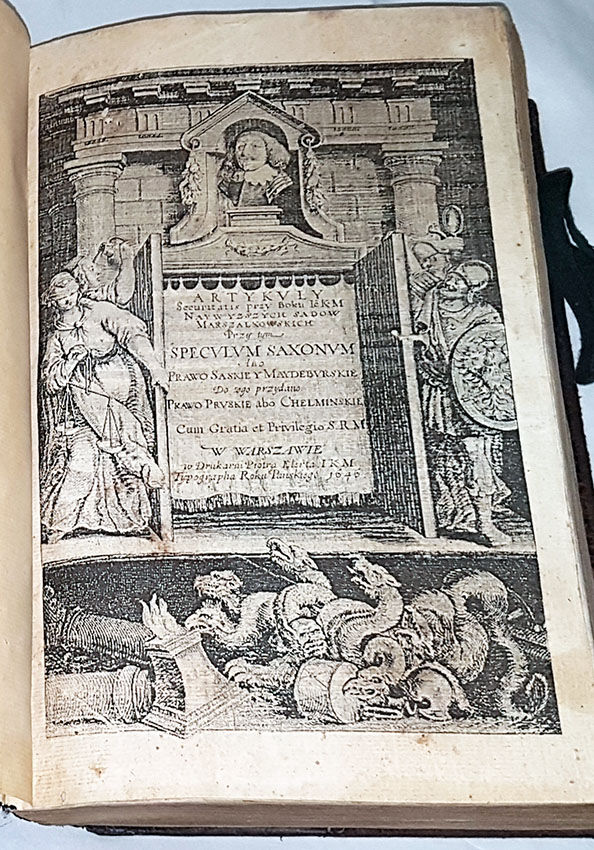
The title page comes from a bound collection of rare Polish legal incunabula published in 1646 in Warsaw at the printing house of Piotr Elert, royal typographer (I.K.M.). The collection contains works by Paweł Szczerbic (Articuli securitatis alongside His Royal Majesty's Highest Marshal Courts, Speculum Saxonum or Saxon and Magdeburg Law, Ius municipale, that is Magdeburg city law) and Paweł Kruszewic from Chełmno (Chełmno Law).
The title page comes from the first Paris edition of Adam Mickiewicz's work titled “Pan Tadeusz, or the Last Foray in Lithuania. A Nobleman's Tale from 1811 and 1812 in Twelve Books in Verse”, published in 1834 in Paris by A. Jełowicki.
Practical Step-by-Step Guide: How to Assess the Value of a Historical Book
Here are five steps that will allow you to independently assess whether a given copy is a valuable book of historical significance or just an old book without special value.
Step 1: Assess Rarity and Uniqueness
Start by determining the initial print run of the edition. Check bibliographies, BN Polona catalogs, or consult a specialist to find out how many copies may have survived. In the case of incunabula, often only single copies remain. For 19th-century books, typical print runs range from 500 to 3,000 copies.
Ask yourself: is this a specific edition – first, limited, signed? The first edition of the "Communist Manifesto" by Marx and Engels (London, 1892) is offered by the Sobieski Antiquarian Bookshop appraised at 41,995.80 PLN precisely because of the historical breakthrough it represents and the rarity of the copy.
Step 2: Examine Condition (Grading)
Condition is one of the most important valuation factors. Professional grading of historical books is based on a scale from Mint (perfect) to Poor (very bad). Minor defects can reduce the value by even several dozen percent.
What to watch out for:
- Foxing – rusty spots on paper (common in 19th-century books). Small foxing is acceptable in incunabula, but extensive foxing lowers the value.
- Missing dust jacket – for 20th-century books, the lack of the original dust jacket can reduce the value by 30–60%.
- Mold, water damage, amateur tape repairs – these are disqualifying factors. In expert practice, tape repairs permanently damage the paper.
Step 3: Check Provenance
Provenance – that is, documented origin of the copy – can multiply the book's value. Check if the book contains:
- Ex-libris – ownership marks of previous owners (the more famous, the better).
- Autographs and dedications – handwritten entries by the author greatly increase value.
- Seals and superex-libris – family coats of arms, seals of magnate libraries.
A copy with the ex-libris of Count Aleksander Wielopolski or from the Zamoyski library is worth much more than an anonymous copy of the same edition.
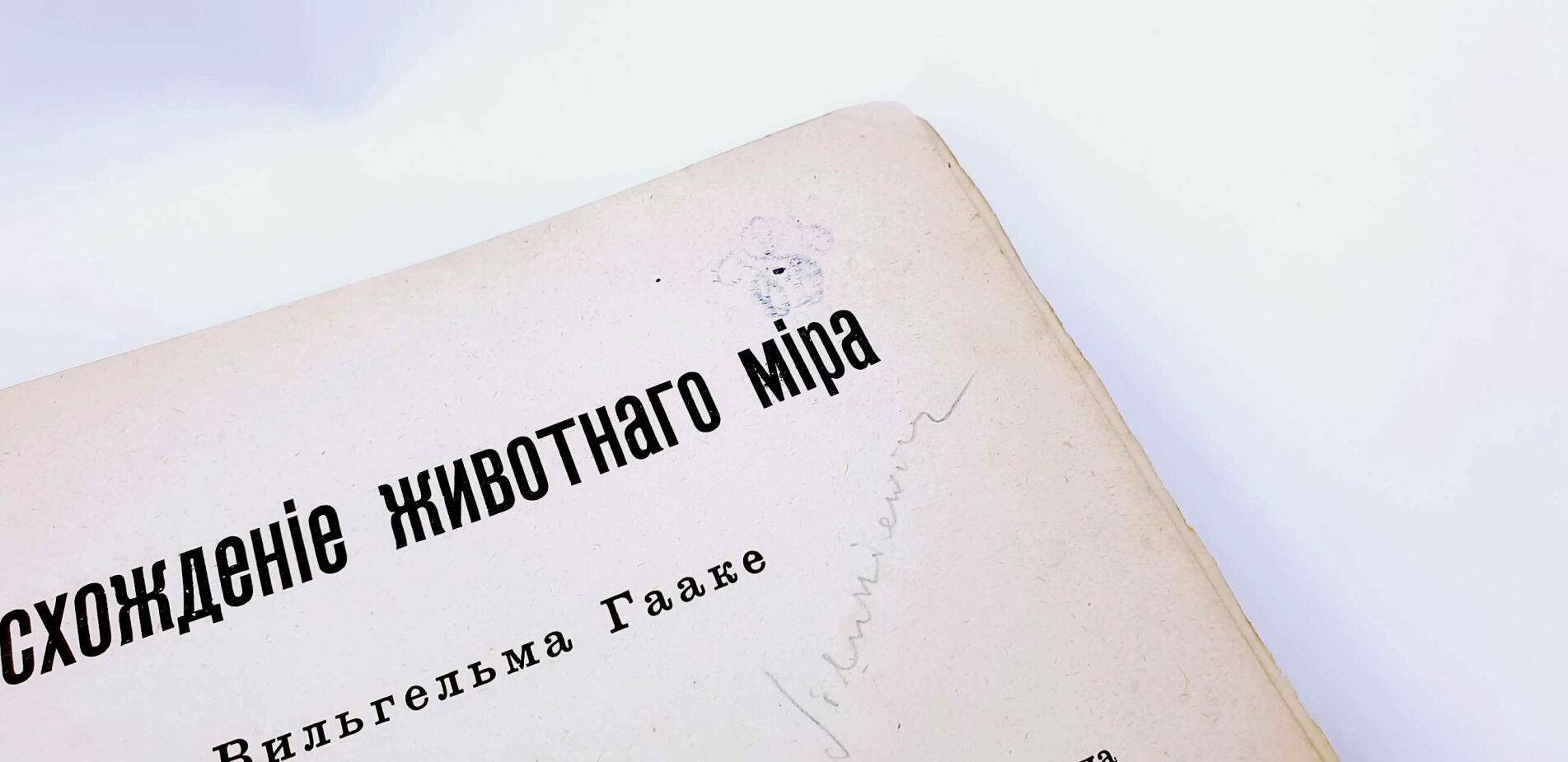
The book titled ИРОЙСХОЖДЗЕНIЕ ЖИВОТНАВО МИРА describing the animal world, comes from the personal library of Henryk Sienkiewicz, as evidenced by the anagram seal placed on the front flyleaf and title page, as well as the author's handwritten autograph in pencil on the title page of the work.
Step 4: Identify the Edition
This is a key moment: are you holding the first edition or just a later reprint? How to check?
- Check the publishing details – on the title page look for the year of publication, publisher's name, and place.
- Compare with bibliography – for most important Polish works, detailed descriptions of first prints exist (e.g., Estreicher bibliography).
- Pay attention to the publishing address – first editions often appeared in specific publishing houses, and reprints in others.
Example from the offer: Henryk Sienkiewicz "Pan Wołodyjowski" (1887–1888) – the first edition of the last part of the Trilogy. In Sienkiewicz's case, first prints have a value many times higher than later reissues.
Step 5: Examine the Binding
Binding is the book's business card. An original period binding (leather, parchment, publisher's cloth) significantly increases value. A secondary binding – if professionally done – can be neutral or even add value if it is the work of a known bookbinder. If you are interested in artistic book bindings, check out our projects.
Three levels of binding:
- Original publisher's binding – highest collector's value.
- Secondary but professional – leather binding done in a bookbinding workshop can be an asset, especially if the book is a gift.
- Secondary, amateur – often destroys value.
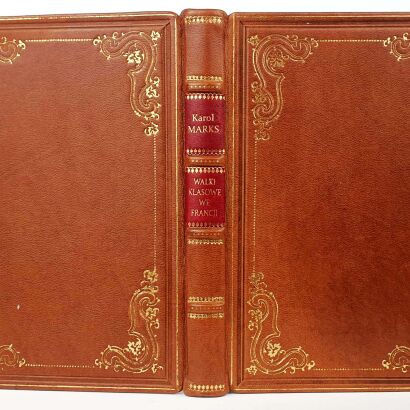
At the Sobieski Antiquarian Bookshop, you will find exceptional copies with exclusive leather bindings – for example, Stanisław Lem's "Solaris" (1st edition) and Zbigniew Herbert's "Pan Cogito" (1st edition). Professional binding not only protects the book but also gives it a prestigious character.
Common Mistakes and Market Traps – What to Watch Out For
The historical book market unfortunately also attracts people trying to profit from buyers' ignorance. Here are the most common threats:
- Fake autographs – forged handwritten entries on title pages. Sometimes an autograph is "added" to an authentic copy to raise its price. Always demand a certificate of authenticity from a reputable source.
- "Assembled" copies – the cover comes from one book, the block from another. Easy to overlook if you only look at photos online.
- Reprints passed off as originals – modern photographic reprints of incunabula. You can distinguish them by the lack of laid paper, absence of watermarks, and too "clean" title page.
- Amateur tape repairs – the most common beginner's mistake. Chemically and mechanically destroys paper. If you see tape marks, the value practically drops to zero.
- Missing dust jacket – for 20th-century books, this can be detrimental. A knowledgeable seller always provides information about the dust jacket.
Where to Buy Safely? Antiquarian Bookshop vs. Online Auctions
Specialized antiquarian bookshop – the safest way. Professional description, certificate of authenticity, right of return, and expert support. Sobieski Antiquarian Bookshop is a member of CINOA (International Confederation of Art and Antique Dealers' Associations) and SAMP (Polish Antiquarian Booksellers Association), which means every copy undergoes expert verification. Every book of historical significance sold comes with a certificate of authenticity. Read our guide on collector's books as an investment.
Online auctions (OneBid, Allegro) – a chance for a bargain, but higher risk. You cannot be sure if the description is reliable, and you cannot physically inspect the copy. Rule of thumb: if an incunabulum is auctioned for 500 PLN – something is wrong.
Historical and antiquarian book fairs – a good place to learn. You can touch, compare, and talk to exhibitors.
Decision tree – when to choose what:
| Situation | Recommendation |
|---|---|
| Buying for the first time, budget under 1000 PLN | Trusted antiquarian bookshop |
| Looking for a specific first print | Specialized antiquarian bookshop |
| Know the market, budget over 5000 PLN | You can consider an auction, but with expertise |
| Need a book as a gift | Antiquarian bookshop – you get a certificate and binding |
| Hunting for a bargain, accept risk | Online auctions, but only from trusted sellers |
How to Store and Protect Your Acquired Historical Book?
Buying a valuable copy is only half the success. Without proper storage, you may lose a significant part of your investment. Here are the basic rules:
- Temperature – maintain 18–20°C. Too high accelerates paper aging.
- Humidity – 40–55%. Too dry – paper cracks; too humid – mold appears.
- Avoid UV light – direct sunlight destroys paper and fades covers. Keep books away from windows.
- Vertical positioning – books should stand upright, supported. Lying stacks deform spines.
- Sobieski Antiquarian Bookshop runs its own bookbinding workshop with 20 years of experience. Professional binding in genuine leather not only adds prestige but primarily protects the copy from degradation. They offer artistic and exclusive gift bindings – perfect if you want the book to last for centuries.
Summary
Assessing the value of a book of historical significance is a skill that can be mastered. The key is systematically going through five steps:
- Rarity – how few copies have survived?
- Condition – is the book complete and undamaged?
- Provenance – who was the previous owner?
- Edition – is it a first print?
- Binding – original or professionally restored?
Each of these elements affects the final valuation. If you are just starting your collecting adventure, it is safest to trust a specialized antiquarian bookshop that provides a reliable description, certificate of authenticity, and professional binding.
Sobieski Antiquarian Bookshop has been gathering about 20,000 volumes and serving customers from all over Poland – from Warsaw, through Poznań, Kraków, to Gdańsk – and offers safe shipping worldwide for over 20 years. Every book of historical significance in their offer is accompanied by a professional description and certificate.
Check out our offer of incunabula and first editions – from Szczerbic's "Artykuły Securitatis" to Herbert's "Pan Cogito" in leather binding.
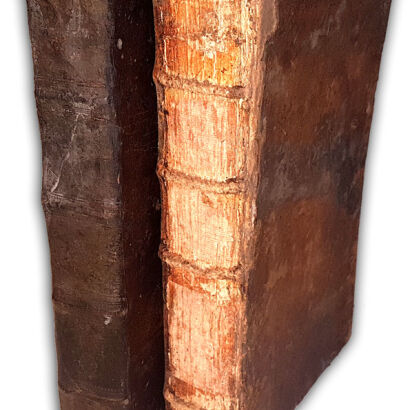

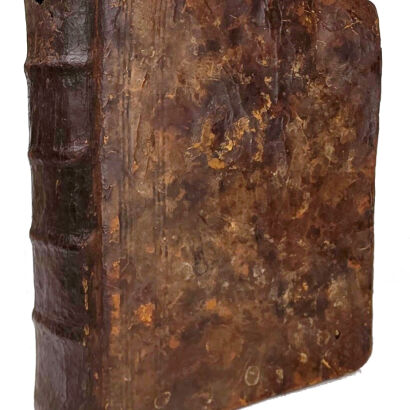
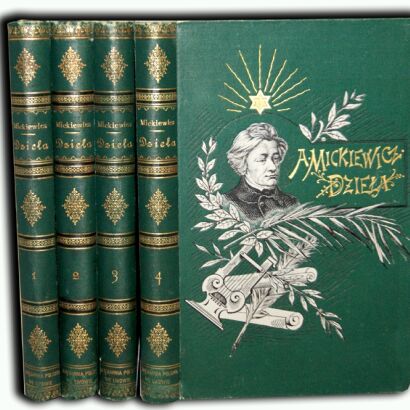
![MICKIEWICZ - PISMA t.1-4 [komplet] Paryż 1844 wyd. profesorskie](/media/products/d7f8e7211fc70867ec3250982866c984/images/thumbnail/small_20201123-130437.jpg?lm=1765540476)




 Polish