How to Choose an Early Printed Book - Who Is This Guide For?
How to Choose an Early Printed Book – A Beginner’s Guide
Do you want to buy an early printed book but don’t know where to start? This guide will show you how to do it safely and confidently—even if you’re just beginning to explore the world of rare and old books.
You’ll find practical tips based on real antiquarian experience that will help you avoid common mistakes and choose a valuable copy more easily—even when buying from an online antiquarian bookstore.
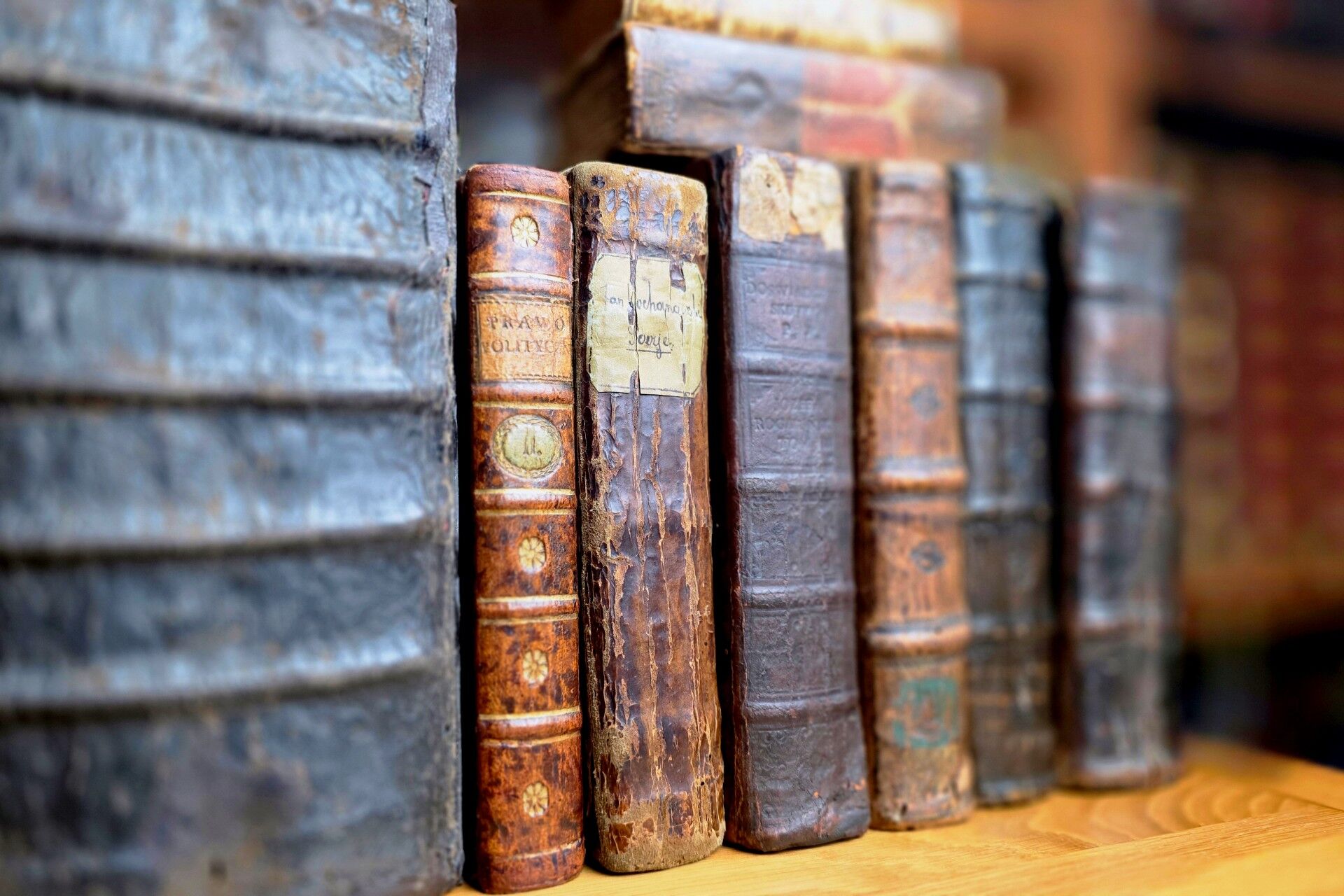


How to Choose an Early Printed Book – Who Is This Guide For?
How do you choose an early printed book if you’re just starting your journey into collecting old books? This guide is for you if:
you want to buy your first early printed book for your home library,
you are looking for a unique, “with history” book as a gift,
you have loved books for a long time but are encountering terms like “provenance,” “later binding,” or “collectible copy” for the first time.
The text is written in simple language, without technical jargon—so that someone from Warsaw, Kraków, Poznań, Wrocław, Gdańsk, or a small town who has never visited a physical antiquarian bookshop can independently and safely choose a good early printed book online.
Antykwariat Sobieski has specialized for years in early printed books, pre-war editions, and professional bookbinding. The tips in this guide come from everyday work with rare books and are intended to help avoid common beginner mistakes.
What Is an Early Printed Book? Basic Concepts for Beginners
Early printed book – a simple definition
In bibliological literature, early printed books are usually defined as books printed up to around 1800 (often with the cut-off date of December 31, 1800). These are publications created using manual printing techniques:
handmade paper,
type cast and set by hand,
illustrations made using traditional techniques (engraving, woodcut, hand-colored engraving),
bindings made by craftsmen bookbinders, most often in leather or parchment.
In antiquarian practice, the term is sometimes used more broadly—some sellers also include rare early 19th-century editions, especially if they retain traditional features (laid paper, hand-made illustrations, classic leather bindings).
Important distinctions:
early printed book – a historically old publication, usually up to 1800; a historical object,
old book – a general term, e.g. a 1920 edition that is not an early printed book but may still be collectible,
antique / collectible edition – a later book (19th–20th century), valuable due to rarity, first edition status, special binding, or historical importance.
For beginners, it is important that descriptions clearly indicate whether a book is a genuine early printed work or simply an old but later edition.
Key Terms Worth Knowing
Some terms frequently appearing in descriptions:
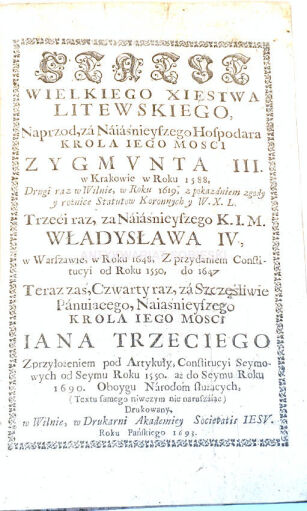
Title page – usually the first printed page, listing author, title, place and year of publication, and publisher. Missing it significantly reduces value.
Colophon – publication details placed at the end of the book (common in early prints).
Format – size based on sheet folding (folio, quarto, octavo, etc.), now often given in centimeters.
Original binding – binding made in the same period as publication; may be simple (parchment, boards) or luxurious (gilt leather).
Later / modern binding – made later; does not always reduce value and may be desirable if it preserves the book.
Bibliophile copy – a carefully produced copy (better paper, extra illustrations, numbered edition).
Provenance – ownership history: bookplates, inscriptions, stamps, notes. Can increase value.
Condition – overall state: completeness, wear, damage, repairs.
What Determines Value?
Age and rarity – earlier and rarer equals more valuable.
Content significance – important works, first editions, historically relevant texts.
Condition – missing pages or damage reduces value.
Completeness – presence of all elements (maps, illustrations, inserts).
Binding – original increases value; good modern binding can stabilize it.
Provenance – notable ownership adds value.
How to Assess Condition Step by Step
Title page and completeness
Always make sure the copy is as complete as possible.
Check:
title pages (main and partial),
signatures instead of table of contents,
illustrations and maps (missing one can halve value).
Binding – original or later?
Original bindings have historical value, even if worn.
Later bindings can be:
practical (repairing structure),
aesthetic (especially for gifts),
protective (preserving the book).
Typical Damage
Acceptable:
paper aging,
minor wear,
foxing,
slight spine wear.
Serious:
missing pages,
moisture damage or mold,
loose structure,
paper loss,
broken spine.
Checklist
Before buying:
Completeness
Is it complete? Title page visible?
Structure
Are pages firmly attached?
Paper
Any mold or water damage?
Binding
Original or modern? Damaged?
Provenance
Any marks or history?
Description
Detailed and consistent with photos?
How to Read Listings
Typical description includes:
author, title,
place and year,
printer,
format,
binding,
condition,
language,
notes.
Common terms:
half-leather binding,
full leather,
modern binding,
wear,
spine loss,
old repairs.
Photos – What to Look For
Ensure listing includes:
title page,
binding (front/back/spine),
interior pages,
illustrations/maps.
Watch for:
stains,
mold,
damage,
interesting inscriptions.
When to Ask Questions
Contact seller if:
description is vague,
key photos missing,
completeness unclear,
buying as a gift.
Common Beginner Mistakes
Choosing by price only,
not checking photos,
not asking questions,
ignoring condition,
buying from unreliable sources,
neglecting storage.
Safe Online Buying
Choose a trusted antiquarian:
clear company details,
return policy,
specialization,
good reputation.
Check:
description accuracy,
return options,
purchase documentation.
Shipping:
secure packaging,
insurance.
Binding and Conservation
Binding protects and enhances appearance.
Consider rebinding if:
structure is weak,
original binding is destroyed,
book is for display or gift.
Storage Basics
Temperature: ~18–20°C
Humidity: 40–55%
Avoid sunlight.
Store:
upright (most books),
flat (large volumes).
Handle carefully:
clean hands,
no tape,
no metal clips.
Buying Scenarios
First purchase
Compare several items, check condition, ask for photos.
Gift
Consult seller, consider custom binding.
Mini FAQ
Are all early printed books expensive?
No—prices vary.
Are they good investments?
Sometimes, but mainly cultural objects.
Does missing original binding reduce value?
Usually, but good rebinding helps.
Can I read them?
Yes, carefully.
Can I repair them myself?
No—consult professionals.
Why Choose Antykwariat Sobieski?
Specialization in early prints,
trusted online store,
professional descriptions,
expert advice,
high-quality bookbinding,
ready gift editions.
Summary – Quick Guide
Understand what an early printed book is,
check completeness,
analyze condition,
consider binding,
buy from trusted sources,
store properly,
ask questions.
Following these rules will make your first early printed book a source of satisfaction—and possibly the beginning of a lifelong passion for book collecting.
Sources
[1] https://antyksobieski.pl/blog/jak-kupowac-starodruki-i-przedwojenne-wydania-w-internecie-kompletny-poradnik-dla-poczatkujacego-kolekcjonera
[2] http://pliki.sbp.pl/ac/NDP_081.pdf
[3] https://www.kwiatkowski.edu.pl/jak-rozpoznac-wartosciowa-ksiazke-kolekcjonerska/
[4] https://szarlatan.pl/jak-rozpoznac-wartosciowe-ksiazki-antykwaryczne-praktyczny-poradnik-dla-poczatkujacych-i-zaawansowanych-kolekcjonerow/
[5] https://antykwariatwaw.pl/jak-dbac-o-stare-ksiazki-praktyczne-porady-dla-kolekcjonerow
[6] https://czasopisma.kul.pl/index.php/abmk/article/download/9306/7717/23435
[7] http://pliki.sbp.pl/ac/NDP_032.pdf
![HISTOIRE DE FREDERIC II Roi de de PRUSSE wyd.1788r. 5 wol. [HISTORYA FRYDERYKA II- WOYNY ŚLĄSKIE]](/media/products/9e9df9dc2cd2e27958c087dda9762afc/images/thumbnail/small_1_6d5f776b9864.jpg?lm=1765540606)
![RECUEIL DE DIVERSES PIECES servans a l'Histoire de HENRY III [HENRYK III- KRÓL POLSKI I FRANCJI] wyd. 1663 OPRAWA](/media/products/36a3bde9338d7c6b24e8dbb0360b956e/images/thumbnail/small_1_1b71812b201d.jpg?lm=1765540634)
![HISTOIRE DE SUEDE SOUS LE REGNE DE CHARLES XII [KAROL XII i STANISLAW LESZCZYNSKI ] wyd.1721 I-X OPRAWA ryciny](/media/products/1fd0faa4033f001d3e11fcd5a019d13a/images/thumbnail/small_1_829fdf131c13.jpg?lm=1765539389)


![COXE- VOYAGE EN POLOGNE, RUSSIE, SUEDE, DANNEMARC, etc. t. I-IV [komplet] wyd. 1786 - plany, mapy, portrety, ilustracje](/media/products/75d50a96ee963ac0fbd0a6f098606ecc/images/thumbnail/small_1_ec5a6800a6b2.jpg?lm=1765540569)

![PEREGRINI- DISSERTATIO ACADEMICA... INSTITUTIONUM TITULOS 1755 [PODRĘCZNIK PRAWA]](/media/products/9632ae492653def6866df1847bc9d1d1/images/thumbnail/small_1_7a1c680f2f15.jpg?lm=1765540634)


![[Constitutions]. Constitucie Statuta Y Przywileie Na Walnych Seymach Koronnych Od Roku Pańskiego 1550 Áż Do Roku 1637 Uchwalone. Kraków 1637. W Drukárniey Andrzeiá Piotrkowczyká](/uploads/blog/main/thumbnail/thumb_6666bf812ef20-big-batch-20240605-130121.jpg?lm=1765538148)


 Polish