H.G. Wells - The War in the Air: A Small Book, a Big Warning
A seemingly unremarkable pre-war book that is, at the same time, a piercing vision of the future. Wells predicted modern warfare faster than anyone could imagine, blending fascination with technology and reflection on the fragility of civilization. For collectors, first editions; for readers, a journey into the past that still raises questions about our future.
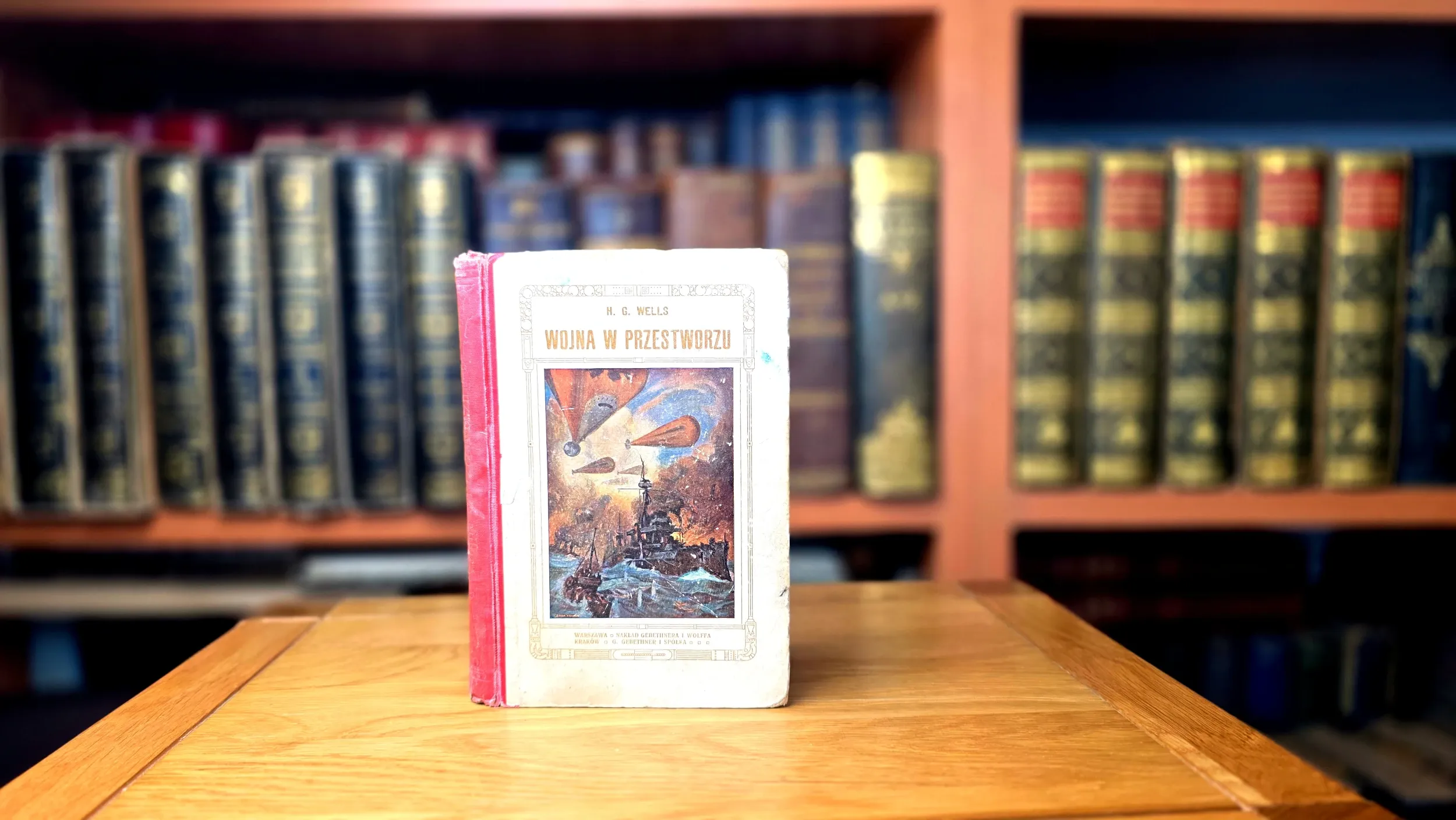
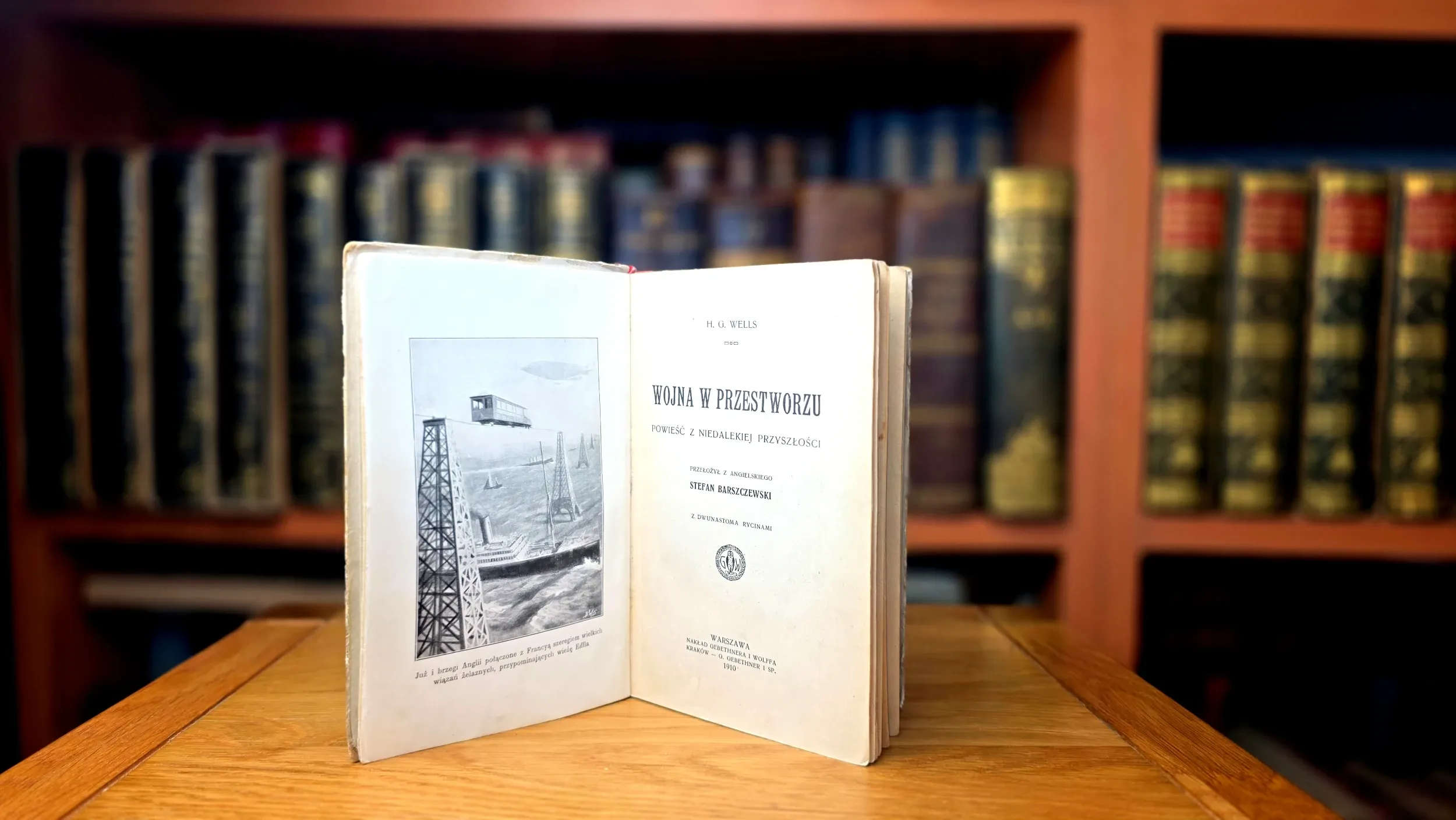
H.G. Wells - The War in the Air is one of those books that surprises not with its size, but with the weight of its ideas. Small and almost unassuming, bound in a beautiful original edition, it proves to be more than just a literary curiosity—it is like a dispatch from the future, warning that the world may spiral out of control. Today, copies of this novel are highly sought after first editions, treasured in antiquarian stores like Sobieski Antiquarian, and each volume is a gem among rare books and valuable books.
Wells envisioned something that, in his time, seemed almost fantastical: war fought from the air. Airplanes were just emerging, yet he described them as instruments of mass destruction, showing that technology often outpaces human morality. The book focuses not on heroes, but on mechanisms: escalating conflict, chaos, civilian helplessness, and the illusion of control. Its quasi-journalistic form makes it read like a war report from the future.
H.G. Wells (1866–1946) was not only a writer but also a keen observer of society and a visionary. Trained as a biologist and a teacher, he combined a fascination with science with reflections on humanity and civilization. His works often served as warnings: he foresaw world conflicts, technological advances, and social transformations that later became reality.
Other classics of his show similar prophetic insight:
-
The Time Machine (1895) - a vision of a future where technological advances and social divides lead to dramatic consequences for humanity.
-
The War of the Worlds (1898) - the story of a Martian invasion of Earth, remarkably anticipating elements of total war, civilian panic, and the terror of modern weaponry.
Wells does not indulge in pathos or heroic battles. Instead, he shows how fragile civilization is when technological progress outpaces human responsibility. The lightness of his narrative contrasts with the gravity of his message—his books act as a cautionary mirror, reflecting our fears and uncertainty about the future.
For collectors and lovers of pre-war science fiction, a copy of The War in the Air is more than a read—it is a collector’s book, a testament to its era, and a literary warning.
Reading Wells’ visions today, one cannot help but ask: where are we heading if technology continues to grow faster than our understanding of its consequences?


![POE - ARABESKI t.1-2 [komplet w 1 wol.] oprawa skóra](/media/products/d6cbc64570dcf5c939f3f4e01f3bd8fc/images/thumbnail/small_batch-20240425-103722.jpg?lm=1765539686)










 Polish