Where to buy pre-war editions of famous authors, how to recognize the first edition and assess its value? A guide to reliable sources of purchase, sales offers, and principles for evaluating the authenticity and value of books for collectors and bibliophi
A practical guide for collectors and lovers of old books. Learn where to safely buy pre-war editions of well-known authors, how to recognize first editions, distinguish originals from reprints, and assess the condition and collectible value of books. Discover reliable sources for purchasing – antiquarian bookstores, auction houses, and sales platforms – as well as the most important verification rules before buying.
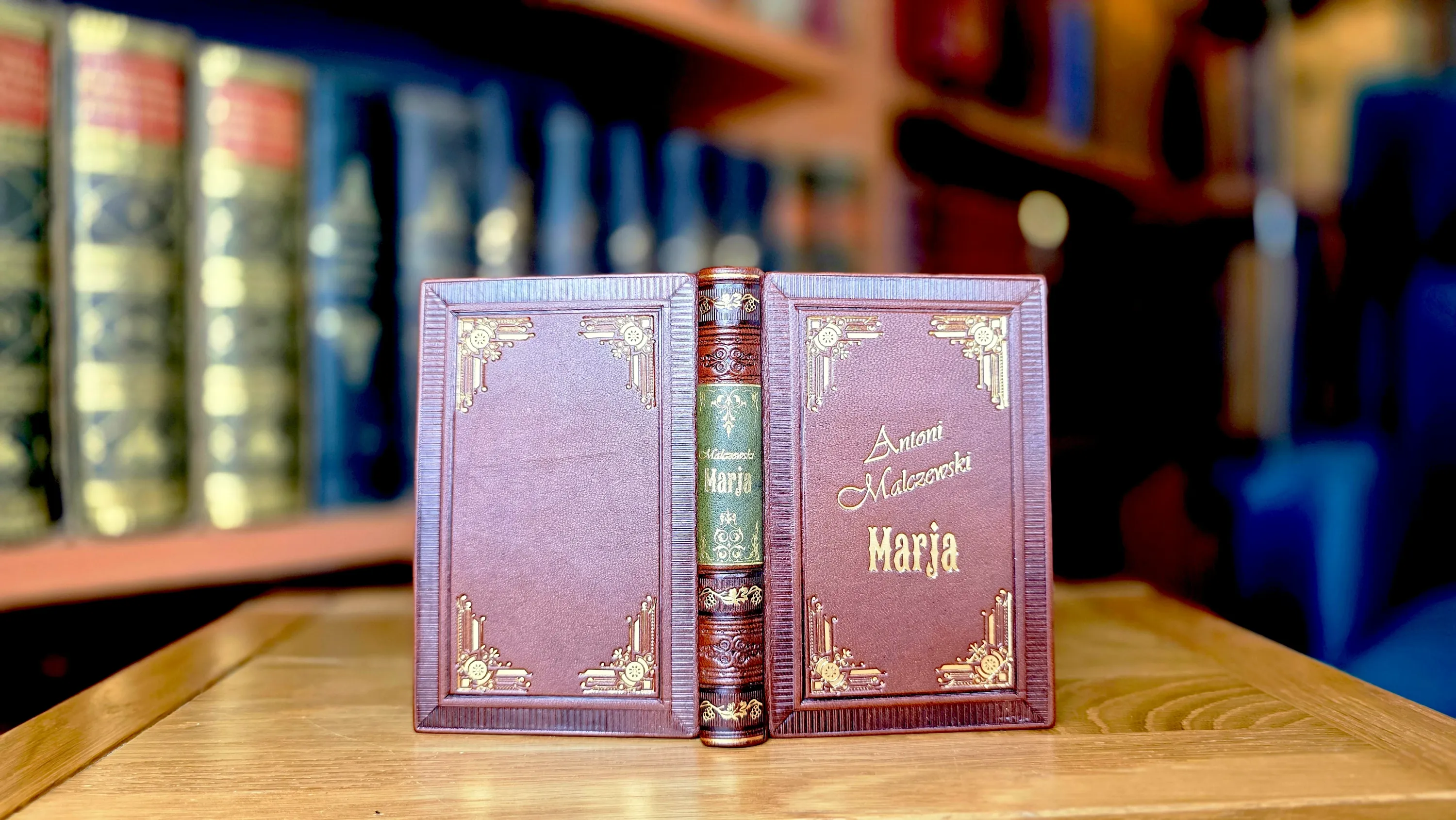
Where to buy pre-war editions of famous authors, how to recognize the first edition and assess its value?
A guide to reliable purchase sources, sales offers, and principles for assessing the authenticity and value of books for collectors and bibliophiles.
The market for pre-war editions is experiencing a true renaissance. More and more collectors, bibliophiles, and investors are looking for first editions of Polish literature – from Schulz and Gombrowicz to Tuwim and Leśmian. Unfortunately, the supply of reprints and forgeries, which at first glance may resemble originals, is growing just as dynamically. Without proper knowledge and access to verified sources, costly mistakes are easy to make. The guide below will help you understand where to look for authentic pre-war editions, how to assess their condition and value, and which purchasing channels offer the greatest transaction security.
TL;DR Searching for pre-war editions requires knowledge and caution. The most reliable sources are specialized online antiquarian bookstores (e.g., Antykwariat Sobieski with 20 years of experience), auction houses (DESA Unicum, OneBid), and classifieds platforms (Allegro, OLX) – but the latter require verification. Key evaluation criteria are: condition, completeness (dust jackets add 50-200% value), type of binding, and provenance (ex-libris can increase value by up to 500%). Always verify the copy in digital catalogs (Polona, NUKAT) before purchase and use professional appraisal. Market price ranges (2025-2026): from 500 PLN for Żeromski's "Przedwiośnie" to 15,000 PLN for Schulz's "Sklepy cynamonowe".
Where to buy pre-war editions of famous authors? – 5 proven channels
Choosing the right purchase channel is the first and key decision. Each has different risk profiles, price availability, and verification possibilities. Below is a summary of the most important sources.
Online antiquarian bookstores – the largest selection but require knowledge
Today, this is the most popular channel for buying pre-war books. Services such as Tezeusz.pl, AntykwariatHumanitas.pl, and Antykwariat Sobieski offer a wide selection of titles at various price ranges.
Advantages:
-
Rich offer – from cheap items to rare gems
-
14-day return policy (consumer rights law)
-
Auction descriptions with bibliographic data
Disadvantages:
-
No physical inspection – photos do not always reflect the book's condition
-
Varied reliability of descriptions – not every seller precisely states the condition
Antykwariat Sobieski has specialized in pre-war editions and first editions for over 20 years. Each copy is accompanied by a certificate of authenticity, and prices are verified against the auction market (OneBid, DESA Unicum). The antiquarian also organizes regular bibliophile auctions – so far, 48 editions on OneBid.pl have been held. An additional advantage is the possibility of remote appraisal via WhatsApp (number: 609 772 993) and home visits in Warsaw. The offer also includes bookbinding services – from restoration of bindings to making leather and bibliophile bindings.
|
Feature |
Online antiquarian bookstore |
Stationary antiquarian bookstore |
Auction house |
|---|---|---|---|
|
Possibility of inspection |
No (photos only) |
Yes |
At pre-auction exhibition |
|
Legal basis for return |
14 days (consumer) |
None |
None (auction) |
|
Price level |
Medium-high |
Medium-high |
Very high |
|
Availability of rare gems |
Medium |
Low |
High |
|
Authenticity guarantee |
Depends on seller |
Seller's description |
Auction catalog |
|
Possibility of negotiation |
Yes |
Yes |
No (auction) |
Auction houses – places where you find rare gems
If you are looking for the rarest copies – first editions with dust jackets, copies with author dedications – auction houses are the best place. DESA Unicum, Libra, Rempex, and the platform OneBid regularly list pre-war editions in thematic auctions.
Prices at auctions start from about 100 PLN for less popular titles, but for unique items you have to pay from 5,000 PLN to over 15,000 PLN. Advantage: each copy is described by an expert, and the bidding is transparent. Disadvantage: prices often rise in the last seconds, and the final amount can be higher than in antiquarian bookstores.
Classified platforms – hunting for bargains with risk
Allegro is a huge source – there are regularly 18-20 thousand offers of pre-war and post-war books, with prices starting from just a few dozen zlotys. OLX is also a source of interesting items, especially when selling collections from private individuals.
How to verify sellers on Allegro and OLX:
-
Check sales history and reviews – a seller with 99-100% rating and hundreds of transactions is safer
-
Request additional photos: spine, endpapers, title page, last page with printing details
-
Ask about completeness – missing pages are the most common hidden defect
-
Avoid offers without photos or with blurry quality – this may hide damages
Book fairs and flea markets
International Book Fair in Warsaw (May) and local flea markets (Warsaw – Koneser, Łódź, Kraków) are meeting places for the bibliophile community. You can see the book live, talk to the seller, bargain. Unfortunately, the selection is often limited, and prices – especially at flea markets – are often inflated without professional appraisal.
Collector forums and Facebook groups
Bibliophile communities on Facebook (e.g., "Bibliophiles and book collectors") and forums (e.g., forum.bibliofilka.pl) are places for exchange among collectors. Often, offers appear there that you won't find in antiquarian bookstores. Transactions are based on trust – it's worth asking for references and high-resolution photos.
What to pay attention to when buying pre-war editions? Key evaluation criteria
The value of a pre-war edition is the result of several factors. Below we discuss the most important ones.
Condition – what determines value?
Bibliophiles use a scale of 1-6, where 1 = damaged book, and 6 = perfect condition as from the printing house. Copies in condition 4/6 (slight signs of use, complete, clean) are valued 3-4 times higher than those in condition 2/6 (loose, dirty, damaged).
Elements that lower condition:
-
Loose or cracked spine
-
Stains, yellowing, moisture marks
-
Torn pages (especially the title page)
-
Pencil/pen annotations (ex-libris and author dedications are exceptions)
Completeness – dust jacket +50-200% value
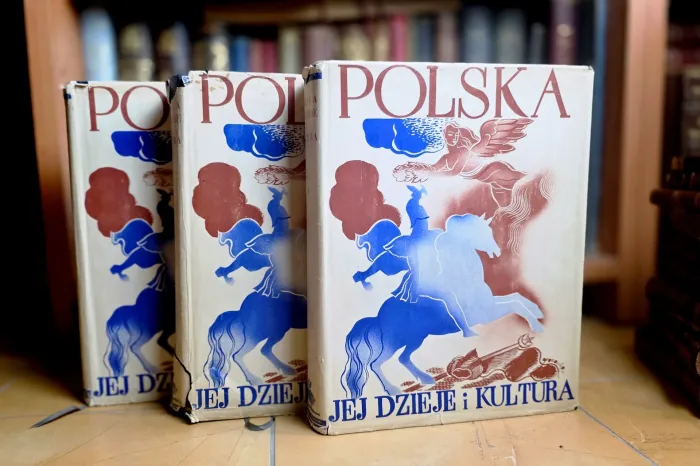
The dust jacket, i.e., the original paper cover, is one of the most important price-forming factors. Pre-war dust jackets have survived in very few copies. If the book has the original dust jacket, its value increases by 50-200%. Missing pages – even a single one – drastically reduce value. Check if the book's gatherings are complete.
Binding – publisher's, contemporary bookbinder's, modern
-
Publisher's binding – original, ordered by the publisher. Has the highest collector's value.
-
Contemporary bookbinder's binding – made by a bookbinder on the owner's order. Can add 20-50% to value, especially if artistic (leather, embossing, gilding).
-
Modern binding – lowers value, unless exceptionally made (by a recognized bookbinder). Antykwariat Sobieski offers professional bookbinding services – restoration of original bindings, leather and bibliophile bindings that can restore the book's former glory.
Provenance – ex-libris and dedications +300-500% value
Provenance, i.e., the ownership history of the copy, can surprisingly increase its price. A famous collector's ex-libris, author's dedication (especially handwritten), or a pre-war library stamp can increase value by 300-500% compared to a similar copy without provenance.
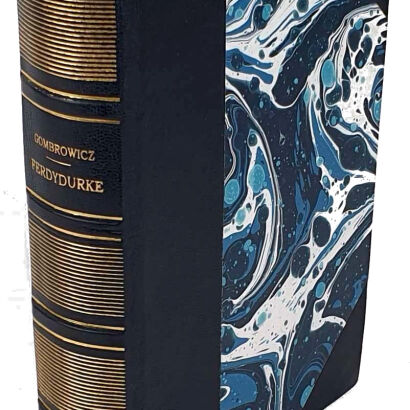
Example: A copy of "Ferdydurke" (1937) with Gombrowicz's dedication to a literary friend was sold at auction for over 20,000 PLN, while a standard copy in condition 4/6 costs 4,000-8,000 PLN.
How to check if a pre-war book is a first edition?
The first edition of a book is one of the most important factors affecting its collector's value. However, not every old book is a first edition – many popular titles were published multiple times before the war, in various print runs, formats, and bindings. For a collector, the difference between a first edition and a later reprint can mean a significant difference in the copy's value.
In the case of 20th-century Polish literature, first editions of works by authors whose work has become part of the literary canon – including Bruno Schulz, Witold Gombrowicz, Bolesław Leśmian, Julian Tuwim, and Stanisław Ignacy Witkiewicz – are especially sought after.
Check the book's colophon
The first place to check is the title page and often the colophon on its reverse. This is where basic information allowing identification of the edition is found:
-
year of publication,
-
publisher's name,
-
place of publication,
-
printer's name,
-
print run information, if provided.
The year of publication alone does not always determine that it is a first edition. Publishers often released subsequent print runs of the same title in short intervals, so it is necessary to compare the copy with the bibliographic description.
Compare the book with bibliographic catalogs
Professional identification of the first edition requires comparing the book with reliable sources. The most helpful are library catalogs and digital databases:
-
Polona – allows comparison of preserved copies and the appearance of individual editions,
-
National Library Catalog – allows checking exact publishing data,
-
NUKAT – catalog of Polish scientific libraries,
-
auction catalogs of auction houses and specialized antiquarian bookstores.
When comparing, pay attention not only to the year of publication but also to the book's format, number of pages, illustrations, type of binding, dust jacket, and characteristic elements of a specific edition.
Pay attention to markings of subsequent editions
Some books have clear markings of subsequent editions, such as:
-
"second edition",
-
"revised edition",
-
"reviewed edition",
-
"second print run".
In such cases, it is not a first edition.
More difficult are situations when the publisher did not mark the subsequent print run. Then it is necessary to compare typographic details – page layout, numbering, printing errors, illustrations, and binding elements.
Check characteristic features of the first edition
First editions often have features that distinguish them from later reprints:
-
a specific cover design,
-
characteristic dust jacket,
-
specific format,
-
illustrations made especially for that edition,
-
individual typographic layout.
For many valued authors, these details determine the collector's value. The same title may appear in several pre-war versions, of which only one is the sought-after first edition.
Do not judge the book solely by appearance
One of the most common mistakes of beginner collectors is the belief that an older or more damaged book must be a first edition. In reality, later print runs can look very similar.
The value is determined not by the book's age but primarily by:
-
priority of edition,
-
rarity of a specific print run,
-
condition,
-
completeness,
-
presence of original dust jacket,
-
ownership history of the copy.
In case of doubt, use professional identification
For valuable books, self-determining the first edition can be difficult. This especially applies to publications issued in small print runs, avant-garde books, and works that appeared before the war in several similar versions.
Antykwariat Sobieski helps in identifying and appraising pre-war books based on photos of the copy – especially the title page, colophon, cover, and characteristic binding elements. Comparison with library catalogs and auction results allows determining whether the book is a first edition and its actual market value.
The most important rule for a collector: the first edition is not just the oldest date on the title page. It is a specific, identifiable variant of the book, whose rarity, condition, and completeness determine the collector's value.
Originality – how to distinguish an original from a reprint?
Reprints of pre-war editions are common and often of very good quality. How to distinguish the original?
-
No ISBN (International Standard Book Number) – pre-war books do not have ISBN. If the book has an ISBN, it is a post-war reprint or edition
-
Paper quality – pre-war paper is often thicker, darker, with uneven texture (handmade or printing paper). Reprints use coated or offset paper, uniformly white
-
Printing technique – originals were printed on typographic machines (intaglio, typography with visible font impression). Reprints are made by offset – the print is flat, and the halftone dot is visible under a magnifier
How to verify the authenticity and value of a pre-war edition?
Before you spend money, conduct a verification process. Here are tools and methods available to everyone.
Library and digital catalogs – your first line of defense
Free digital catalogs allow you to compare the copy with bibliographic descriptions and digitized versions.
-
Polona (polona.pl) – the largest Polish digital library with over 5 million documents. Search the title and compare edition description, format, cover, page layout
-
National Library Catalog (katalog.bn.org.pl) – allows identification of specific edition, date, print run, format
-
NUKAT (nukat.edu.pl) – central catalog of Polish scientific libraries. Confirms if the edition exists and its parameters
Professional appraisal – when to use an expert?
If you come across a copy worth over 1000 PLN, professional appraisal is a must. Antykwariat Sobieski offers free preliminary remote appraisal via WhatsApp – just send photos of the book (cover, title page, colophon, any damages), and the expert will verify it against the auction market (OneBid, DESA Unicum) and library catalogs. Additionally, you can use book and old print buying services throughout Poland.
Certificate of authenticity – a guarantee for the buyer
Professional antiquarian bookstores, including Antykwariat Sobieski, attach a certificate of authenticity to every sold copy. This document confirms that the book is an original pre-war edition, and its condition and completeness have been verified by an expert.
Most popular pre-war editions – prices and market trends (2025-2026)
The table below presents approximate market prices of the most popular pre-war editions of Polish literature. Prices vary depending on condition, binding, and provenance.
|
Author |
Title |
Year of publication |
Approximate value (PLN) |
|---|---|---|---|
|
Bruno Schulz |
Cinnamon Shops |
1934 |
8,000 – 15,000 |
|
Witold Gombrowicz |
Ferdydurke |
1937 |
4,000 – 8,000 |
|
Stanisław Ignacy Witkiewicz |
Farewell to Autumn |
1927 |
3,000 – 7,000 |
|
Bolesław Leśmian |
Meadow |
1920 |
4,000 – 6,000 |
|
Julian Tuwim |
First Volume of Poems |
1918 |
1,500 – 3,000 |
|
Maria Dąbrowska |
Nights and Days |
1932-1934 |
800 – 2,000 |
|
Stefan Żeromski |
Springtime |
1925 |
500 – 1,500 |
Trends: We observe a systematic increase in prices of pre-war editions of Polish literature. First editions of Schulz and Gombrowicz are rising especially dynamically, attracting interest from both Polish and foreign collectors. In the 500-2000 PLN segment (Żeromski, Dąbrowska, Tuwim), demand is growing from cultural institutions and university libraries.
Checklist: How to assess a pre-war edition before purchase
Before making a purchase decision, perform the following steps:
-
Check the colophon – confirm year and publisher in the National Library or NUKAT catalog
-
Assess condition on a scale of 1-6 (high-resolution photos)
-
Verify completeness – count pages, check if gatherings are complete
-
Check if the dust jacket is original (compare with a copy in Polona)
-
Identify binding – publisher's, contemporary bookbinder's, or modern
-
Look for signs of provenance – ex-libris, dedications, stamps
-
Distinguish original from reprint – no ISBN, paper type, printing technique
-
Compare price with auction results on OneBid and DESA Unicum
-
Request a certificate of authenticity (if the seller offers one)
-
In case of doubt – use professional appraisal
What to do next?
The acquired knowledge is just the first step. Here are three concrete actions you can take today:
-
Check the current offer of Antykwariat Sobieski – a constantly updated collection of pre-war editions, each copy with a certificate of authenticity
-
Use free remote appraisal – send photos via WhatsApp (609 772 993) and learn the real value of your book
-
Participate in bibliophile auctions – Antykwariat Sobieski regularly organizes auctions on OneBid.pl. This is an opportunity to acquire unique copies in transparent bidding
Summary
Buying pre-war editions is a passion that combines love of literature with a collector's instinct. The key to success is choosing the right purchase channel – a specialized antiquarian bookstore with a certificate of authenticity offers the greatest security, an auction house is a source of rare gems, and classifieds platforms require vigilance and verification skills. Remember to assess condition, completeness, and provenance – these three factors determine value. When in doubt, always seek expert help. Whether you are a beginner bibliophile or an experienced collector – Antykwariat Sobieski offers support, knowledge, and a proven offer.
Sources
-
Polona – Polish Digital Library (https://polona.pl)
-
National Library Catalog (https://katalog.bn.org.pl)
-
NUKAT – Central Catalog of Scientific Libraries (https://nukat.edu.pl)
-
OneBid – Auction platform (https://onebid.pl)
-
DESA Unicum – Auction house (https://desa.pl)
-
Antykwariat Sobieski – Collector's offer (https://antyksobieski.pl)






 Polish